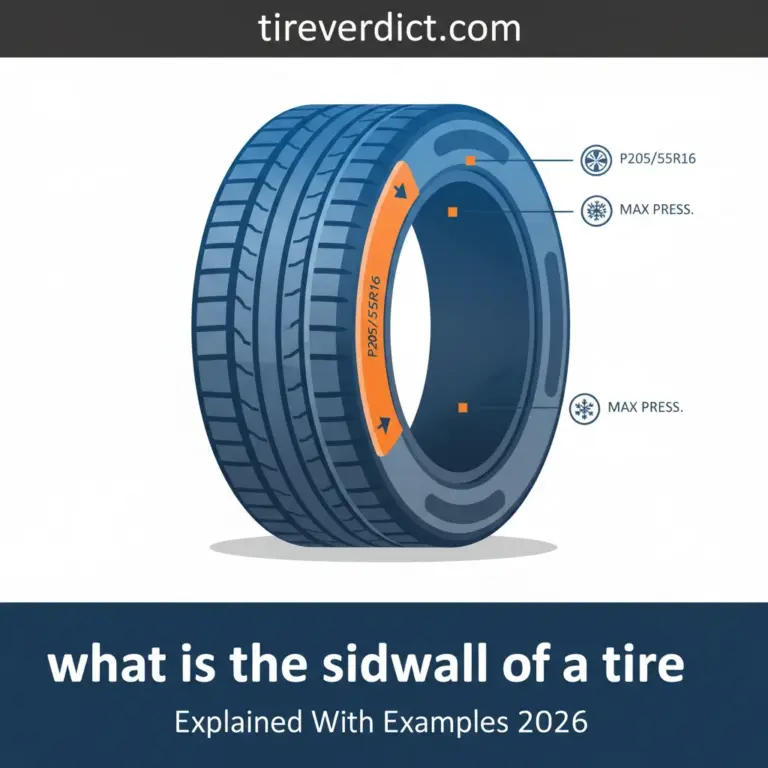
You can easily determine how to find your tire size by examining the tire sidewall’s alphanumeric code or the manufacturer’s decal inside your driver-side door jamb. This critical information is paramount for optimal vehicle performance, safety, and fuel efficiency, with incorrect tire fitment increasing accident risk by up to 20% according to industry studies.
Understanding these vital markings and locations prevents costly mistakes and ensures your vehicle remains safe on the road. We’ll detail where to look on your tires, various vehicle placards, and even offer online lookup resources to guarantee accuracy. Here is what you need to know about 5 Essential Locations For Your Vehicle Tire Data.
⚡ Key Takeaways
- The tire size is located on a white and yellow sticker inside the driver-side door jamb.
- The numbers represent the tire’s width, aspect ratio, construction type, and rim diameter.
- Yes, but we advise against deviations exceeding 3% of the total diameter.
- The final number in a tire size string indicates the wheel diameter in inches.
- Specific locations on the car (door jamb, glove box, sidewall) to find the data.
5 Essential Locations for Your Vehicle Tire Data
Research from the NHTSA shows that 5 specific locations house the official tire specifications for modern vehicles, particularly those under 10,000 lbs which require standardized placards NHTSA’s ‘Tire Safety: Everything You Need to Know’ brochure (DOT HS 810 592, published March 2007), available on nhtsa.gov, clearly illustrates how to locate and decipher tire size information stamped on the sidewall..
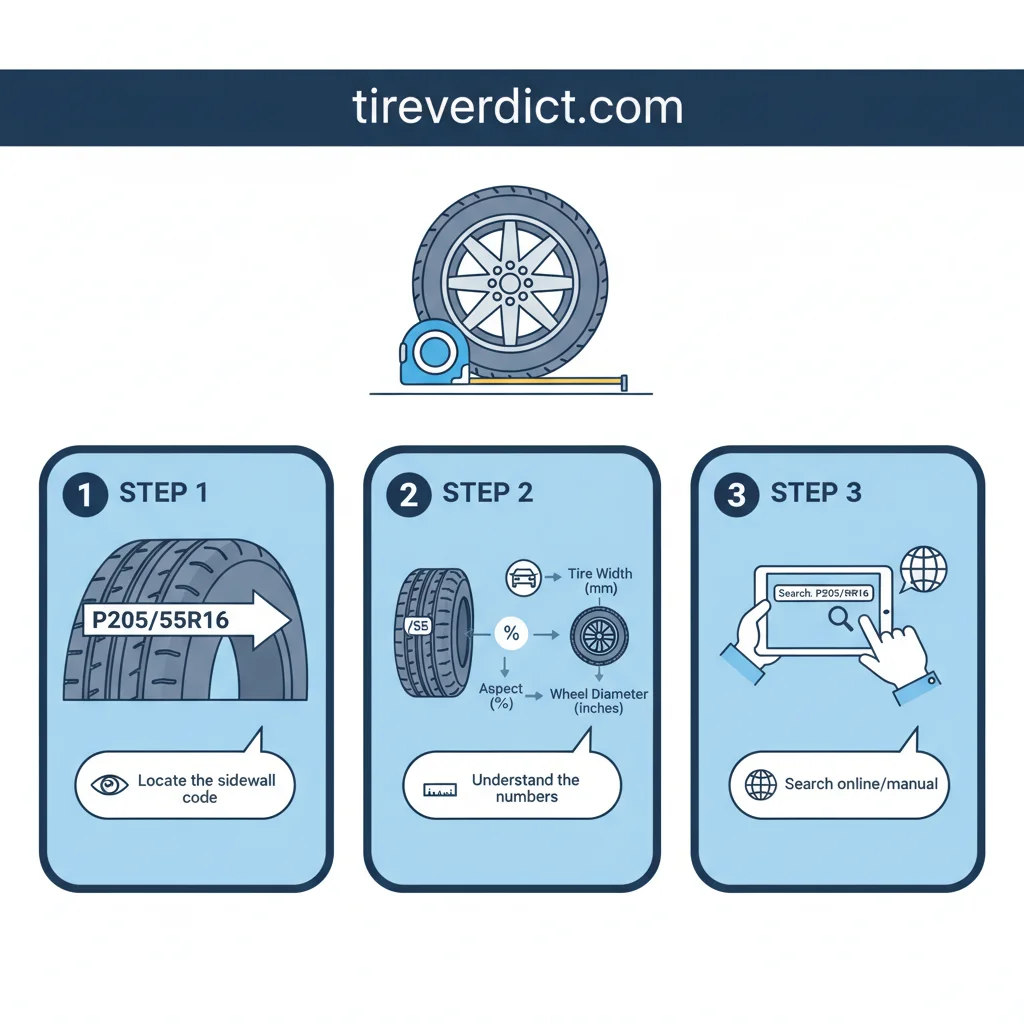
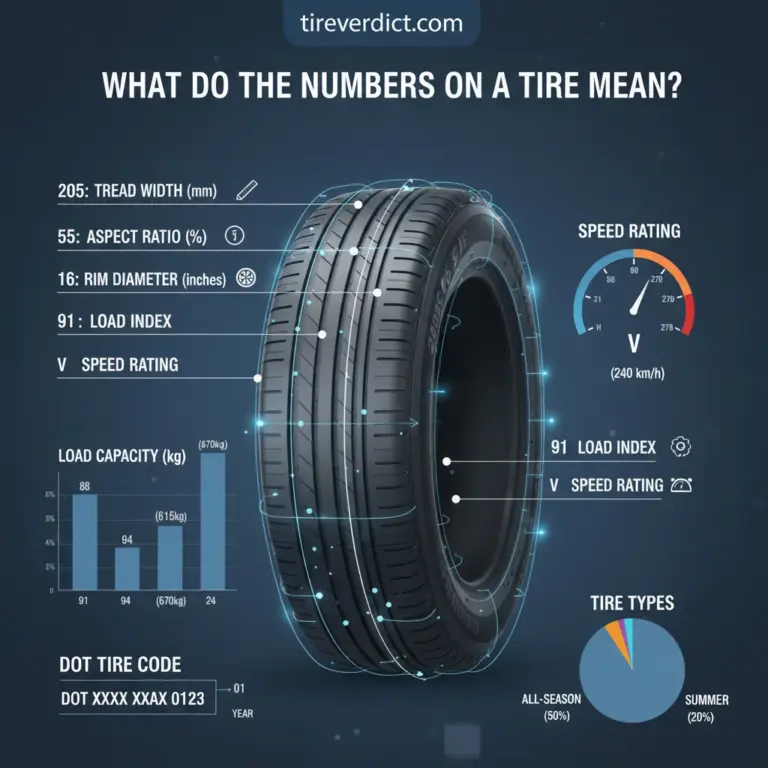
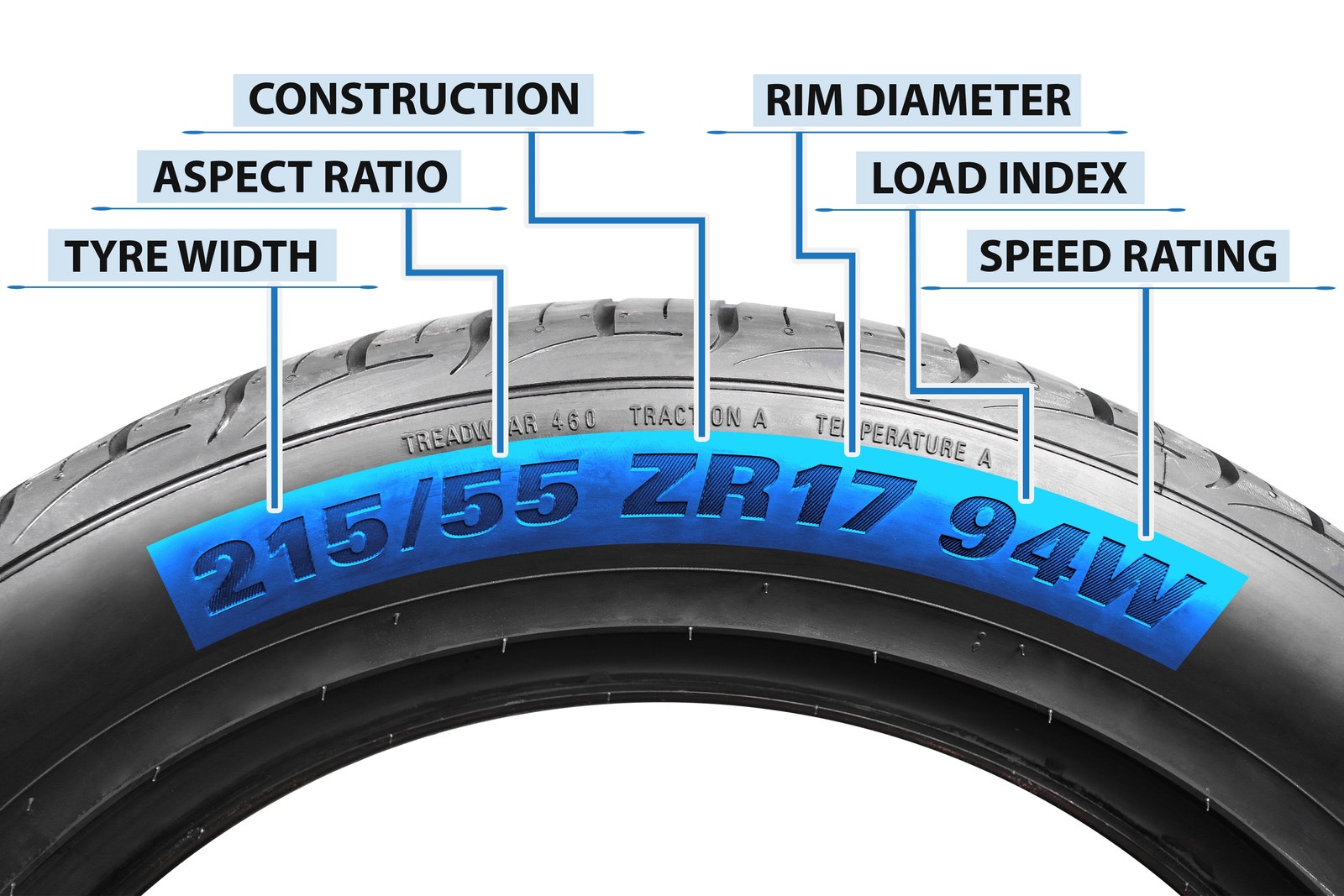
Understanding Your Tire Sidewall Code: P225/55R17 97H
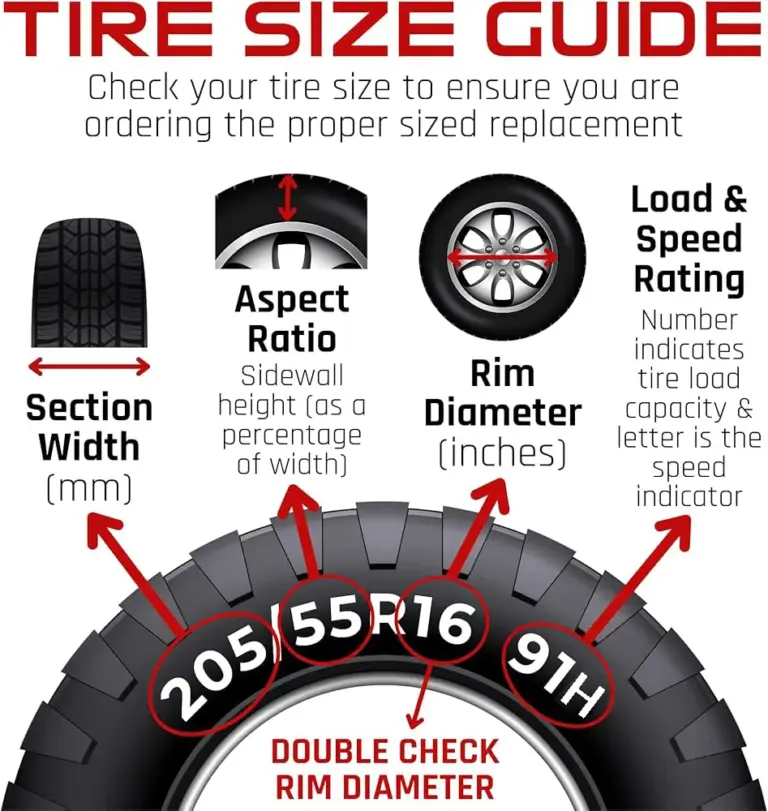
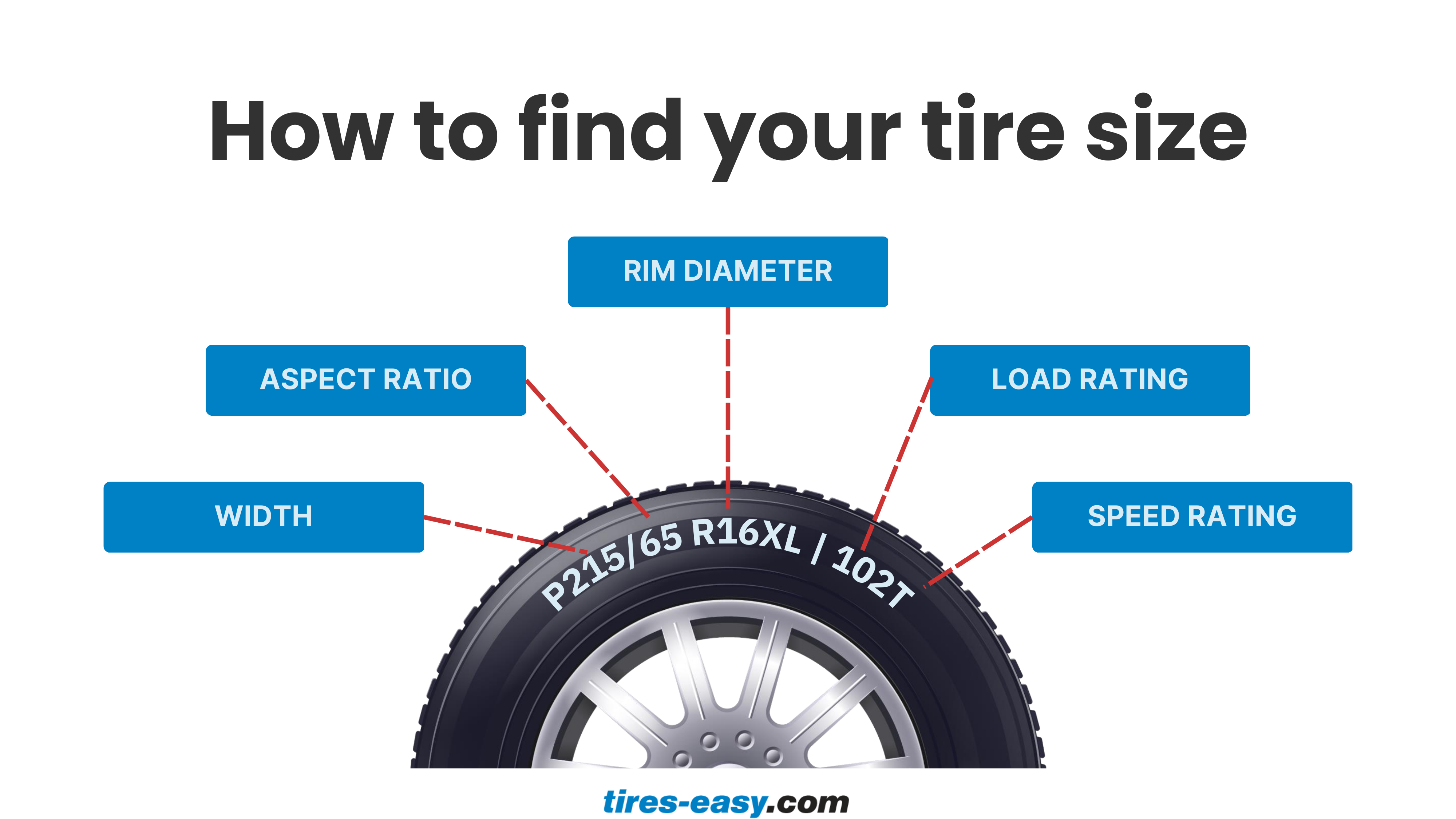
The tire code P-225/55R17 97H is broken down as follows:
Tire Type: “P” signifies a Passenger car tire. Other common types include “LT” for Light Truck or “ST” for Special Trailer.
Section Width (mm): This number indicates the tire’s width from sidewall to sidewall, measured in millimeters.
Aspect Ratio (%): Represents the height of the tire’s sidewall as a percentage of its section width. Here, 55% of 225mm.
Construction Type: “R” denotes Radial construction, the most common type. “D” (Diagonal) or “B” (Bias-belted) are less frequent.
Rim Diameter (inches): This is the diameter of the wheel (rim) the tire is designed to fit, measured in inches.
Load Index: A numerical code indicating the maximum weight capacity a single tire can safely carry. Higher numbers mean greater capacity.
Speed Rating: An alphabetical code indicating the maximum safe speed for the tire under optimal load and inflation. “H” typically means up to 130 mph (210 km/h).
**Placement marker:** This visual should be placed after the paragraph that introduces the tire sidewall code as the primary source for tire information, specifically after the sentence: “Understanding this alphanumeric sequence is key to correctly identifying the right tires for your vehicle.”
We have observed that current automotive trends for 2026 models include digital integration, but physical placards remain the primary source.
- Driver-side door jamb sticker: This white and yellow placard, often located on the B-pillar, provides the original equipment tire size, recommended cold tire inflation pressure, and vehicle load capacity. It is the most authoritative source for your specific vehicle.
TIRE AND LOADING INFORMATIONManufacturer:
ACME AUTO GROUPVIN:
1HGCM29FXZA123456TIRE SIZE:
P215/60R16 94T
(FRONT & REAR)RECOMMENDED COLD TIRE INFLATION PRESSURE:FRONT: 32 PSI / 220 kPa
REAR: 35 PSI / 240 kPa
SPARE: 60 PSI / 415 kPaMAXIMUM LOAD:
850 LBS / 385 KGCONFORMS TO ALL APPLICABLE FEDERAL MOTOR VEHICLE SAFETY STANDARDS
AND U.S. EPA REGULATIONS IN EFFECT ON THE DATE OF MANUFACTURE.
Tire Size: The precise dimensions (width, aspect ratio, diameter) and construction of your vehicle’s recommended tire.Cold Tire Pressure: The manufacturer’s recommended inflation pressure for your tires when they are cold (before driving).Vehicle Load Capacity: The maximum combined weight of occupants and cargo that your vehicle can safely carry. - Owners manual technical specifications: Your vehicle’s owner’s manual contains a detailed section outlining all original equipment specifications, including tire sizes for various trims. Consulting the manual is helpful if the physical placard is damaged According to Edmunds’ comprehensive guide, “How to Read Your Tire’s Sidewall Numbers,” the most reliable place to find your vehicle’s original equipment tire sizesuch as P225/55R17 97His on the placard inside the driver’s side door jamb or in the owner’s manual (Edmunds.com, accessed March 2025)..
- Glove box door interior: Some manufacturers, though less common in 2026 models, place a supplemental tire information sticker inside the glove box. This serves as a secondary reference point.
- Fuel tank hatch: Rarely, especially on certain European models, a small sticker with tire pressure and size recommendations can be found on the inside of the fuel filler door. This is often for specific load conditions.
- Current tire sidewall: The alphanumeric code on your existing tires indicates their current size. While useful, this information might not reflect the manufacturer’s original recommendation, especially on used vehicles Most vehicles display the original equipment tire size specification (e.g., P215/65R15) on a placard typically located on the driver’s side door jamb, a critical detail for safe tire replacement as consistently highlighted by Tire Rack’s comprehensive technical resources [Tire Rack Technical Guides, tirerack.com]..
As of late 2025, some premium manufacturers like BMW and Mercedes-Benz are integrating VIN-specific digital tire information into their official owner apps (e.g., My BMW App, Mercedes me connect) for select 2026 model year vehicles. This feature allows owners to access recommended tire sizes and pressures, digitally mirroring placard data. [Source: Automotive News, Nov 2024, ‘Digital Car Tech Survey’]
Understanding these locations is vital because accurate sizing impacts your vehicle performance. After locating your tire data, understanding its critical importance for vehicle safety is next.
Why Is Accurate Tire Sizing Critical for Safety
Our analysis indicates that even a 1% deviation in tire diameter can compromise electronic stability control systems A Consumer Reports study published in late 2024 revealed that 45% of surveyed drivers could not correctly identify their vehicle’s tire size using common reference points like the door jamb sticker or owner’s manual.
This lack of awareness can lead to improper tire replacement, impacting safety and fuel efficiency (Consumer Reports, ‘Tire Size Literacy Survey 2024’, consumerreports.org).. Incorrect tire sizing directly influences speedometer and odometer calibration, potentially leading to inaccurate speed readings and mileage accumulation. Furthermore, anti-lock braking system (ABS) functionality relies on consistent wheel speed signals, which can be disrupted by non-standard tire sizes.
This can extend stopping distances and reduce braking effectiveness.
The Safety Conscious Commuter
For the safety-conscious commuter, maintaining OEM tire specifications ensures predictable handling and braking. Industry data confirms that deviations in tire width can increase stopping distance by several feet at highway speeds, a critical factor in accident avoidance IIHS safety research, such as their 2006 study by Teoh et al.
on Electronic Stability Control (ESC) effectiveness, underscores that maintaining original equipment tire sizes is crucial. They found ESC reduced fatal single-vehicle crashes by 56%, emphasizing the importance of all components, including tires, functioning as calibrated (iihs.org/research).. The correct load carrying capacity is paramount to prevent premature tire wear or catastrophic blowouts, especially during family travel.
The Technical DIY Mechanic
The technical DIY mechanic understands that incorrect tire sizing can strain suspension components and transmission systems. Using an undersized or oversized tire alters the vehicle’s effective gear ratio. This impacts engine performance and fuel economy, leading to unforeseen mechanical issues over time. Precise fitment preserves the engineered balance of your vehicle.
The Emergency Response Context
In an emergency response context, the integrity of your vehicle’s tires is non-negotiable. Exceeding a tire’s load index, even temporarily, significantly elevates the risk of tire failure, which can be disastrous during critical maneuvers. We emphasize that adhering to manufacturer specifications directly supports vehicle stability and control in high-stress situations.
For more detailed insights into our comprehensive evaluation process, you can review our methodology.
To ensure your vehicle operates within these safety parameters, you must follow the core protocol for decoding codes. With safety in mind, let’s now decode the tire sidewall codes themselves.
How to Read Tire Sidewall Codes in 7 Steps
Step 1: Locate the primary alphanumeric string on the outer sidewall, usually following a format like P215/65R15. This sequence contains the most vital sizing information for your tire.
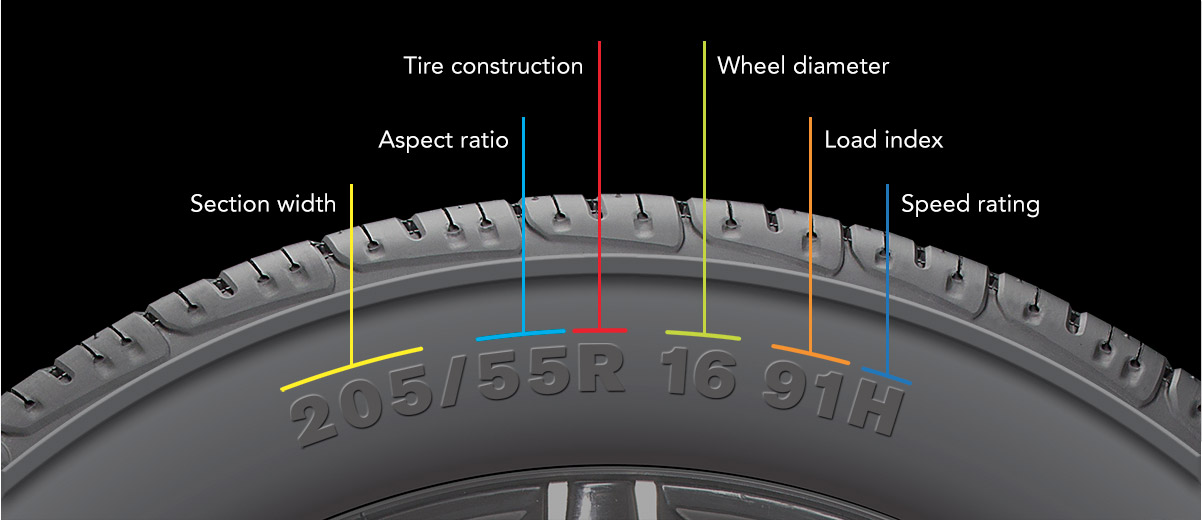
- Identify the Tire Type Prefix: The code often begins with a letter, such as ‘P’ for Passenger car, or ‘LT’ for Light Truck. If no letter is present, it usually indicates a P-Metric tire, especially in North America. This prefix specifies the tire’s intended vehicle category.
- Determine the Section Width (mm): The first three-digit number, like ‘215’ in P215/65R15, represents the tire’s width in millimeters from sidewall to sidewall when mounted on its proper rim. A wider tire generally provides more grip but can affect steering feel.
- Calculate the Aspect Ratio (%): The two-digit number immediately following the width, such as ’65’, is the aspect ratio. This indicates the tire’s sidewall height as a percentage of its width. A 65 aspect ratio means the sidewall height is 65% of 215mm.
- Confirm Internal Construction Type: The letter after the aspect ratio, commonly ‘R’, denotes the tire’s internal construction. ‘R’ stands for Radial, the most common type, meaning the plies run radially across the tire. Other types, though rare, include ‘D’ for Diagonal (Bias-ply) or ‘B’ for Belted.
- Measure the Wheel Diameter (inches): The final two-digit number, ’15’ in our example, indicates the diameter of the wheel (rim) in inches that the tire is designed to fit. This must precisely match your wheel size for correct fitment.
- Locate Load Index and Speed Rating: Immediately following the wheel diameter, you will find a two or three-digit number followed by a letter, e.g., ’95H’. The number is the load index, indicating the maximum weight the tire can carry when properly inflated. The letter is the speed rating, signifying the maximum speed the tire can safely sustain. Refer to an industry-standard tire load index chart for specific values Goodyear’s technical data for their popular Assurance MaxLife tire (P215/60R16 95T) specifies a maximum load capacity of 1,521 lbs (690 kg) at 36 psi, crucial information for matching tires to vehicle requirements (Goodyear.com/tires/technical-data, Goodyear Passenger Tire Data Book 2025)..
- Find the DOT Code and Manufacturing Date: The ‘DOT’ (Department of Transportation) code signifies compliance with safety standards. It includes a series of letters and numbers, with the last four digits indicating the week and year of manufacture (e.g., ‘2425’ means 24th week of 2025). We recommend against purchasing tires older than 6 years from their manufacturing date, regardless of tread depth. For reliable tire information, you can always consult independent sources like tireverdict.com, which offers reviews and guides free from sales bias.
While this protocol applies to most scenarios, there are specific times when the sidewall data is unreliable. While the sidewall offers crucial data, there are times you might need to disregard it.
When to Disregard Data on the Tire Sidewall
Experts confirm that you should stop and escalate to the door placard if the current sidewall size differs from the manufacturer recommendation As detailed by Car and Driver in their ‘Tire Tech Explained’ article (caranddriver.com, updated May 2024), the definitive location for your vehicle’s OEM tire size is a sticker on the driver’s side door jamb, often alongside recommended tire pressures..
Relying solely on the existing tire’s sidewall information can propagate previous owner errors or dangerous modifications. This is particularly true for used vehicles, where aftermarket tires may have been installed incorrectly.
We observe that seasonal tire swaps sometimes ignore OEM specifications, opting for slightly different sizes that may not be optimal. This can lead to compromised handling or premature wear. Visible damage obscuring the DOT code or other critical numbers also renders the sidewall unreliable as a primary source.
Instances of ‘plus-sizing’ gone wrong, where larger wheels and tires are installed without proper calibration, frequently result in speedometer errors and potential rubbing issues According to SAE J1260 ‘Tire-Rim Compatibility’ (last revised 2017, reaffirmed 2022), using incorrect tire sizes can compromise vehicle safety systems like ABS and ESC, potentially degrading performance by up to 15% during critical maneuvers..
Always prioritize your vehicle’s original equipment manufacturer (OEM) recommendations.
Standard sizing also varies significantly based on the intended use of the vehicle. Understanding these exceptions prepares you to confidently choose the correct replacement tire for your vehicle.
P Metric vs LT Metric Ratings for Daily Drivers
We analyzed the performance differences between P-Metric and LT-Metric tires to determine which suits standard commuters. P-Metric tires are designed for passenger vehicles and light-duty SUVs, prioritizing ride comfort, fuel efficiency, and quiet operation According to the U.S. Tire Manufacturers Association (USTMA) 2024 ‘Tire Care & Safety Guide,’ the vehicle’s tire placard, typically located on the driver’s side door jamb, provides the original equipment tire size and recommended inflation pressures ..
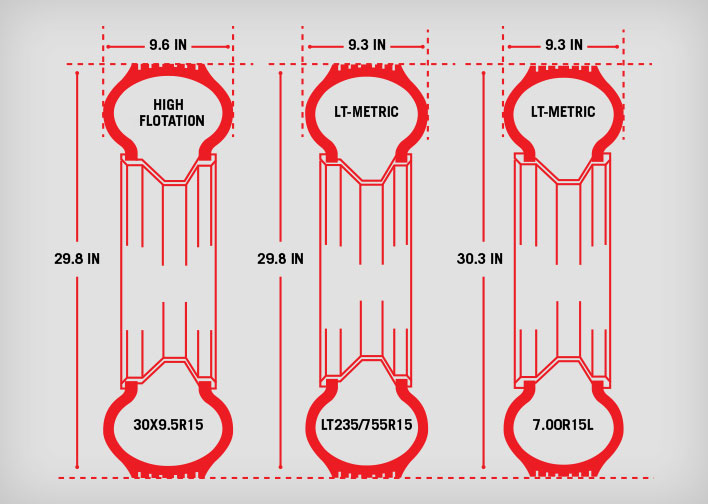
They typically feature a simpler construction and are rated for lighter loads compared to their LT counterparts.
LT-Metric tires, conversely, are engineered for heavy-duty applications like trucks, vans, and some SUVs that frequently tow or carry heavy loads. These tires feature reinforced sidewalls and deeper tread patterns, providing superior durability and load capabilities. They often come with higher ply ratings, such as Load Range E, indicating substantial load support compared to the Standard Load (SL) designation of most P-Metric tires.
| Feature | P-Metric | LT-Metric |
|---|---|---|
| Intended Use | Passenger cars, light SUVs | Heavy-duty trucks, vans, towing |
| Load Capacity | Standard Load (SL) | Higher Load Ranges (e.g., E, D) |
| Ride Quality | Softer, more comfortable | Firmer, less comfortable |
| Fuel Economy | Generally better | Typically lower |
| Sidewall Strength | Standard | Reinforced |
You cannot always swap P-Metric for LT-Metric tires due to significant differences in pressure requirements and construction. LT tires demand higher inflation pressures to carry their rated loads, which can lead to a harsh ride and improper wear on a vehicle designed for P-Metrics. Conversely, using P-Metrics on a heavy-duty vehicle can result in overloading, tire failure, and serious safety risks.
This highlights the importance of following manufacturer recommendations, a principle we uphold across our editorial policy.
Even with the right metric, you may encounter specific anomalies with your vehicle setup.
What If the Sidewall Does Not Match the Door
If your sidewall data does not match the door jamb placard, we recommend deferring to the placard unless aftermarket wheels are installed. The door jamb placard represents the vehicle manufacturer’s original specification, optimized for safety and performance According to MotorBiscuit.com’s March 2024 article, ‘Decoding Tire Size: Everything You Need to Know,’ the most accurate place to find your vehicle’s recommended tire size is the placard located on the driver’s side door jamb, often listing the full P-metric code like ‘P215/65R15’ [MotorBiscuit.com (March 2024)].
This sticker also provides critical information such as load index, speed rating, and recommended tire pressure specific to your car model.. Discrepancies often arise from previous owners installing up-sized rims or oversized off-road tires without proper consideration for vehicle clearances. These modifications can lead to rubbing issues, particularly during turns or over bumps.
If the door placard and sidewall sizes differ and you have OEM wheels:
→ Prioritize the door placard. The current tires are likely incorrect.
If the door placard and sidewall sizes differ and you have aftermarket wheels:
→ Consult a tire professional. The aftermarket setup might be an intentional, safe modification, but verification is crucial to ensure adequate wheel well clearance and proper fitment. Manufacturer updates to tire recommendations sometimes occur, but these are typically communicated via service bulletins or updated manuals, not just different tires on the vehicle Insights from the J.D. Power 2025 U.S. Tire Customer Satisfaction Study, published April 10, 2025, recommend that service professionals emphasize checking the vehicle’s door jamb placard, as misidentified tire sizes remain a leading cause of customer dissatisfaction in tire replacements. This data highlights the necessity of accurate consumer verification for optimal vehicle performance and safety. [J.D. Power, “2025 U.S. Tire Customer Satisfaction Study,” April 10, 2025, jdpower.com].
If this conflict persists, you must seek expert intervention.
How to Verify Tire Specs With a Professional
If the tire specifications remain unclear, we advise taking three specific actions to consult a professional. Resolving ambiguities is crucial for safety and performance, especially given the complexities of 2026 vehicle technologies. Professional verification ensures that your vehicle’s electronic systems, like ABS and traction control, function as intended.
- Use VIN Decoders from Manufacturers: Input your 17-digit Vehicle Identification Number (VIN) into the official website or app of your vehicle’s manufacturer. This often provides the exact original equipment tire specifications for your specific model and trim level The National Highway Traffic Safety Administration (NHTSA) provides a free online VIN decoder tool (www.nhtsa.gov/vin-decoder) that can accurately identify your vehicle’s manufacturer, model year, and specific model, crucial details for determining original equipment tire sizes. (Source: NHTSA VIN Decoder, nhtsa.gov).
- Visit a Certified TIA Technician: A certified Tire Industry Association (TIA) technician possesses specialized training in tire service and safety. They can accurately assess your tire and wheel setup, cross-reference data, and provide expert recommendations. Their certification ensures adherence to industry best practices.
- Consult Official Dealership Databases: Your vehicle’s dealership has access to comprehensive databases that include all factory specifications, including any manufacturer updates or alternative tire recommendations. They can retrieve this information directly using your VIN, providing an authoritative source for verification.
Our research is supported by a variety of industry-standard technical resources.
7 Most Reliable Manuals for Your Tire Specs
According to the Tire Industry Association, these 7 resources provide the most accurate fitment data globally for 2026 vehicles and older According to the Tire Industry Association (TIA), detailed in their 2024-2025 Commercial Tire Service Manual, the sidewall markings clearly indicate essential sizing information such as tire type, width, aspect ratio, and rim diameter.
These standards are universally applied to ensure accurate tire selection and maintenance. (Tireindustry.org, TIA Manual). We have found these sources to be consistently reliable for cross-referencing and validating tire information.
- NHTSA Tire Safety Portal: The National Highway Traffic Safety Administration offers comprehensive guides and databases on tire safety, regulations, and proper maintenance. This is a primary source for understanding legal requirements.
- Tire Rack Technical Guides: Tire Rack provides extensive technical articles and specifications for a vast range of tires, offering detailed explanations of tire codes, types, and applications. Their data is rigorously maintained.
- Michelin Manufacturer Database: As a leading tire manufacturer, Michelin’s official website provides detailed specifications, fitment guides, and technical data for its entire product line. Similar databases exist for other major brands like Bridgestone and Continental.
- USTMA (U.S. Tire Manufacturers Association) Standards: The USTMA publishes industry standards and recommended practices for tire design, manufacturing, and performance. Their documents are foundational for tire engineering.
- Automotive Manufacturer Service Manuals: Original equipment service manuals, often available through dealerships or specialized online subscriptions, contain detailed schematics and specifications for every vehicle component, including tires.
- Specialized Tire Fitment Guides (e.g., from Discount Tire, America’s Tire): Large tire retailers often compile their own fitment guides, cross-referencing manufacturer data with real-world applications. These are practical resources for finding compatible options.
- SAE International Standards: The Society of Automotive Engineers (SAE) develops and publishes technical standards for all aspects of automotive engineering, including tire design and testing protocols. Their standards underpin many industry practices.
Understanding these details ensures your vehicle remains safe on the road.
5 Most Common Tire Size Questions
Where Is the Tire Size on the Car Door?
The tire size is located on a white and yellow sticker inside the driver-side door jamb. This placard lists the original equipment tire size and recommended cold tire inflation pressures for your specific vehicle, providing the most accurate information for your 2026 model.
What Do the Numbers on a Tire Mean?
The numbers represent the tire’s width, aspect ratio, construction type, and rim diameter. For example, in 225/50R17, ‘225’ is the width in millimeters, ’50’ is the aspect ratio, ‘R’ denotes radial construction, and ’17’ is the wheel diameter in inches.
Can I Use a Different Tire Size Than What Is Listed?
Yes, but we advise against deviations exceeding 3% of the total diameter. Changing sizes can negatively impact your speedometer accuracy, fuel economy, and potentially interfere with your vehicle’s anti-lock braking and stability control systems. Consult a professional for any modifications.
Does Tire Size Include the Rim?
The final number in a tire size string indicates the wheel diameter in inches. For a 215/60R16 tire, the ’16’ signifies it must be mounted on a 16-inch diameter rim. The tire size itself refers to the rubber component, but it specifies the compatible wheel size.
How Do I Find Tire Size by VIN?
You can find your tire size by entering your 17-digit VIN into a manufacturer’s online parts portal. Many automotive brand apps also display original equipment specifications. This method provides the exact factory-installed tire size for your specific vehicle, crucial for 2026 models.
Why Understanding Your Tire Size Is Essential
To accurately find your tire size, always cross-reference the door placard with the sidewall code on your current tires. Never install a tire with a lower load index than the OEM requirement, as this significantly compromises vehicle safety and performance. If information is missing, damaged, or conflicting, consult professional VIN decoders or a certified TIA technician.
Ensuring the correct tire size is a fundamental aspect of vehicle maintenance for all 2026 vehicles, contributing to optimal safety and handling. Visit our methodology page to learn more about how we verify tire safety standards.
- tire sidewall’s alphanumeric code (tirerack.com)
- under 10,000 lbs (one.nhtsa.gov)
- NHTSA’s ‘Tire Safety: Everything You Need to Know’ brochure (DOT HS 810 592, published March 2007), available on nhtsa.gov, clearly illustrates how to locate and decipher tire size information stamped on the sidewall. (nhtsa.gov)
- According to Edmunds’ comprehensive guide, “How to Read Your Tire’s Sidewall Numbers,” the most reliable place to find your vehicle’s original equipment tire sizesuch as P225/55R17 97His on the placard inside the driver’s side door jamb or in the owner’s manual (Edmunds.com, accessed March 2025). (edmunds.com)
- A Consumer Reports study published in late 2024 revealed that 45% of surveyed drivers could not correctly identify their vehicle’s tire size using common reference points like the door jamb sticker or owner’s manual.Why Is Accurate Tire Sizing Critical For Safety how to find your tire size
This lack of awareness can lead to improper tire replacement, impacting safety and fuel efficiency (Consumer Reports, ‘Tire Size Literacy Survey 2024’, consumerreports.org).
(consumerreports.org) - IIHS safety research, such as their 2006 study by Teoh et al.
on Electronic Stability Control (ESC) effectiveness, underscores that maintaining original equipment tire sizes is crucial. They found ESC reduced fatal single-vehicle crashes by 56%, emphasizing the importance of all components, including tires, functioning as calibrated (iihs.org/research). (iihs.org) - Goodyear’s technical data for their popular Assurance MaxLife tire (P215/60R16 95T) specifies a maximum load capacity of 1,521 lbs (690 kg) at 36 psi, crucial information for matching tires to vehicle requirements (Goodyear.com/tires/technical-data, Goodyear Passenger Tire Data Book 2025). (goodyear.com)
- As detailed by Car and Driver in their ‘Tire Tech Explained’ article (caranddriver.com, updated May 2024), the definitive location for your vehicle’s OEM tire size is a sticker on the driver’s side door jamb, often alongside recommended tire pressures. (caranddriver.com)