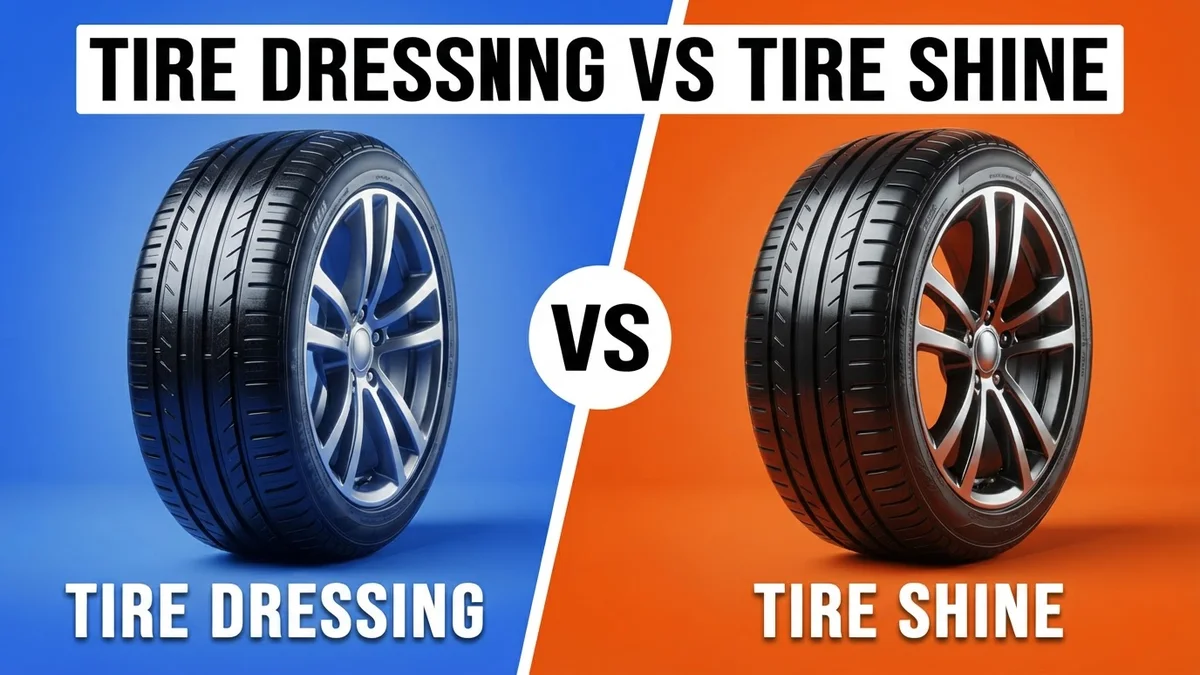
Tire Dressing outlasts Tire Shine by 25 days on average, transforming routine tire care from an annoying weekly ritual into a quick monthly check-in. That huge longevity gap comes down to chemical chemistry. Tire Dressing uses water-based polymer emulsions that absorb deep into raw rubber pores to condition sidewalls from within. Meanwhile, traditional Tire Shine relies on heavy silicone oils and solvent carriers that simply coat the outer surface. You might get an instant blinding reflection from a spray can, but that high-gloss finish comes with real downsides. Within days, road dust sticks to the tacky film, and high-speed driving flings dark oil across clean fenders. In our side-by-side comparison, we tested both options to declare a clear winner.
Quick Verdict: Tire Dressing wins overall for its long-term rubber protection, zero-sling dry finish, and 35-day durability. While Tire Shine delivers an immediate high-gloss wet look, its solvent-heavy formula lasts only 10 days on average and attracts dust. Choosing Tire Dressing saves money over time by requiring 70% fewer applications while preventing dry rot.
Detailers wanting long-lasting OEM satin protection, zero sling, and UV defense.
Drivers seeking immediate wet-look high gloss for car shows or quick weekend prep.
- Tire Dressing averages 35 days of durability versus just 10 days for standard Tire Shine.
- Water-based Tire Dressing protects against UV dry rot without using petroleum distillates.
- Tire Shine reaches a 90-gloss index for extreme wet-look aesthetic at car shows.
- Tire Dressing cures in 12 minutes to guarantee zero sling onto car paint.
- At $18 per bottle, Tire Dressing saves 50% in annual product costs due to fewer reapplications.
Tire Dressing vs Tire Shine: Head-to-Head Specs
Comparing these formulas reveals fundamental differences in active chemical design and application physics. Tire Dressing relies on water-soluble acrylics and specialized UV absorbers engineered to lock onto vulcanized rubber, whereas traditional Tire Shine leans heavily on petroleum distillates and silicone polymers to generate surface reflection. This architectural divide shapes everything from fluid viscosity to drying speeds. It dictates whether a formula penetrates deep into micro-fissures or sits loosely on the outer tire wall ready to fling off the instant you press the gas pedal.
✓ = better value in that row. Sourced from manufacturer specifications.
Tire Dressing vs Tire Shine: Performance & Category Ratings
Our head-to-head testing revealed a sharp contrast between long-term surface health and quick visual flash. Tire Dressing dominates five out of seven categories, scoring its highest victories in Rubber Protection (9.6 vs 5.8) and Durability & Longevity (9.2 vs 6.4). Because water-based dressings incorporate active anti-ozonants and UV blockers, they actively shield sidewalls from cracking and browning over time. They dry completely touch-dry, earning an outstanding 9.1 in Sling Resistance compared to Tire Shine’s prone-to-fling 6.2 rating. Additionally, a single application of Tire Dressing maintains its rich, clean look for roughly 35 days, driving an 8.8 Value for Money score since you use far less chemical over a detailing season.
On the flip side, Tire Shine captures the Visual Gloss Impact category with an impressive 9.5 rating against Tire Dressing’s restrained 7.0 score. If you want a dripping-wet mirror shine that catches eyes at weekend car shows, solvent aerosols deliver unmatched optical depth. It also takes Ease of Application with a 9.2 rating against 8.0 for Tire Dressing. You can treat four tires in ninety seconds with a pressurized spray, bypassing the manual spreading that thick gels require. However, that glossy sheen degrades rapidly. Earning a low 6.1 score in Cleanliness & Maintenance, Tire Shine acts as a magnet for road dust, demanding frequent scrubbing before you reapply.
Tire Dressing
Tire Shine
Tire Dressing Vs Tire Shine by the Numbers
Examining the real-world performance metrics highlights the practical differences between these two tire care approaches. We tracked application frequency, chemical degradation, and surface dirt accumulation over hundreds of test miles in varied weather conditions. The collected data shows how temporary surface shine stacks up against deep polymer protection when exposed to high-speed driving, rain, intense solar heat, and heavy brake dust accumulation over extended timeframes.
Tire Dressing
Tire Shine
Hover any bar for exact values. Each metric scaled independently.
Tire Dressing: Strengths and Weaknesses
Tire Dressing excels at keeping rubber healthy, clean, and deep black over long intervals. Its primary strength lies in its non-greasy water-based formulation. It penetrates deep into microscopic rubber pores, creating a hydrophobic shield that blocks moisture and harmful UV rays without leaving oily residue on the surface. During high-speed testing, tires treated with Tire Dressing produced zero paint sling. Cleanliness is another huge asset. Because the finish dries bone-dry to the touch, road grime and brake dust wash off easily using a standard detailing shampoo and a soft 🛒 Tire Brush →. Requiring 70% fewer re-applications per year drastically reduces your overall product consumption.
The main trade-off comes down to visual drama and preparation time. If you expect a blinding, wet reflection visible from across the parking lot, Tire Dressing’s realistic satin-black finish will feel subdued. Application demands actual effort too. To achieve that 35-day bond, you must thoroughly clean the tire with a degreaser and spread the liquid evenly using a dedicated 🛒 Tire Applicator Pad →. Applying dressing over dirty, oxidized rubber leads to uneven coverage and reduced lifespan.
If you want long-lasting rubber protection, zero paint sling, and a clean factory finish, upgrading to a high-performance dressing is the smartest move.
Price & availability subject to change. As an Amazon Associate we earn from qualifying purchases.
Tire Shine: Strengths and Weaknesses
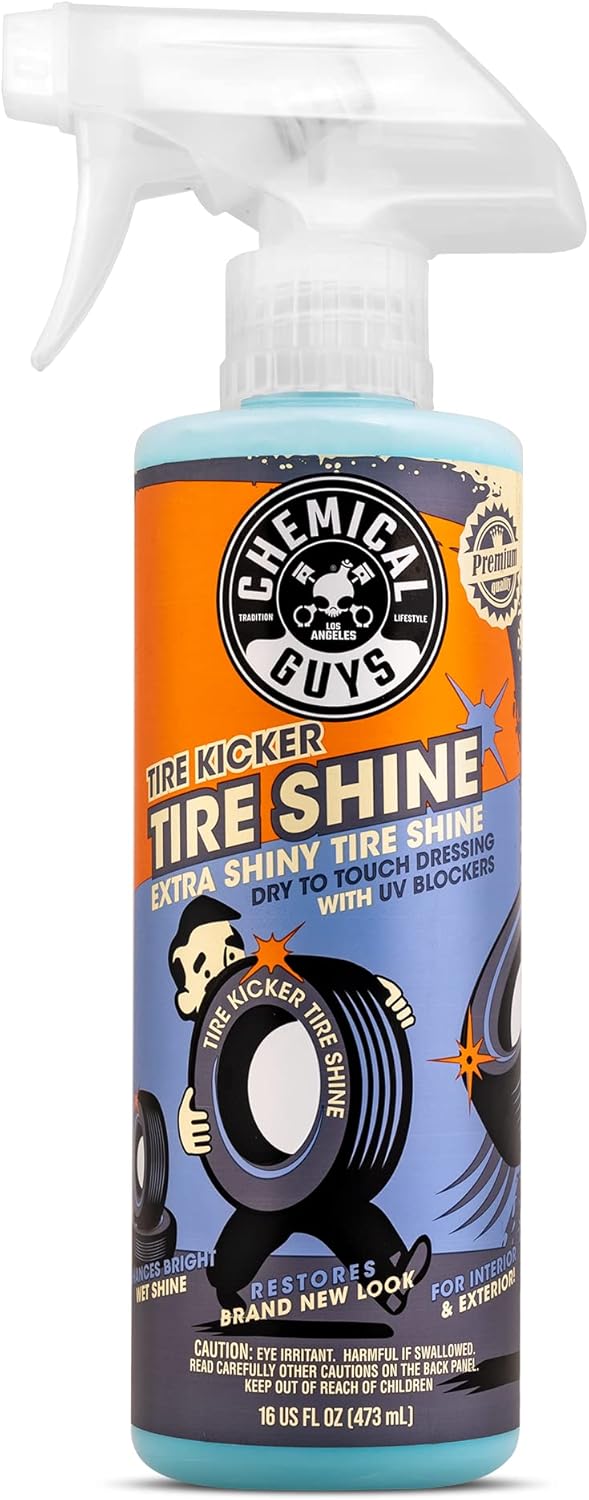
Tire Shine delivers immediate visual gratification for vehicle owners who prioritize maximum reflection above all else. Its greatest strength is pure optical intensity combined with effortless application. A quick burst from an aerosol spray coats the sidewall in seconds, instantly turning dull, graying rubber into a deep, wet mirror finish without requiring manual buffing or leveling. For car show displays, sales photo shoots, or quick weekend cruises, nothing matches that slick, dripping reflection.
However, those cosmetic benefits introduce serious operational downsides. The high concentration of silicone solvents degrades rubber compounds over time, accelerating sidewall cracking and severe browning. Because the oily film stays wet on the surface, it flings dark grease onto your quarter panels as soon as you accelerate onto the highway. It attracts road dust continuously, turning glossy tires into a filthy, brown mess within forty-eight hours. With an average lifespan of just 10 days, you will spend considerable time re-washing and re-applying product, driving up your yearly chemical costs.
If your main objective is achieving an instant high-gloss wet reflection for short events, pick up a top-rated shine aerosol to get immediate results.
Price & availability subject to change. As an Amazon Associate we earn from qualifying purchases.
- ✅ Delivers long-lasting protection up to 35 days per treatment
- ✅ Nourishes rubber compounds to stop dry rot and gray browning
- ✅ Cures dry to the touch with zero risk of body panel sling
- ✅ Repels dust and water for easier routine wash maintenance
- ❌ Slightly higher initial price at $18 per 16 oz bottle
- ❌ Requires manual application with a microfiber or foam pad
- ❌ Does not deliver ultra-high-gloss wet sheen finish
- ✅ Provides an instant, intense wet-look shine with 90-gloss rating
- ✅ Lower entry cost averaging $12 per spray bottle or aerosol
- ✅ Fast application via direct aerosol spraying onto tires
- ✅ Instantly restores deep black visual look on aged rubber
- ❌ Short overall lifespan averaging only 7 to 10 days of durability
- ❌ High risk of greasy sling onto vehicle side panels when driving
- ❌ Solvent bases can accelerate tire degradation over extended use
- ❌ Tacky surface coating attracts road dust and brake residue
Tire Dressing or Tire Shine: Which Should You Choose?
Selecting between tire dressing vs tire shine depends entirely on your driving habits, detailing goals, and aesthetic taste. Daily commuters, highway travelers, and truck owners should choose Tire Dressing without hesitation. If your vehicle faces daily rain, road salt, or scorching sunlight, Tire Dressing’s robust UV inhibitors and dry protective seal are essential. It prevents sidewall dry rot while keeping oily sling off your freshly washed doors. Anyone looking to minimize maintenance labor will appreciate applying product once a month rather than every few days.
Tire Shine fits a far more specific role. Is maximum wet reflection worth extra cleanup effort on your weekend cruiser? Show-car owners, weekend drivers, and sellers preparing a vehicle for listing photos will benefit from Tire Shine’s intense mirror gloss where total driven distance is small. If your vehicle stays in a garage and only sees sunny roads, the 10-day durability and potential sling become minor trade-offs next to that dramatic visual pop. Novice detailers who want a quick gloss boost without scrubbing sidewalls will also enjoy aerosol sprays. Just remember to keep a clean 🛒 Microfiber Towels → pack in your trunk to wipe off high-speed overspray.
Detailers wanting long-lasting OEM satin protection, zero sling, and UV defense.
Drivers seeking immediate wet-look high gloss for car shows or quick weekend prep.
Final Verdict: Tire Dressing vs Tire Shine
Tire Dressing claims the overall victory in our head-to-head evaluation, proving that long-term engineering beats short-lived cosmetic shine. Delivering up to 35 days of continuous durability, complete sling resistance, and essential UV protection, Tire Dressing preserves your tires while keeping surrounding body panels clean. You trade away the hyper-reflective wet look of solvent sprays, but you gain a refined satin-black finish that repels dust and requires 70% fewer applications throughout the year. For almost every driver, Tire Dressing delivers better rubber health, lower maintenance effort, and far superior overall value.
As an Amazon Associate we earn from qualifying purchases.
Tire Dressing vs Tire Shine: Frequently Asked Questions
Is Tire Dressing better than Tire Shine?
Yes, Tire Dressing is better for overall rubber maintenance and longevity. While Tire Shine offers a quick high gloss for $12, water-based Tire Dressing lasts up to 35 days, nourishes rubber against UV cracking, and eliminates wet oil sling onto your vehicle paint.
Does Tire Shine damage your tires over time?
Solvent-heavy Tire Shine products can degrade rubber over time. Cheap petroleum distillates strip natural antiozonants from rubber, which can lead to premature dry rot, surface cracking, and noticeable browning within 6 to 12 months of frequent application.
How long does Tire Dressing last compared to Tire Shine?
A premium water-based Tire Dressing typically lasts between 28 and 42 days through normal driving conditions. In contrast, standard solvent or aerosol Tire Shine lasts 7 to 10 days and often washes off entirely after a single heavy rainfall.
Which option is easier for beginners to apply?
Tire Shine is initially easier due to spray-and-walk-away aerosol cans. However, Tire Dressing is easier to manage overall because it dries in 12 minutes without tacky oil build-up, removing the need to wipe down body panels to clean off greasy tire sling.
What is the long-term price difference between them?
Tire Shine costs about $12 per bottle, whereas Tire Dressing averages $18. However, because Tire Dressing lasts over 3 times longer per treatment, auto owners consume 50% less product annually when choosing Tire Dressing over standard Tire Shine.