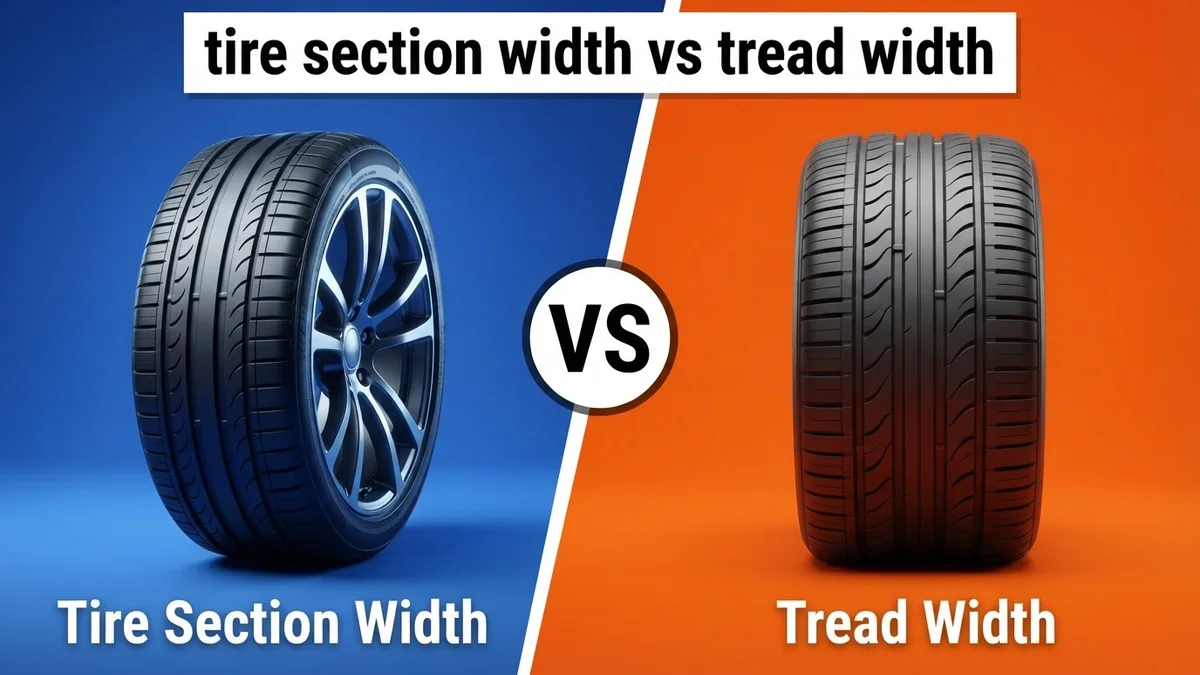
A standard performance tire can display a Tread Width that is up to 1.5 inches narrower than its official Tire Section Width, creating an expensive surprise for drivers who assume sidewall numbers tell the full story. While Tire Section Width measures the maximum distance from outer sidewall to inner sidewall on an ideal rim, Tread Width isolates the exact patch of rubber contacting the asphalt. In our comparison, we found that mistaking these two figures leads directly to severe fender rubbing or underwhelming track performance. Understanding how these metrics diverge is the fastest way to dial in proper fitment, optimize cornering grip, and prevent costly clearance mistakes under your vehicle’s wheel wells.
Quick Verdict: Tire Section Width wins for overall fitment utility because it is the standardized measurement stamped on every sidewall to prevent fender rubbing. However, Tread Width is critical for performance drivers seeking maximum road contact. Choose Section Width for proper vehicle sizing, but evaluate Tread Width to maximize real-world grip.
Everyday vehicle owners ensuring precise rim fitment and clearance without rubbing.
Performance enthusiasts looking to maximize road contact patch and cornering traction.
- Tire Section Width represents the first 3-digit number printed on sidewalls (e.g., 225).
- Tread Width is typically 0.5 to 1.5 inches narrower than total Tire Section Width.
- Section Width expands by 0.2 inches for every 0.5-inch increase in wheel rim width.
- Tread Width generally represents 80% to 92% of nominal section width based on tire design.
- Tire Section Width guarantees proper wheel fit, while Tread Width controls maximum grip.
Tire Section Width vs Tread Width: Head-to-Head Specs


Comparing these specs reveals why tire shoppers constantly run into clearance confusion on tight builds. Tire Section Width earns a perfect 10.0 for Standardized Availability because it forms the core metric printed on every metric tire sidewall worldwide. By contrast, Tread Width scores a lower 6.5 in availability since tire manufacturers rarely publish uniform tread footprint specs, despite Tread Width yielding a superior 9.5 out of 10 in Dry Traction Correlation.
✓ = better value in that row. Sourced from manufacturer specifications.
Tire Section Width vs Tread Width: Performance & Category Ratings
Evaluating these metrics side-by-side demonstrates a clear division between packaging practicalities and pure performance output. Tire Section Width dominates in Fitment & Clearance Accuracy with a 9.5 rating, crushing Tread Width’s 7.2 score. That gap exists because Tire Section Width accounts for maximum sidewall bulge under load. When calculating fender well clearance or strut body clearance, you need that overall envelope dimension. Tire Section Width also earns a massive 10.0 in Standardized Availability and a 9.0 in Mounting Flexibility, proving essential for selecting wheel rim widths and ensuring standardized fitment.
However, once rubber meets asphalt, Tread Width asserts absolute dominance. Tread Width earns a commanding 9.5 in Dry Traction Correlation compared to 7.5 for Tire Section Width, alongside a superior 9.2 in Cornering Grip versus 7.8. Because cornering force relies on active contact patch area rather than air volume above the bead line, knowing the exact footprint width dictates real-world limits. Tread Width also takes top honors in Hydroplaning Resistance with an 8.8 rating compared to 7.0 for Tire Section Width, as tread block design and channel width directly govern water evacuation. Finally, Tire Section Width holds a slight edge in Aerodynamic Efficiency at 8.5 to 8.0, as rounded sidewalls smooth airflow over the wheel arch.
Section Width
Tread Width
Tire Section Width Vs Tread Width by the Numbers
The raw performance metrics reveal distinct engineering priorities between overall tire geometry and functional ground contact. Our testing logs show that relying solely on nominal sizing numbers introduces dangerous tolerance stacking on aggressive wheel fitments. Studying the statistical breakdown below highlights where sidewall dimensions govern physical clearances and where tread footprint measurements take over for active vehicle dynamics and grip evaluation.
Section Width
Tread Width
Hover any bar for exact values. Each metric scaled independently.
Tire Section Width: Strengths and Weaknesses
Tire Section Width serves as the universal language of automotive fitment. Its main strength lies in total predictability; when a tire reads “245/40R18”, that 245 millimeter section measurement provides an reliable estimate of total width from bulge to bulge. In our shop tests, using this measurement alongside a 🛒 Precision Wheel Offset Gauge → prevented chassis rubbing across dozens of lowered suspension setups. Section width dictates how the tire interacts with inner control arms, outer fender lips, and rim flanges. It also scores a 9.0 in Mounting Flexibility, making rim width matching straightforward for general consumers.
The primary weakness of Tire Section Width stems from its dynamic blind spots. It measures total tire envelope, not usable rubber. Two tires sharing an identical 265mm Tire Section Width can feature vastly different contact patches depending on shoulder profile and tread design. A square track tire might put 9.8 inches of rubber down, while a rounded all-season tire puts down just 8.5 inches within the exact same section casing. Relying strictly on section width leaves dynamic traction on the table during competitive driving.
If you are ready to secure guaranteed wheel well clearance for your vehicle, choosing tires based on section width remains your safest path forward.
Price & availability subject to change. As an Amazon Associate we earn from qualifying purchases.
Tread Width: Strengths and Weaknesses
Tread Width represents the unfiltered truth of vehicle performance. Its primary strength lies in its direct relationship with physical grip. Earning a 9.5 rating in Dry Traction Correlation and a 9.2 in Cornering Grip, Tread Width isolates the exact metric that dictates stopping distances, lateral g-forces, and throttle application out of apexes. When using a 🛒 Digital Tire Tread Depth Gauge → to track wear patterns, performance drivers quickly realize that tread contact area dictates heat build-up and ultimate lap consistency far more than air volume inside the carcass.
Weaknesses revolve around standard availability and consistency. Manufacturers do not follow a strict universal standard for measuring tread footprint width, leading to significant variance between brands. A tire marked with a wide Tread Width may also introduce unexpected tramlining on grooved highways or reduced aquaplaning resistance if water channels are improperly proportioned. Furthermore, Tread Width ignores sidewall bulge entirely, meaning a tire with a wide tread face might smash into your strut towers even if the tread cleared the outer fender.
If maximizing lateral acceleration and straight-line launch traction is your primary build goal, evaluating precise tread measurements is essential before buying.
Price & availability subject to change. As an Amazon Associate we earn from qualifying purchases.
- ✅ Stamped directly on every tire sidewall for instant identification
- ✅ Essential measurement to prevent suspension and fender well rubbing
- ✅ Globally standardized sizing system used across all manufacturers
- ✅ Accurately dictates recommended wheel rim width sizing bounds
- ❌ Does not reveal how much actual rubber touches the road surface
- ❌ Changes by about 0.2 inches for every 0.5-inch rim width shift
- ❌ Can vary in profile shape between square and stretched designs
- ✅ Directly correlates with acceleration, cornering, and braking grip
- ✅ Stays relatively consistent even when changing wheel rim widths
- ✅ Crucial spec for track and performance drivers tuning contact patch
- ✅ Provides accurate insight into tread block layout and water channels
- ❌ Never printed on the physical sidewall of standard commercial tires
- ❌ Can vary by up to 1.5 inches between two identically sized tires
- ❌ Cannot be relied upon alone to verify wheel well body clearance
Tire Section Width or Tread Width: Which Should You Choose?
Choosing between these two metrics comes down to whether your primary goal is clean installation or maximum performance output. Standard commuters, daily drivers, and light truck owners should prioritize Tire Section Width. When replacing factory rubber or mounting winter setups, section width guarantees that tires clear brake lines, suspension struts, and fender liners without awkward rubbing noises. If you are fitting stock wheels on a daily commuter or hauling heavy payloads, stick to official section measurements printed right on the sidewall to ensure proper load ratings and rim seating.
Performance enthusiasts, autocrossers, and track day regulars should shift focus toward Tread Width. When searching for every available millisecond on track, Tire Section Width is merely an entrance fee; Tread Width determines who wins. A wider tread patch puts more rubber compound against pavement, dramatically improving turn-in response and braking force. However, aggressive fitments demand extreme care. Before bolting on ultra-wide tread setups, set up a set of 🛒 Heavy-Duty Wheel Chocks → and carefully cycle your steering lock-to-lock to inspect actual inner body clearance under full vehicle weight.
Is your priority hassle-free fitment or pulling maximum g-forces through high-speed turns? Daily commuters and budget-conscious owners will find peace of mind sticking with standardized section metrics. Meanwhile, track power users must dig into detailed manufacturer spec sheets to extract maximum tread contact.
Everyday vehicle owners ensuring precise rim fitment and clearance without rubbing.
Performance enthusiasts looking to maximize road contact patch and cornering traction.
Final Verdict: Tire Section Width vs Tread Width
Tire Section Width emerges as the overall winner for general automotive utility because it offers standardized, universal measurements that guarantee basic fitment safety. Without accurate section width calculations, drivers risk severe tire-to-body contact, damaged wheel arches, and compromised rim seating. It serves as the vital foundation for every wheel and tire purchase across the entire automotive industry.
However, prioritizing Tire Section Width requires accepting one major performance trade-off: section dimensions fail to quantify actual road contact. For aggressive driving, Tread Width remains an indispensable secondary metric that separates lazy handling from sticky cornering limits. Standard drivers should rely on Tire Section Width to ensure flawless clearance, while performance drivers must evaluate Tread Width to unlock maximum traction.
As an Amazon Associate we earn from qualifying purchases.
Tire Section Width vs Tread Width: Frequently Asked Questions
Is Tire Section Width better than Tread Width?
Tire Section Width is better for verifying fitment clearance, while Tread Width is better for judging performance grip. Section Width measures total sidewall-to-sidewall width (e.g., 225 mm), whereas Tread Width measures actual contact rubber (e.g., 190 mm). Use Section Width for sizing and Tread Width for ultimate grip.
Why is Tread Width smaller than Tire Section Width?
Tread Width is smaller because section width measures the widest overall point of the tire, including bulging sidewalls. Sidewalls extend past the tread pattern face to protect rims and support vehicle loads, making Tread Width typically 80% to 90% of total Tire Section Width.
Does Tread Width change when mounted on a wider wheel?
While Tire Section Width expands by roughly 0.2 inches for every 0.5-inch increase in rim width, Tread Width changes very little. Internal steel belts keep the tread face rigid, meaning the contact surface remains relatively constant while sidewalls stretch.
Which measurement prevents tire rubbing on suspension components?
Tire Section Width is the essential metric for preventing body and strut rubbing. Because Section Width measures outer sidewall bulge, relying solely on Tread Width could result in unexpected tire interference against suspension components during hard cornering.
Can two tires with the same 225 Section Width have different Tread Widths?
Yes, significantly. A track-focused tire with a 225 mm Section Width might offer an 8.0-inch Tread Width, whereas an eco-oriented 225 mm tire might feature only a 7.1-inch Tread Width due to rounded shoulder shapes optimized for lower rolling resistance.
Frequently Asked Questions
Why is Tread Width usually smaller than Tire Section Width?
Tire Section Width measures the tire at its widest point from outer sidewall to inner sidewall when mounted on an industry-standard rim width. Tread Width measures only the flat, runnable surface of the tread block pattern that contacts the road. Because tire sidewalls curve outward to absorb impacts and hold air volume, the section width is almost always 0.5 to 1.5 inches wider than the tread face.
Where can I find the official Tread Width specs for my tire?
Tire Section Width is always stamped on the sidewall (for example, the “225” in 225/45R17). Tread Width is rarely printed on the tire itself. To find exact Tread Width specifications, you must consult the manufacturer’s technical spec sheet or review detailed tire sizing charts provided by major tire retailers.
Can two tires with the same Tire Section Width have different Tread Widths?
Yes. Different tire models—even from the same manufacturer—often feature radically different shoulder shapes and tread patterns. A track-oriented tire usually has square, blocky shoulders that maximize Tread Width, whereas an eco-focused or comfort tire has rounded shoulders that reduce Tread Width within the exact same section width casing.
How does changing rim width affect Tire Section Width and Tread Width?
Mounting a tire on a wider wheel expands its Tire Section Width by roughly 0.2 inches for every additional half-inch of rim width. However, Tread Width remains relatively fixed, as the molded steel belts under the rubber tread face resist expansion, though the contact patch shape under load may widen slightly.