
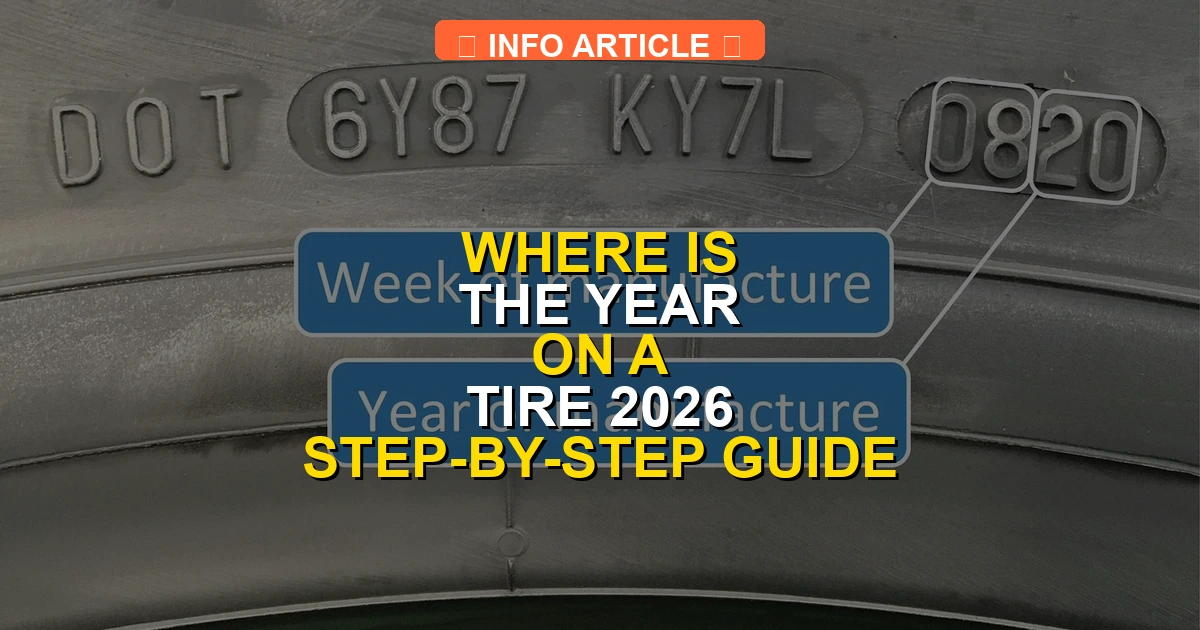
The manufacturing date on a tire is located inside a small rectangular box or oval on the sidewall, designated by the letters DOT. The final four digits of this code indicate the exact week and year the tire was built. Checking this code helps determine if an aging tire needs replacement for safety reasons.
The manufacturing year on a car tire is located inside a string of characters that begins with the letters DOT, found stamped directly into the rubber sidewall. On modern tires manufactured for the 2026 market, this date is represented by a strict four-digit code at the very end of that long serial number, where the first two digits indicate the production week and the last two digits show the production year.
Checking this date matters because rubber degrades over time regardless of tread depth. Even if a tire looks brand new when buying used or inspecting your current vehicle in 2026, rubber compounds dry out, harden, and lose structural integrity after six to ten years. Knowing exactly where to look prevents you from driving on dangerously aged tires that are prone to sudden failure on the highway.
Key Takeaways
- Locate the letters DOT on the outer or inner sidewall.
- Scan the end of the DOT code for a four-digit number.
- The first two digits represent the manufacturing week.
- The last two digits indicate the manufacturing year.
- Tires older than six years generally require professional inspection.
What Causes Confusion When Searching for the Manufacturing Year on a Tire
The Inner Sidewall Blind Spot
Many drivers search frantically across the outward-facing side of their tires and find nothing resembling a date code. This happens because tire technicians do not always mount tires with the serial numbers facing outward. Manufacturers print the full Department of Transportation serial code on both sides of the tire, but they only include the crucial four-digit date stamp on one side. If your tires were mounted with the date code facing inward toward the vehicle frame, you will not see it from a normal standing position.

Overwhelming Serial Number Codes
The sidewall of a modern tire features a massive amount of raised lettering, which creates visual clutter. You will see maximum load ratings, size specifications, safety warnings, and brand names clustered together. Drivers often mistake plant codes or size matrices for the actual age of the tire. To clear up this confusion, you need to ignore the size markings and hunt specifically for the letters DOT followed by a sequence of up to twelve letters and numbers.
Master Tire Age Identification in 6 Simple Steps
Understanding the exact age of your vehicle’s tires is critical for your safety on the road, as rubber degrades over time regardless of tread depth. This comprehensive walkthrough will teach you precisely how to locate and decode the manufacturing date stamped on any tire, ensuring you never buy or drive on dangerously old rubber again.
Step 1: Locate the Tire Sidewall
What you need: Good lighting, a flashlight or your smartphone light, and optionally a clean rag to wipe away built-up road grime.
Instructions: Walk around your vehicle and crouch down next to the first tire you want to inspect. Examine the entire outer sidewall from the outer tread edge down to the metal wheel rim. Manufacturers stamp various technical specifications, brand names, and regulatory codes directly into the rubber on the side of the tire. You are looking for a specific series of letters and numbers rather than a typical calendar date. Make sure to check the outer-facing sidewall first, as it is much easier to access without getting underneath the vehicle chassis.
Pro Tip: On some vehicles, particularly those with asymmetrical or directional tires installed backward during a previous rotation, the date code might be stamped on the inner sidewall facing the engine or suspension. If you cannot find the code on the outside, you will need to peek behind the tire.
Step 2: Spot the Letters “DOT”
What you need: Your flashlight and an observant eye to scan the complex wall markings.
Instructions: Carefully scan the outer sidewall for the letters “DOT,” which stands for the Department of Transportation. This acronym indicates that the tire complies with all applicable United States federal safety standards. Directly following or located near the “DOT” prefix, you will see a long alphanumeric string consisting of 10 to 13 total characters. This is the Tire Identification Number, often referred to as the DOT serial number. The date code you are searching for is always the final group of digits at the very end of this long sequence.
Pro Tip: Do not confuse the DOT serial number with the maximum load or maximum pressure ratings, which are usually marked much more prominently in large, bold numbers.
Step 3: Isolate the Final Four Digits
What you need: Patience to filter out manufacturer plant codes, size codes, and production batch numbers.
Instructions: Trace your eyes along the DOT string until you reach the very end of the sequence. On modern tires manufactured after the year 2000, the date code is universally a standalone block of exactly four consecutive numeric digits. Ignore the letters and numbers at the beginning and middle of the DOT string, as these represent the manufacturing plant location, tire size, and private company codes. Focus exclusively on the last four numbers, which are sometimes (though not always) enclosed inside a small, recessed rectangular box with rounded corners.
Pro Tip: If you find a three-digit code instead of a four-digit code, stop immediately—your tire was manufactured before the year 2000 and is critically unsafe for highway driving due to extreme rubber degradation.
Step 4: Decode the Week of Manufacture
What you need: Basic arithmetic skills and a standard calendar to translate production weeks.
Instructions: Look at the first two digits of the four-digit date code block. These two numbers represent the exact week of the calendar year that the tire was built, running from 01 through 52. For example, if the first two digits are “24,” it means the tire rolled out of the manufacturing plant during the 24th week of that year, which roughly translates to early June. Keep in mind that weeks do not align neatly with calendar months, so week 01 is early January and week 52 is late December.
Pro Tip: Never assume all four tires on a used car are the same age; always check the date code on every individual wheel, as spares or single replacements are frequently swapped out at different times.
Step 5: Decode the Year of Manufacture
What you need: The final two digits of the four-digit code block.
Instructions: Look at the last two digits of the four-digit code. These numbers represent the final two digits of the production year. For instance, if the final two digits are “19,” the tire was manufactured in the year 2019. Combining this with your previous step, a code reading “2419” means the tire was produced in the 24th week of 2019. If the code reads “0821,” the tire was made in the 8th week (late February) of 2021. Always look for this crucial pairing to determine how many years the rubber has been exposed to UV rays, heat, and structural stress.
Pro Tip: Be especially cautious when purchasing “new” tires online or from discount warehouses; sometimes older stock sits in a dark, climate-controlled or unconditioned warehouse for years before being sold to an unsuspecting consumer.
Step 6: Assess Overall Tire Health and Age Thresholds
What you need: General safety guidelines and a coin or tread depth gauge to evaluate physical wear.
Instructions: Now that you know the exact age of your tire, compare it against industry-standard safety timelines. Most major tire manufacturers and safety organizations, including the National Highway Traffic Safety Administration (NHTSA), strongly recommend replacing tires that are more than 6 years old from the date of manufacture, regardless of how much tread is left. Tires that have reached 10 years of age from their DOT stamp must be replaced immediately. Inspect the tread rubber for dry rot, tiny cracking lines in the sidewall or between the treads, and any bulging before making your final verdict.
Pro Tip: Tires stored in hot climates or parked outside under direct sunlight degrade significantly faster than tires on vehicles kept inside a cool garage.
✅ Final Checklist
- Successfully located the DOT serial number on the tire sidewall
- Identified the final 4-digit block at the end of the DOT code
- Accurately interpreted the first two digits as the week of production (01-52)
- Accurately interpreted the last two digits as the year of production
- Inspected the tire for physical signs of dry rot, cracking, and structural aging alongside chronological age
Important Notes:
- Never drive at high speeds on tires older than 10 years, as internal belt separation can lead to catastrophic tread delamination and sudden blowout.
- If you cannot find the DOT code on the outer sidewall, safely jack up the vehicle or visit a professional tire shop to inspect the inner sidewall.
- Checking tire age takes approximately 2 to 5 minutes per vehicle and costs $0 in tools if you already own a basic flashlight.
How to Fix and Locate the DOT Date Code on Your Tires Step by Step
Step 1: Locate the Letters DOT
Squat down beside your vehicle and inspect the outer sidewall close to the metal wheel rim. Scan the circumference of the tire until you spot the letters DOT embossed in a small, oval-shaped depression. If you scan the entire outer wall and only see a partial DOT code without the final digits, the date stamp is likely on the inner sidewall facing the vehicle undercarriage.
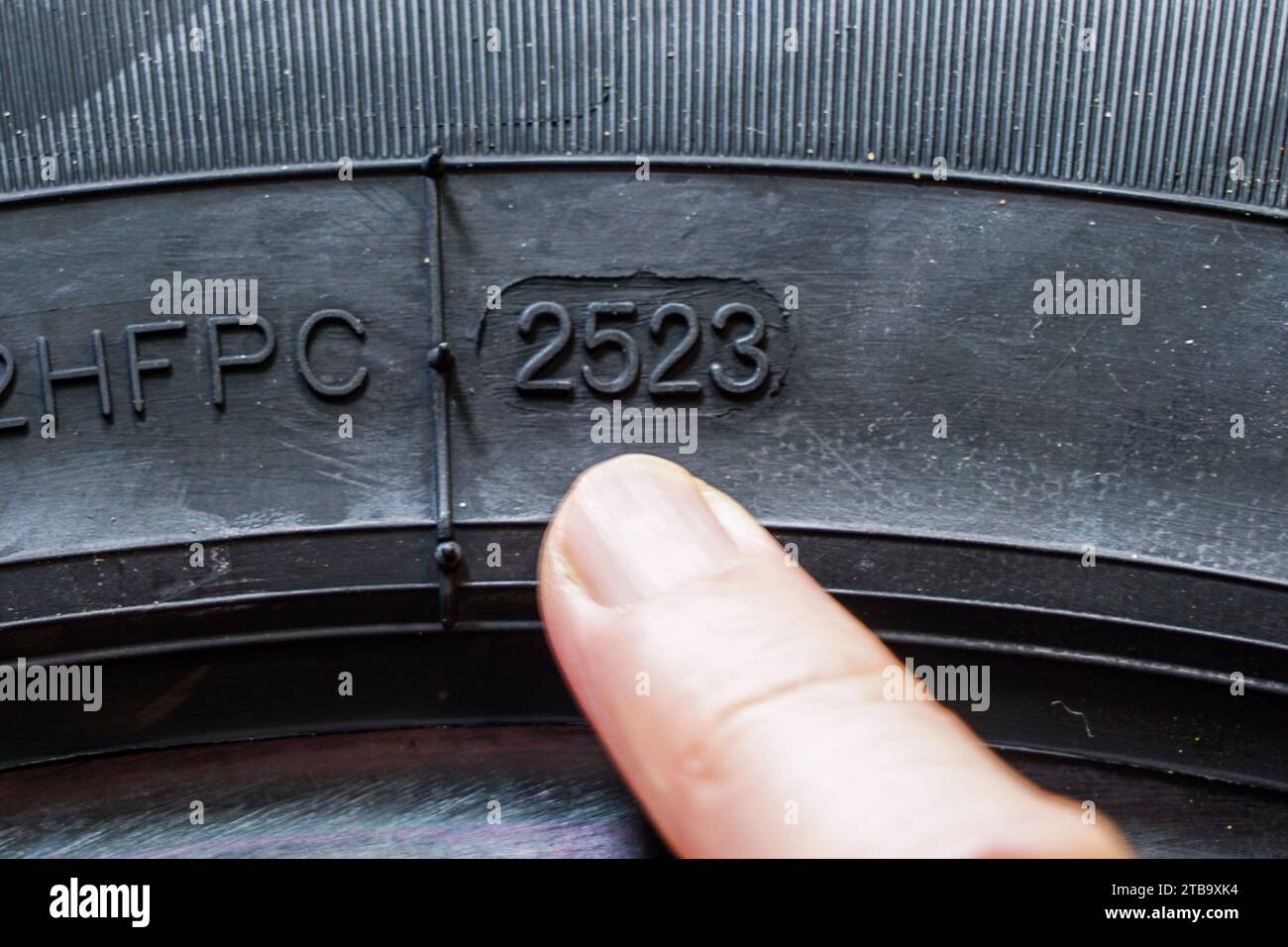
Step 2: Inspect the End of the Sequence
Once you locate the full alphanumeric string following the DOT stamp, look exclusively at the very end of that sequence. Pre-2000 tires used a three-digit code, but any tire relevant to road safety in 2026 will feature a four-digit box. For example, a code reading DOT XX2X 1425 means the tire was manufactured during the 14th week of 2025. If the last four digits read 0826, your tire was built in the 8th week of February 2026.
How to Read the Four-Digit Week and Year Code Accurately
Once you locate the final four digits of the DOT code, decoding them is straightforward if you know the manufacturing formula established by the Department of Transportation. The first two digits represent the calendar week, and the last two digits represent the year of production.
Decoding the Numbers
According to safety standards set by the National Highway Traffic Safety Administration (NHTSA), tire manufacturers stamp a standardized string onto the sidewall. For a tire manufactured in early 2026, the logic remains identical to previous decades.
- Identify the first two digits: These numbers indicate the specific week of the year, running from 01 through 52. For example, a code starting with “15” means the tire was built during the 15th week of that year.
- Identify the last two digits: These numbers show the exact production year. A tire labeled “1526” rolled off the factory floor during the 15th week of 2026.
- Distinguish pre-2000 tires: If your tire only shows a three-digit code without a trailing triangle symbol, it was manufactured before the year 2000 and must be replaced immediately due to rubber degradation.
What If the Date Code Is Missing on the Outer Sidewall
Finding a blank outer sidewall can be frustrating, but it does not mean your tire lacks a date stamp entirely. Tire manufacturers occasionally place the full 11-character DOT serial number on the inner sidewall instead of the outer facing side.
Troubleshooting Missing Codes
When you cannot see the stamp on the side facing away from your vehicle, follow these steps to locate the necessary manufacturing information safely.
- Inspect the inner sidewall: Safely elevate your vehicle using a hydraulic jack and secure it with jack stands to check the side of the tire facing the vehicle frame.
- Use a flashlight and mirror: Shine a bright light along the inner bead area and use an inspection mirror to read reversed or hidden stampings.
- Look for partial stampings: Sometimes tires are mounted backward, placing the DOT code on the inside. If the code is missing entirely from both sides, the tire may be a retread or a heavily damaged unit requiring immediate replacement.
What If It Still Doesn’t Work?
If you have inspected both sidewalls thoroughly and still cannot find a legible date code, or if the numbers are worn away past the point of recognition, specific fallback steps are necessary to ensure your vehicle remains roadworthy in 2026.
- Consult a certified tire technician: Take your vehicle to a licensed local tire shop where a professional can inspect the tire bead and inner liner using specialized equipment.
- Check for structural dry rot: Look closely for deep cracking in the tread grooves and sidewalls, which indicates dangerous rubber fatigue regardless of the stamped date.
- Budget for professional replacement: If the age cannot be verified and the tire exhibits signs of aging, expect professional inspection services to cost between $0 and $30, while a new replacement tire typically ranges from $100 to $250 depending on your vehicle specifications.
Conclusion
Locating and reading the four-digit manufacturing date code on your tire sidewall is a vital routine maintenance task that directly impacts road safety. By successfully identifying the week and year stamp, drivers can prevent catastrophic blowouts caused by aged, degraded rubber. According to verified research and expert sources from the NHTSA and the Rubber Manufacturers Association, replacing tires older than six years remains the safest course of action. Take the next step today by inspecting all four of your vehicle tires to ensure your rubber is fresh, reliable, and road-ready for 2026.
❓ Frequently Asked Questions
Why is the date code only visible on the inside of the tire?
Tire manufacturers often mold the complete DOT serial number, including the date stamp, on only one side of the tire. If it faces inward during installation, you may need to look behind the wheel or use a mirror to see it.
What happens if my tire only has a 3-digit code?
A three-digit code indicates the tire was manufactured before the year 2000. Tires of this age are severely degraded from rubber aging and must be replaced immediately for safety.
Does the DOT code include letters as well as numbers?
Yes, the DOT string begins with the letters DOT followed by a manufacturer plant code, size code, and optional manufacturer codes, ending with the four-digit date stamp.
Can I trust a tire that has no manufacturing date visible?
All legally sold tires have a DOT code stamped on at least one sidewall. If it appears missing, the tire might be mounted backward, or the code is caked in heavy brake dust and mud.
Does tire storage affect the expiration date?
Properly stored tires that have never been mounted degrade much slower than installed tires, but the chronological age still serves as the primary benchmark for replacement.
Are used tires required to display a specific manufacturing year?
Used tire regulations vary by region, but safety experts strongly advise against purchasing or driving on any tire that exceeds six years of age regardless of tread depth.