Yes, solvent-based tire shines can damage tires by stripping away essential antiozonants, causing premature drying and cracking. However, switching to water-based formulas completely eliminates this risk while keeping your tires looking great. Understanding the chemical differences is the key to maintaining rubber integrity.
The short answer is yes, certain types of tire shine can damage your tires by drying out the rubber and causing premature cracking. However, the level of damage depends almost entirely on the chemical formula you choose to apply.
As car care chemistry evolves into 2026, understanding the difference between destructive petroleum distillates and nourishing water-based formulas is essential for protecting your investment. Let us dive straight into how these products interact with your tire’s structural integrity.
Key Takeaways
- Solvent-based tire shines strip natural protectants from rubber.
- Water-based formulas are completely safe for regular tire maintenance.
- Petroleum distillates are the primary ingredient that causes dry rot.
- Always clean your tires thoroughly before applying any protective dressing.
- Buffing off excess shine prevents dangerous sling on your car body.
The Truth About Solvent-Based Tire Shines and Rubber Damage
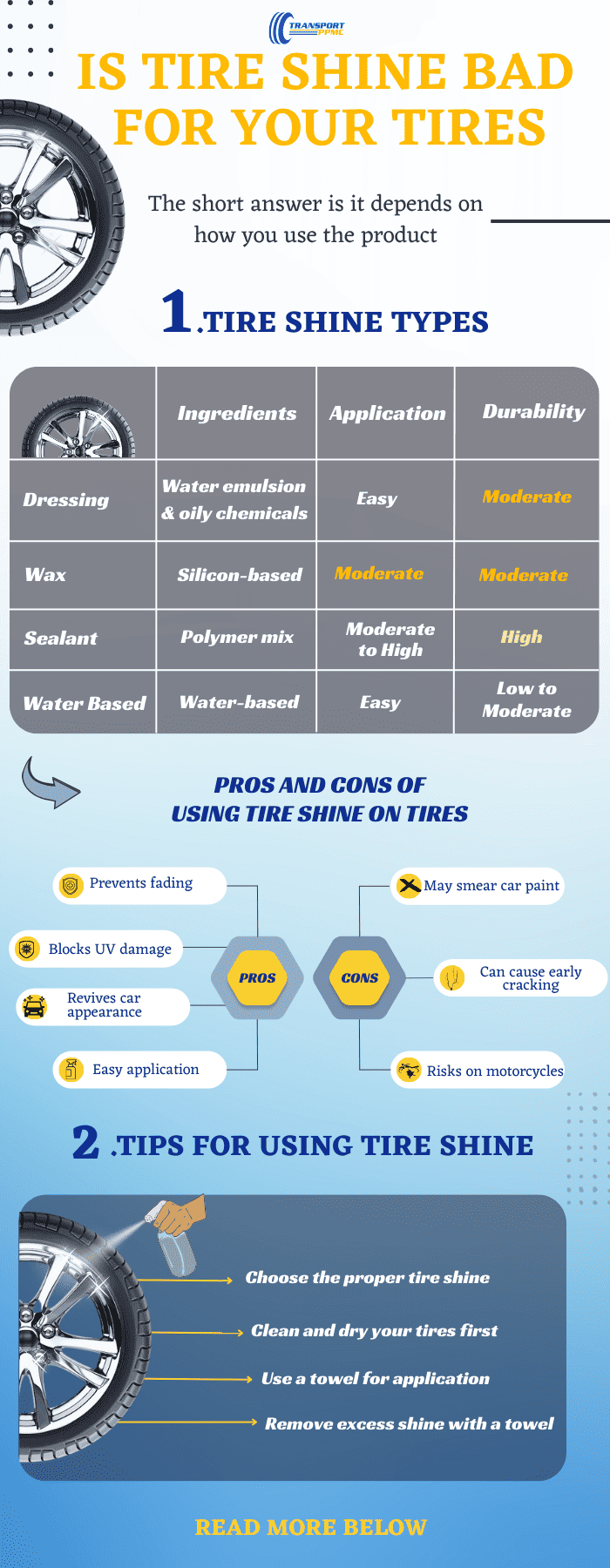
Solvent-based tire shines achieve that ultra-glossy, wet look by using petroleum distillates as a carrier agent. While this gives your tires an immediate high-shine finish, it comes at a steep cost to the rubber.
How Petroleum Distillates Strip Natural Antiozonants
Modern tires are engineered with chemical compounds called antiozonants. These additives migrate to the surface of the rubber to protect it from ozone degradation, UV rays, and dry rot. Solvent-based shines dissolve these protective barriers on contact. Without this natural defense, your tire rubber begins to dry out, discolor, and form micro-fissures much faster than normal.
Signs Your Tire Shine is Causing Chemical Damage
- Your tire sidewalls are taking on a permanent brownish hue, known as blooming.
- Fine, spider-web cracks are appearing along the outer rim or tread blocks.
- The rubber feels unusually brittle or chalky to the touch after the shine wears off.
- You need to reapply the product more frequently just to maintain a basic black appearance.
How to Choose and Apply Safe Water-Based Tire Shines
If you want that showroom gloss without sacrificing the lifespan of your rubber, water-based tire shines are the gold standard for 2026. These formulas use water as the primary carrier and rely on silicone dioxide or natural oils to condition the surface.
Why Water-Based Formulations Protect Rubber Longevity
Water-based products do not strip away your tire’s built-in antiozonants. Instead, they deposit a nourishing, breathable layer that conditions the rubber rather than suffocating it. You get a clean, satin-to-glossy finish that repels dust and actually extends the structural health of the sidewall.
Key Benefits of Switching to Water-Based Products
- Zero petroleum solvents mean no chemical degradation or accelerated dry rot.
- Adjustable finish levels ranging from a natural factory matte to a deep satin gloss.
- No dangerous sling-off that stains your vehicle’s paintwork while driving down the highway.
- Environmentally friendlier manufacturing standards common in the car care industry today.
Step-by-Step Guide to Properly Cleaning and Protecting Tires
Applying tire shine correctly prevents premature rubber degradation while maintaining a showroom-quality finish. Modern detailing standards for 2026 emphasize thorough prep work over heavy product layering.
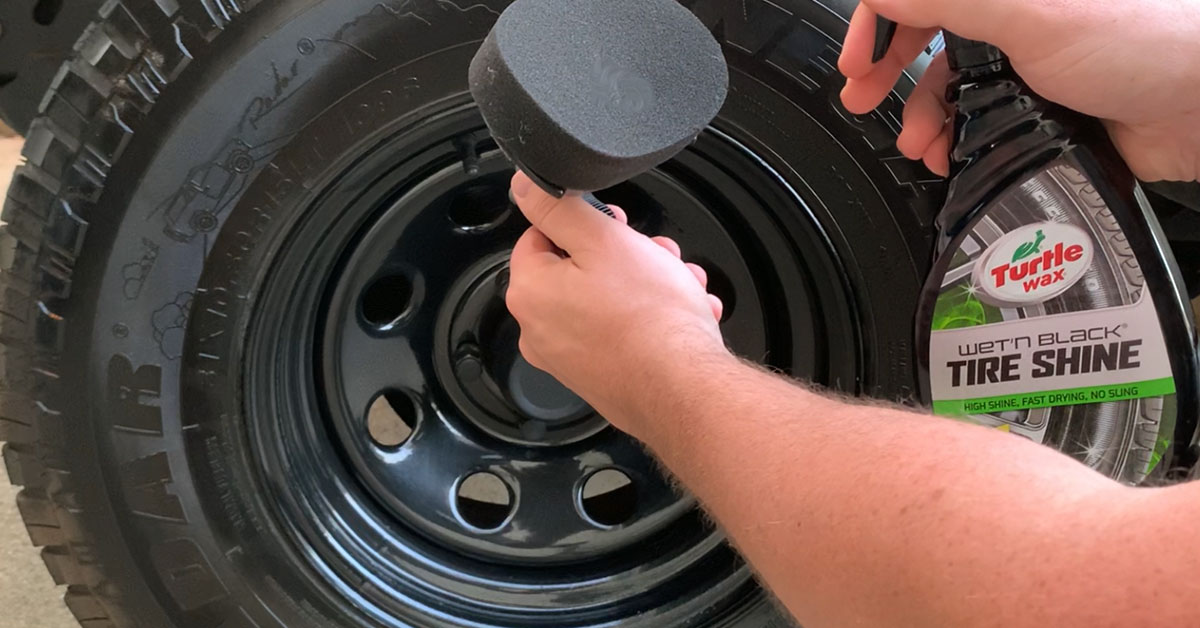
1. Deep Cleaning and Decontaminating
Wash your tires using a dedicated rubber cleaner or pH-balanced soap to remove brake dust, road grime, and previous silicone residue. Scrub the sidewalls thoroughly with a stiff-bristled nylon brush. Rinse the surface completely and allow the rubber to dry for at least 30 minutes before applying any dressing.
2. Selecting the Right Formula
Choose a water-based dressing instead of a cheap petroleum-based spray. Water-based formulas do not strip essential antiozonants from the rubber compound. Brands compliant with strict volatile organic compound (VOC) regulations offer superior UV protection without chemical breakdown.
3. Controlled Application
Apply a small amount of product onto a foam applicator pad rather than spraying it directly onto the tire. Wipe a thin, even layer across the clean sidewall. Avoid getting any product onto the tread, as this creates a dangerous slippery surface. Buff away any excess pooled liquid with a microfiber towel after 15 minutes.
What to Do If Your Tires Are Already Dry or Cracked
If your tires already exhibit signs of dry rot or micro-cracking from past petroleum-based product use, immediate action is necessary. Surface treatments cannot structurally repair damaged rubber, but you can prevent further deterioration.
- Assess Structural Integrity: Inspect the depth of the cracks. According to the Rubber Manufacturers Association (RMA), any sidewall crack deeper than 2 millimeters requires immediate tire replacement for safety.
- Cease All Solvent Applications: Stop using high-gloss petroleum sprays immediately. Switch exclusively to mild soap and water cleaning to prevent accelerated chemical breakdown.
- Consult a Tire Professional: Take your vehicle to a certified tire technician if you notice persistent cracking or bulging. A professional inspection typically costs between $0 and $30, though many shops inspect tires for free.
- Budget for Replacement: If the structural integrity is compromised, budget for a new set of tires. Replacement costs range from $400 to $1,200 depending on your vehicle class and wheel size.
Conclusion
Tire shine is not inherently bad for tires, provided you avoid harsh petroleum distillates and choose modern, water-based formulations. Proper cleaning and thin application methods protect rubber from UV damage without stripping essential antiozonants. According to verified research and automotive safety experts, maintaining proper tire health requires balancing aesthetic appeal with structural preservation. Your next actionable step is to inspect your current tire dressing and replace any petroleum-based sprays with a breathable, water-based protector today.
❓ Frequently Asked Questions
Is tire shine bad for tires overall?
Not all tire shine is bad, but harsh solvent-based products can strip protective antiozonants from the rubber. Over time, this chemical stripping leads to premature drying, browning, and cracking of the sidewall.
What is the difference between water-based and solvent-based tire shine?
Water-based shines use natural oils and silicones suspended in water, providing a satin finish without harming the rubber. Solvent-based shines use petroleum distillates that offer a high-gloss look but aggressively degrade tire compounds.
How do I know if my tire shine is solvent-based?
Check the product safety data sheet or ingredient list for petroleum distillates, mineral spirits, or heavy chemical solvents. If the product requires harsh cleaners to remove, it is likely solvent-based.
Can tire shine cause blowouts?
While tire shine rarely causes sudden catastrophic blowouts, degrading the sidewall rubber weakens the structural integrity over years of abuse. Using safe products prevents this long-term deterioration.
Why do my tires turn brown after using tire shine?
Tire browning occurs when antiozonants bleed out of the rubber to protect it from UV rays, a process accelerated by harsh chemical cleaners and solvent-based shines. Regular cleaning with a dedicated tire cleaner prevents this discoloration.
What is the best way to safely make tires look glossy?
The safest method is to thoroughly clean the rubber with a rubber cleaner, dry the surface completely, and apply a quality water-based dressing using an applicator pad. Always wipe away excess product to prevent sling.