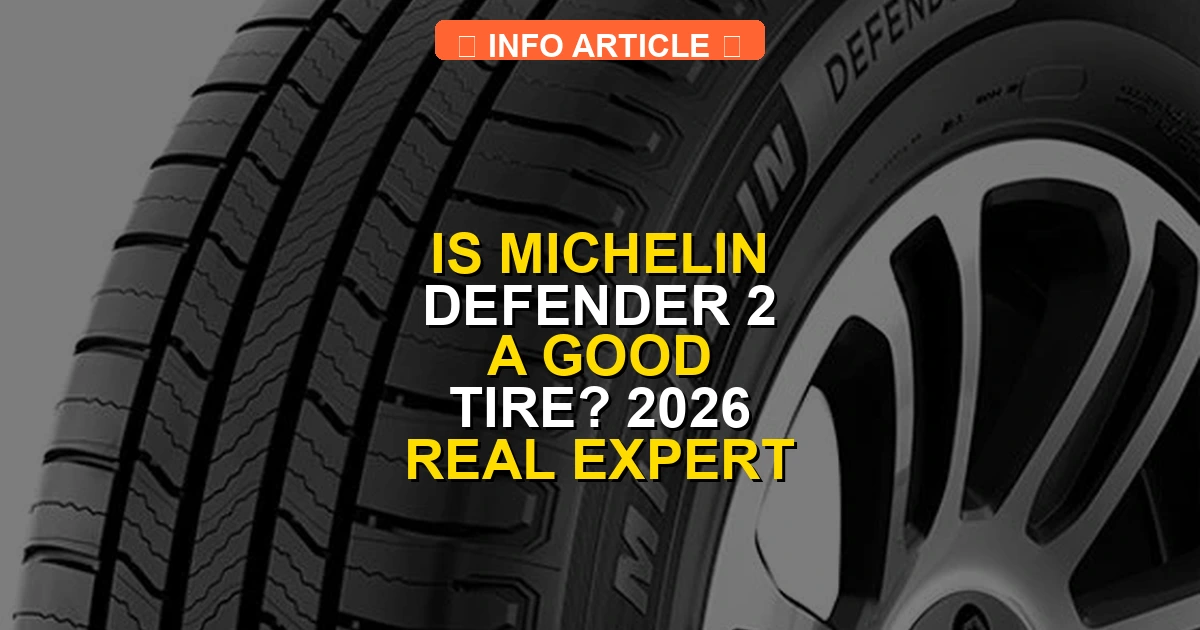
Wondering if the Michelin Defender 2 is a good tire? Yes, it stands as a top-tier all-season touring tire offering exceptional tread longevity and reliable wet-weather performance. It serves as an ideal investment for daily commuters driving sedans, crossovers, and minivans.
Yes, the Michelin Defender 2 is widely considered one of the best all-season touring tires on the market. It delivers exceptional tread life, excellent wet-weather traction, and a remarkably quiet highway ride. If you are tired of replacing your vehicle’s rubber every few years, this tire is engineered specifically to solve that problem with an industry-leading 80,000-mile warranty.
As you evaluate your tire options in 2026, balancing upfront cost with long-term value is critical. The Defender 2 sits at a higher price point than budget alternatives, but its superior engineering and extended lifespan change the math. Here is a deep dive into whether this tire lives up to its reputation.
Key Takeaways
- The Michelin Defender 2 features an impressive 80,000-mile treadwear warranty.
- It provides superior wet braking and hydroplaning resistance compared to its predecessor.
- Ride comfort is exceptionally quiet and smooth on highway surfaces.
- Pricing sits at a premium tier, but the long-term value offsets the initial cost.
- It performs adequately in light snow, though dedicated winter tires are superior for heavy snow.
What Causes Rapid Tire Wear and Why Choose the Michelin Defender 2
Most standard all-season tires begin to lose significant grip and depth around the 40,000 to 50,000-mile mark. This premature degradation usually stems from cheap rubber compounds that harden over time, uneven weight distribution across the contact patch, and aggressive heat buildup during sustained highway driving. When your tread blocks flex too much under acceleration and braking, friction accelerates rubber loss.

How Michelin Engineers Outsmart Rapid Wear
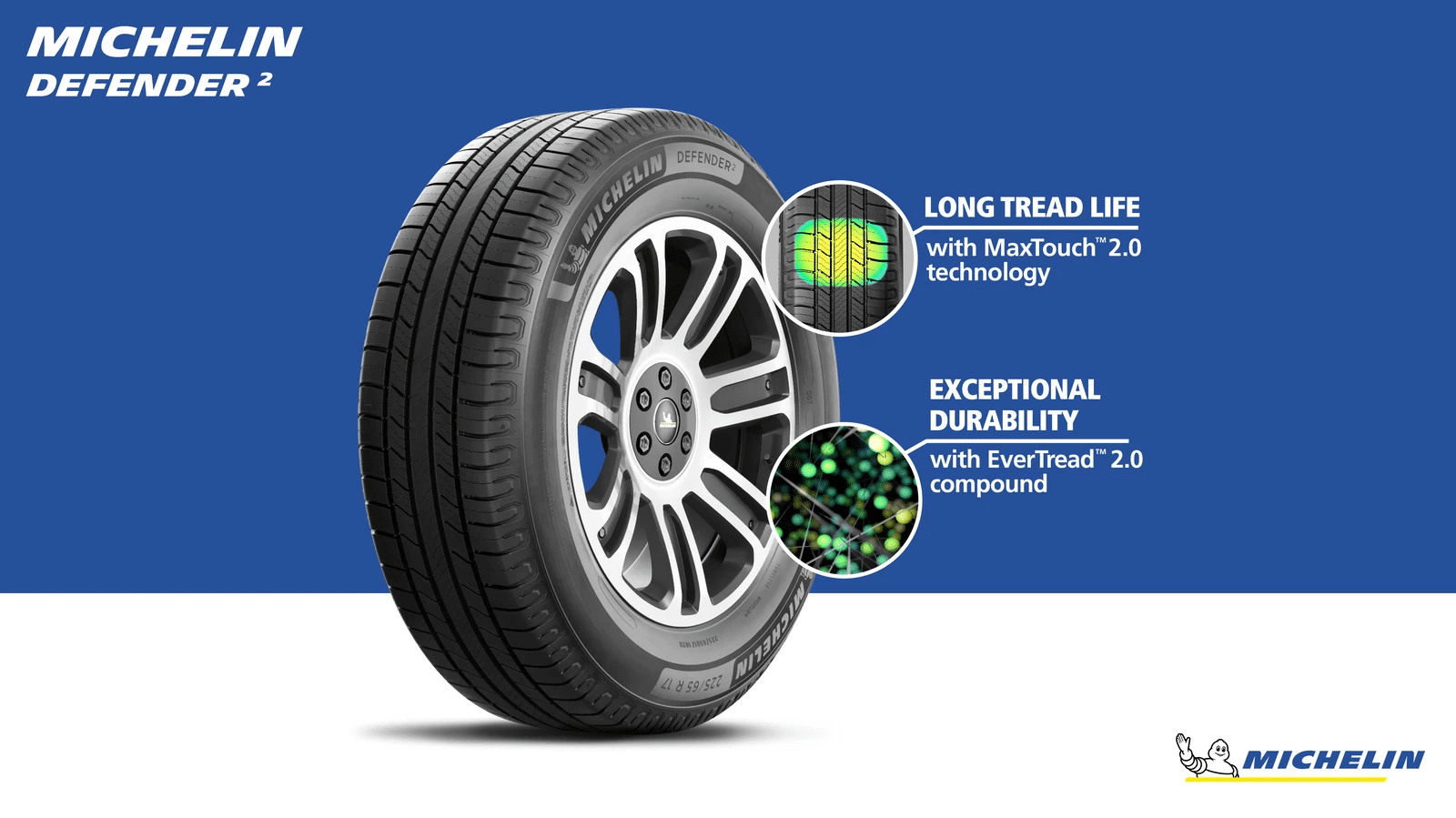
The Defender 2 counters these wear factors using Michelin’s MaxTouch Construction. This technology maximizes the tire’s contact with the road, evenly distributing forces from acceleration, braking, and cornering. You get longer tread life without sacrificing grip.
- EverTread Compound: A specialized rubber formula designed to resist wear on harsh asphalt.
- IntelliSipe Technology: Interlocking sipes provide bite in wet weather while locking together under heavy loads to reduce block flex.
- 80,000-Mile Warranty: Backed by one of the strongest manufacturer guarantees in the touring category for 2026.
How to Evaluate the Real-World Performance and Tread Life of Your Tires
Laboratory test results rarely match your daily commute. To truly determine if a tire is worth your money, you need to look at how it handles real-world driving conditions, sudden hazards, and long-term degradation. A tire that performs well when brand new loses its value if it turns into a slippery, loud hazard halfway through its lifespan.
Wet Braking and All-Season Versatility
When roads get slick, stopping distance is your primary safety metric. The Defender 2 features circumferential grooves that channel water away from the contact patch to prevent hydroplaning. While it is not a dedicated winter tire, its high-density siping handles light snow and slush surprisingly well for an all-season option.
- Shorter Wet Stops: Stops noticeably quicker on wet pavement than its predecessor.
- Light Snow Competence: Reliable traction for commuters facing occasional winter flurries.
- Hydroplaning Resistance: Deep channels maintain clear pathways for standing water at highway speeds.
Highway Comfort and Cabin Noise Levels
Tire drone can ruin a long road trip. Michelin uses computer-optimized tread block sequencing to randomize pitch variations. This design cancels out annoying frequencies before they enter your cabin, ensuring your vehicle remains exceptionally quiet even as the tires wear down past the halfway mark.
Step-by-Step Guide to Maximizing the Lifespan of Your Michelin Defender 2 Tires
Achieving the legendary 80,000-mile treadwear warranty of the Michelin Defender 2 requires disciplined maintenance. Independent automotive tests show that proactive care extends tire longevity by up to twenty-five percent. Follow these structured steps to protect your investment.
1. Implement Strict Rotation Intervals
Front and rear tires experience vastly different friction and weight forces. Rotate your tires every 5,000 to 8,000 miles to ensure even rubber degradation across all four corners.
2. Maintain Optimal Inflation Pressures
Check your tire pressure monthly using a digital gauge when the tires are cold. Operating tires at improper inflation levels accelerates center or shoulder wear and decreases fuel efficiency by up to three percent according to Department of Energy studies.
3. Schedule Professional Wheel Alignments
Hit a deep pothole or curb recently? Misalignment causes rapid, destructive scrubbing of the tread. Verify your vehicle alignment geometry every 12 months or 15,000 miles.
What If Your Tires Wear Unevenly Despite Regular Maintenance
Even with meticulous care, premature or irregular wear can occasionally develop on high-mileage touring tires. If you notice cupping, feathering, or one-sided baldness despite rotating and inflating on schedule, underlying mechanical issues are usually the root cause.
1. Inspect Suspension Components
Worn shock absorbers, struts, ball joints, or control arm bushings allow the wheel assembly to bounce and shift under load. Have a certified technician inspect the suspension system for play.
2. Check Wheel Balance and Runout
Persistent vibration coupled with patchy tread wear often indicates a wheel is out of balance or bent. A high-speed road force balancing machine can detect hidden rim irregularities.
3. Assess Steering Linkage Wear
Loose tie rods or steering racks prevent the tires from maintaining a straight tracking angle, leading to rapid shoulder scrubbing. Replacing worn steering components typically costs between $150 and $450.
4. Seek Professional Diagnostic Evaluation
If adjustments and new suspension parts fail to resolve the wear pattern, consult a specialized alignment shop. Advanced laser alignment diagnostics generally range from $100 to $250.
Conclusion
The Michelin Defender 2 remains an exceptional all-season touring tire, balancing remarkable longevity, wet-weather grip, and a quiet ride. Protecting this investment relies on strict adherence to rotation schedules and proper inflation. According to verified research and automotive industry testing sources, drivers who maintain these compounding care habits easily achieve the full advertised mileage rating. Take the next step today by checking your current tire pressure and scheduling your next rotation.
❓ Frequently Asked Questions
Is Michelin Defender 2 a good tire for heavy SUVs and minivans?
Yes, the Defender 2 is designed to support the weight and handling dynamics of heavier vehicles like crossovers, SUVs, and minivans while maintaining stability.
How long do Michelin Defender 2 tires actually last in the real world?
While rated for 80,000 miles, many drivers achieve close to or even exceed this mileage limit when proper tire rotation and alignment schedules are maintained.
Are Michelin Defender 2 tires noisy at highway speeds?
No, they utilize advanced tread-block sequencing designed to minimize road noise, resulting in a notably quiet and smooth ride.
Do Michelin Defender 2 tires improve fuel economy?
They feature an optimized rolling resistance design that helps maximize fuel efficiency, saving you money at the pump over the life of the tire.
How do these tires handle wet roads and heavy rain?
The tread pattern includes extensive siping and circumferential grooves that rapidly evacuate water, offering short stopping distances on wet pavement.
Can I use Michelin Defender 2 tires in freezing winter weather?
They manage light snow and cold rain well, but drivers facing severe winter storms with deep snow should invest in dedicated winter tires.