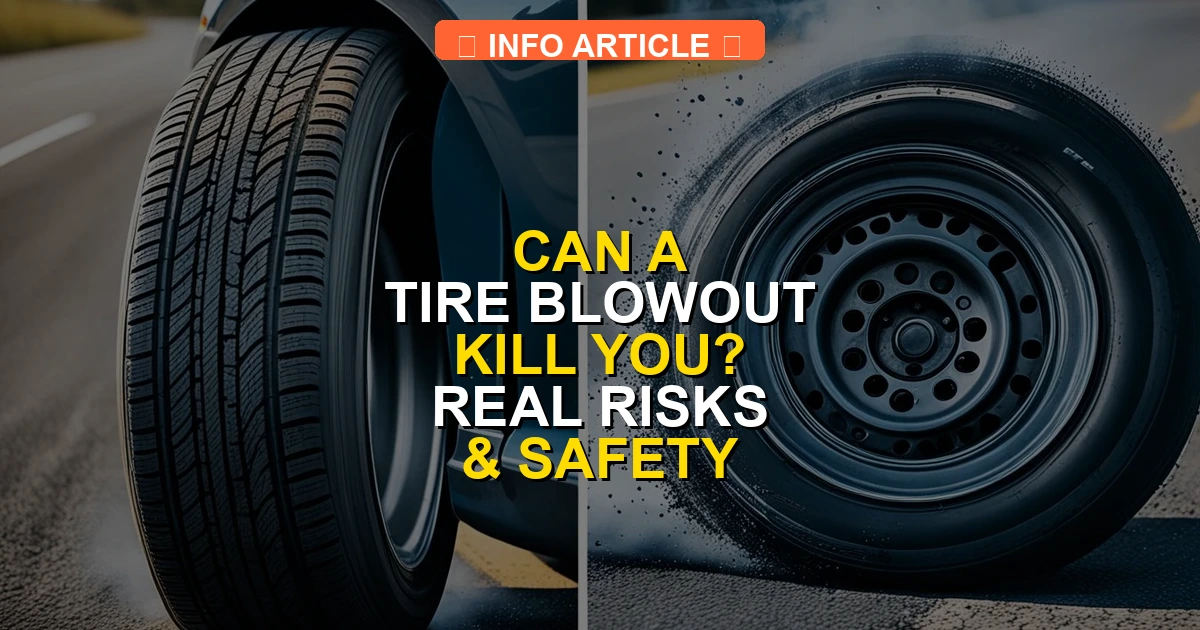
Yes, a tire blowout can be fatal due to sudden vehicle instability, severe high-speed rollovers, and dangerous secondary collisions. Understanding the physics of a blowout and knowing the proper emergency response can prevent a deadly accident.
Yes, a tire blowout can definitely kill you. While modern vehicle safety engineering in 2026 has advanced significantly, a sudden loss of tire pressure at highway speeds remains a life-threatening emergency. National Highway Traffic Safety Administration data shows that tire failures contribute to thousands of severe crashes annually, resulting in hundreds of fatalities.
Understanding the exact mechanics of these fatal accidents helps you prepare for the worst-case scenario on the road. When a tire violently disintegrates, it triggers a chain reaction of physics, vehicle dynamics, and human panic that can quickly turn deadly if you do not know how to respond.
Key Takeaways
- Tire blowouts frequently cause fatal accidents due to sudden loss of vehicle control at high speeds.
- Heavy vehicles like SUVs and trucks carry higher risks of deadly rollovers during a blowout.
- Never slam on the brakes immediately when a tire bursts to prevent losing complete control.
- Hold the steering wheel firmly in the straight-ahead position to maintain directional stability.
- Let off the gas pedal gradually to slow down safely without causing a spinout.
The Real Danger: Why and How a Tire Blowout Can Kill You
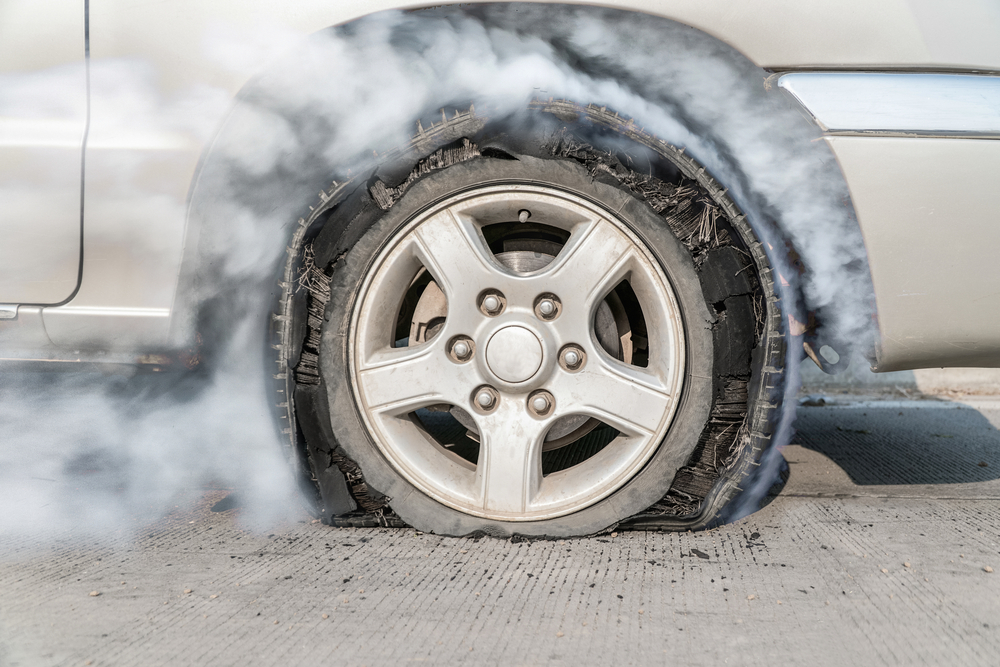
A tire blowout rarely kills you simply from the noise or the sudden jolt. Instead, fatalities occur because of the secondary hazards created when a driver loses control of a moving vehicle. At highway speeds, fractions of a second matter.
High-Speed Control Loss and Rollovers
When a rear tire blows out, the back end of your car may fishtail violently. If you overcorrect, you risk spinning out into oncoming traffic. When a front tire blows, it pulls your steering hard toward the side of the failed tire. In top-heavy vehicles like SUVs and commercial trucks, this sudden shift in weight transfer frequently triggers a rollover crash, which carries a very high fatality rate.
Secondary Collisions and Traffic Hazards
The initial blowout often forces your vehicle across multiple lanes of traffic. In heavy 2026 highway congestion, this sudden trajectory change leads to devastating multi-car pileups or direct head-on collisions with semi-trucks and concrete barriers. Pedestrian strikes and secondary impacts account for a large percentage of blowout-related deaths.
Step-by-Step Guide: What to Do Immediately When a Tire Blows Out
Surviving a tire blowout requires overriding your natural survival instincts. The single most dangerous thing you can do when a tire fails is to slam on the brakes.
Critical Immediate Actions
- Do not brake: Braking shifts your vehicle’s weight forward, reducing rear traction and causing an uncontrollable spin.
- Keep your foot on the gas briefly: Maintain gentle acceleration for a second or two to keep the vehicle stable and moving forward in a straight line.
- Hold the steering wheel firmly: Grip the wheel with both hands to fight the vehicle’s natural pull toward the blown tire.
Controlled Deceleration Steps
Once you regain straight-line stability, execute these steps to safely exit the flow of traffic:
- Ease your foot off the accelerator pedal very gradually.
- Allow the vehicle to naturally lose speed on its own.
- Activate your turn signal and steer smoothly toward the shoulder of the road.
- Apply light, steady pressure to the brakes only after your speed drops below 30 mph.
High-Risk Factors That Increase Fatal Blowout Statistics
According to safety studies from the National Highway Traffic Safety Administration (NHTSA), certain conditions dramatically raise the likelihood that a tire failure turns fatal. Understanding these variables helps drivers mitigate the inherent dangers on the road.

Excessive Speed and Overloading
Driving at highway speeds generates immense heat within the tire structure. When combined with vehicle overloading—exceeding the maximum load index specified on the tire sidewall—the rubber compounds separate violently. NHTSA statistics indicate that tire-related fatalities spike during summer months when higher ambient temperatures compound internal tire heat.
Neglected Tire Maintenance
Underinflation remains the leading precursor to catastrophic tread separation. According to the Rubber Manufacturers Association, over 80 percent of consumers drive on underinflated tires without realizing it. Furthermore, running on tread depths below the legal 2/32-inch limit drastically reduces wet-weather traction when a blowout occurs. As automotive engineers at organizations like the Tire Industry Association emphasize, routine pressure checks and visual inspections are non-negotiable for survival.
What If Your Vehicle Still Swerves or Loses Control During a Blowout
Even with correct defensive driving techniques, severe vehicle pulling or loss of traction can persist due to heavy loads, icy roads, or tire shredding that damages the wheel well. If the standard recovery methods fail to stabilize the car, execute these emergency mitigation steps immediately.
Emergency Recovery Protocol
- Engage the hazard lights immediately: Alert surrounding motorists of your vehicular distress to prevent secondary high-speed rear-end collisions.
- Apply measured counter-steering inputs: Hold the steering wheel firmly with both hands, making micro-adjustments rather than sharp jerks to counteract severe pulling.
- Refrain from sudden braking: Forcefully pressing the brake pedal transfers weight to the front wheels, which can cause total loss of steering control.
- Shift into neutral if slowing stalls: If engine braking or coasting proves insufficient, shift the transmission to neutral to cut power to the drive wheels while maintaining directional command.
- Signal and drift to the shoulder: Once the vehicle speed drops below 20 miles per hour and stability returns, gently guide the car toward the breakdown lane or grassy median.
What If It Still Doesn’t Work?
If vehicular control completely deteriorates and roadside recovery measures fail to stabilize the chassis, emergency intervention is required. Implement these final fallback steps:
- Abandon attempts to drive: Turn off the engine, leave the keys in the ignition, and focus entirely on personal safety.
- Evacuate away from traffic: If safe to do so, exit the vehicle on the side opposite oncoming traffic and move behind a concrete barrier or far up the embankment.
- Contact emergency services: Dial 911 immediately if your vehicle is stranded in an active traffic lane or if a collision occurred.
- Call professional roadside assistance: Contact a certified towing service for transport. Professional towing for a vehicle with severe structural tire and wheel damage typically ranges from $100 to $250 depending on the mileage and flatbed requirements.
- Schedule professional alignment and suspension checks: Have a certified mechanic inspect the axle, steering linkage, and suspension components, which cost between $150 and $400 for diagnostics and minor repairs.
Conclusion
Can a tire blowout kill you? Yes, rapid deflation at highway speeds creates severe kinetic instability that can lead to catastrophic rollover accidents if mismanaged. According to verified research and expert sources from the NHTSA and automotive safety engineers, remaining calm, resisting the urge to slam the brakes, and applying steady steering inputs drastically improve survival odds. Make it an actionable habit to inspect your tire pressure and tread depth monthly to prevent sudden failures before they happen on the open road in 2026.
❓ Frequently Asked Questions
Can a tire blowout kill you instantly?
While the blowout itself is a mechanical failure, the resulting loss of control frequently leads to high-speed collisions with semi-trucks, concrete barriers, or oncoming traffic that can be fatal.
How fast do you need to be driving for a blowout to be deadly?
Blowouts can happen at any speed, but fatalities skyrocket at highway speeds of 65 mph or higher due to the sheer kinetic energy involved and the difficulty of correcting steering.
Is it better to steer into or away from a blowout?
You should steer straight ahead. As the vehicle pulls toward the side of the blown tire, counter-steer gently just enough to keep the car traveling in a straight line.
Do modern cars have safety features to prevent blowout deaths?
Yes, Electronic Stability Control (ESC) and Tire Pressure Monitoring Systems (TPMS) significantly reduce the risk of losing control during a sudden tire failure.
What role does tire age play in fatal blowouts?
Older rubber degrades, separates, and becomes brittle over time regardless of tread depth, making aged tires extremely vulnerable to catastrophic structural failure at speed.
Can a front-tire blowout be more dangerous than a rear-tire blowout?
Generally, yes. A front-tire blowout impacts steering capability much more severely, requiring immediate and precise driver correction to avoid veering into adjacent lanes.