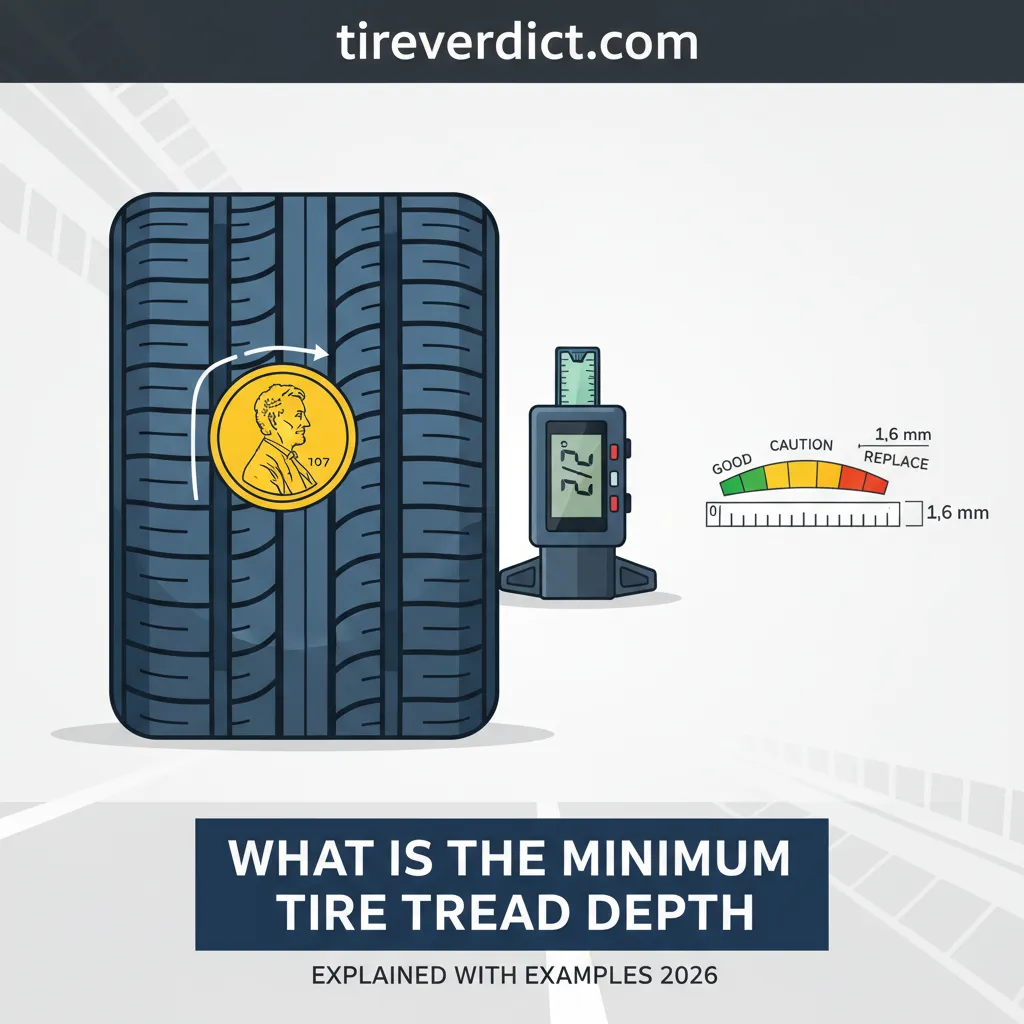
Imagine driving on a rainy highway, your vehicle suddenly struggling to maintain grip. This terrifying scenario highlights the critical, often underestimated, role of tire tread depth. Many drivers are unaware of what constitutes a safe tire tread depth, mistaking legal minimums for optimal safety, or simply overlooking this vital aspect of vehicle maintenance. This article will demystify the essential topic of tire tread depth, explaining the precise legal minimums, recommending safer thresholds, and providing practical methods to ensure your tires – and your journeys – are as secure as possible, with up-to-date information for 2026.
Understanding Tire Tread Depth and Its Critical Role in Vehicle Safety
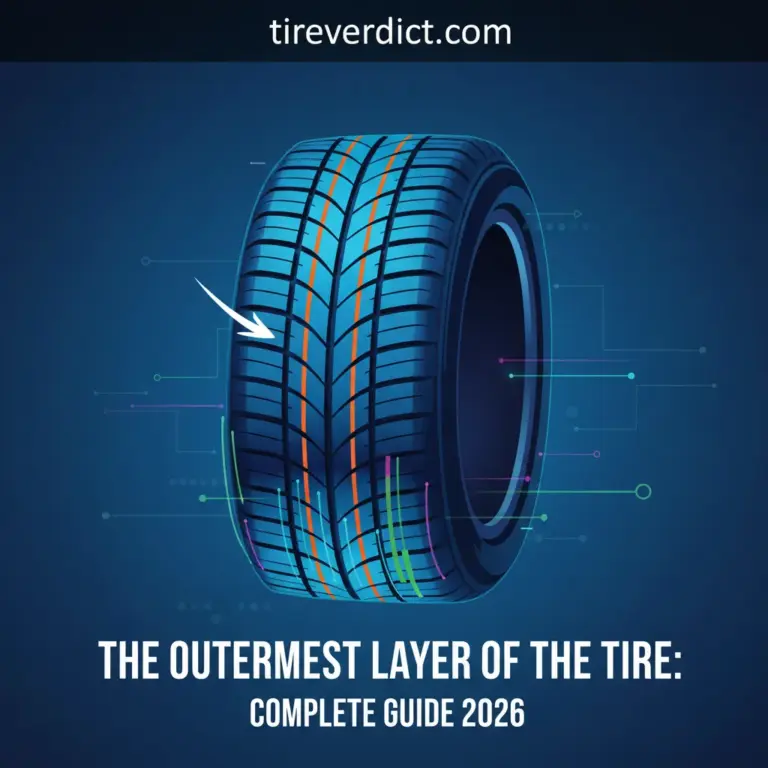
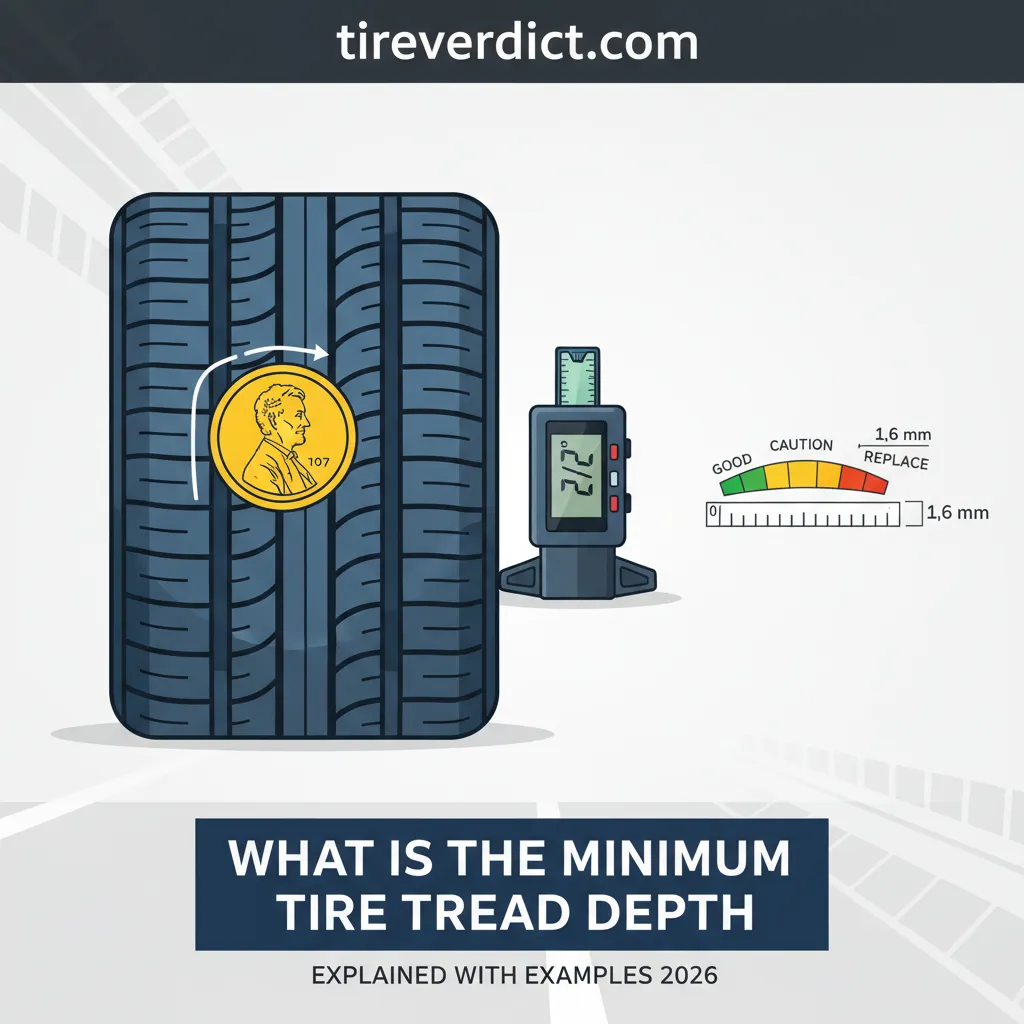
Tire tread depth is a critical, yet often overlooked, aspect of vehicle maintenance directly impacting safety and performance. Simply put, tire tread depth is the vertical measurement from the top of the tire’s tread rubber to the deepest part of its main grooves. It represents the amount of usable rubber on your tires designed to interact with the road surface.
📤 Share Image
The primary functions of tire tread are multifaceted. Firstly, it enhances traction on various surfaces, from dry pavement to gravel. Secondly, and arguably most importantly, it efficiently evacuates water from beneath the tire’s contact patch, preventing the dangerous phenomenon of hydroplaning. Thirdly, the tread provides essential grip for effective acceleration, precise steering, and critical braking performance.
Tread design significantly influences a tire’s performance characteristics. Features like sipes (small slits), wide circumferential grooves, and robust tread blocks are engineered for specific conditions. For instance, all-season tires balance dry grip with wet weather performance, while winter tires feature aggressive patterns and specialized compounds for snow and ice. Performance tires prioritize maximum dry grip, often with shallower, wider blocks. Analogously, consider your tire’s tread as its ‘fingers’ constantly gripping and manipulating the road surface – the more pronounced these ‘fingers,’ the better their function.
There is a direct correlation between tread depth and vehicle control. Deeper treads offer significantly better grip and stability, particularly in adverse weather conditions like heavy rain or snow. A new passenger car tire typically boasts a generous tread depth of 10/32 or 11/32 of an inch (approximately 7.9-8.7 mm). This substantial depth is what ensures optimal water channeling and road contact, providing the safety margins you rely on every day. As tread wears down, these capabilities diminish progressively, making regular assessment an important fundamental of vehicle safety.
Legal and Recommended Minimum Tire Tread Depths: Navigating Standards Across Regions
When discussing what constitutes the minimum tire tread depth, it’s crucial to distinguish between legal requirements and expert safety recommendations. While often intertwined, they serve different purposes and carry varying implications for optimal vehicle performance and driver safety.
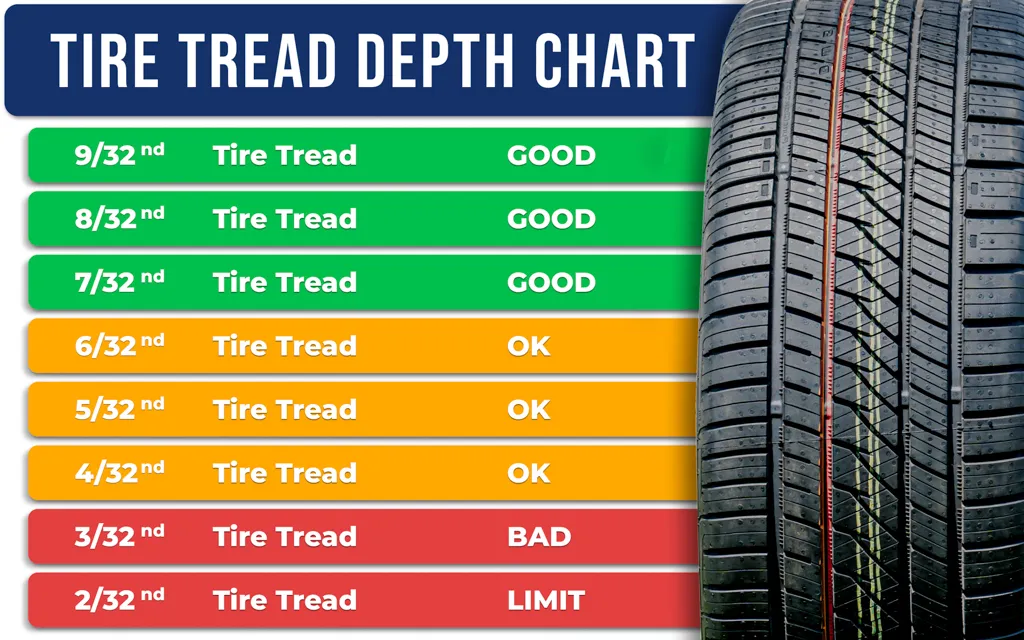
For most of the United States, Canada, and many European countries, the legal minimum tire tread depth is 2/32 of an inch (approximately 1.6 mm). This standard is not arbitrary; it’s typically indicated by small, raised bars molded into the main grooves of the tire, known as tread wear indicator bars. When the tread wears down to be flush with these bars, it signifies that the tire has reached its legal limit and must be replaced. For example, in states like California and New York, operating a vehicle with tread depth below 2/32 inch can result in citations and fines.
However, relying solely on the legal minimum is often insufficient for optimal safety. Automotive safety organizations and tire manufacturers widely recommend replacing tires when their tread depth reaches 4/32 of an inch (approximately 3.2 mm). The American Automobile Association (AAA), for instance, explicitly recommends replacement at 4/32 inch, particularly highlighting its importance for safety in wet conditions. Research consistently shows that a tire’s ability to evacuate water and maintain grip significantly degrades below this threshold, increasing the risk of hydroplaning and extending braking distances.
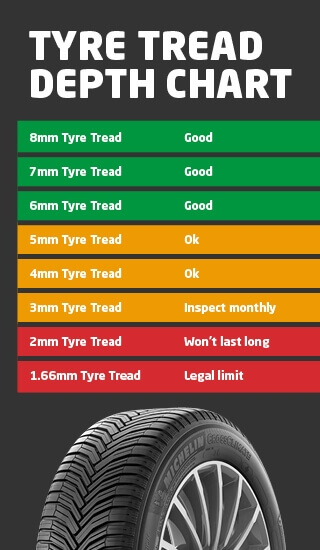
There are also variations in regional regulations to consider. For instance, some European countries implement stricter requirements for winter tires, occasionally mandating a minimum of 3/32 inch (2.4 mm) or applying different measurement criteria across the tread width. In the United Kingdom, the law requires a minimum tread depth of 1.6mm across the central three-quarters of the tread around the entire circumference of the tire. These nuances underscore the importance of understanding the specific regulations pertinent to your driving locale.
The core takeaway here is that meeting legal minimums does not always equate to optimal safety. While 2/32 inch may keep you compliant with the law, 4/32 inch provides a crucial safety buffer, especially in challenging weather conditions, which is why the latter is the strong recommendation from an expert standpoint.

Practical Guide: How to Accurately Measure Your Tire Tread Depth at Home
Regularly checking your tire tread depth is a simple yet vital maintenance task. You don’t need specialized equipment to get a good understanding of your tires’ condition. Here’s a practical guide to performing accurate measurements:
📋
Step-by-Step Guide
The penny test is a quick and easy way to check if your tires have reached the 2/32 inch (1.6 mm) legal minimum. Place a U.S. penny into a tire’s tread groove with Abraham Lincoln’s head pointing down towards the tire. If you can see the very top of Lincoln’s head, your tread is likely at or below 2/32 inch and the tire should be replaced immediately. This indicates dangerously low tread depth. Common pitfalls include not inserting the penny deep enough or measuring in a shallow, worn part of the tread.
For a more conservative and safer assessment, particularly in Canada or if you adhere to the 4/32 inch safety recommendation, use a U.S. quarter. Insert the quarter into a tread groove with George Washington’s head facing down. If the tread reaches any part of Washington’s head, you likely have more than 4/32 inch of tread remaining. If you can see all of Washington’s head, your tread is likely at or below 4/32 inch (3.2 mm), signaling it’s time to consider replacement for optimal wet weather performance.
Most modern tires incorporate tread wear indicator bars (also known as “wear bars”) – small, raised rubber bars located at the bottom of the main tread grooves. These are typically molded to be 2/32 inch (1.6 mm) high. When your tire’s tread has worn down to be level with these indicators, it’s a clear visual warning that the tire has reached the legal minimum depth and needs immediate replacement. Check these bars at multiple points around each tire.
For the most accurate and consistent measurements, a dedicated tire tread depth gauge (either digital or analog) is invaluable. These inexpensive tools provide precise readings in 32nds of an inch or millimeters. To use, push the probe into a main tread groove until its base rests flush with the tread blocks. Read the measurement shown on the gauge. Always measure at multiple points around the tire’s circumference and across its width (inner, middle, outer) to detect uneven wear patterns, which could indicate alignment or inflation issues.
The Perils of Driving on Insufficient Tire Tread Depth: Safety Risks and Legal Ramifications
Operating a vehicle with inadequate tire tread depth is not merely a matter of compliance; it significantly compromises safety and can lead to severe consequences. As an expert with over 15 years in the automotive industry, I’ve seen firsthand the dangers associated with neglecting this critical maintenance aspect.
Significantly Reduced Wet Traction and Increased Hydroplaning Risk
One of the most immediate and dangerous impacts of shallow tread is the drastic reduction in wet traction. The intricate network of grooves on your tires is specifically engineered to channel water away from the contact patch. When these grooves wear down, their capacity to evacuate water diminishes significantly. This leads to a higher risk of hydroplaning, where a layer of water builds up between the tire and the road surface, causing a complete loss of steering and braking control. Even a small amount of standing water can become a major hazard with worn tires.
Extended Braking Distances
The ability to stop quickly is paramount for accident avoidance. Worn tires dramatically increase the distance required to brake, especially in wet conditions. Research by organizations like the National Highway Traffic Safety Administration (NHTSA) and leading tire manufacturers consistently demonstrates this. Studies indicate that braking distance can increase by 20-30% or even more on wet roads when tires are at the 2/32 inch legal minimum compared to tires with 4/32 inch or more tread depth. This extra distance can be the difference between a near miss and a serious collision.
Diminished Handling and Stability
Beyond braking, worn tires also impair overall vehicle handling and stability. Reduced grip translates to a less responsive steering wheel, decreased cornering ability, and compromised control during emergency maneuvers. The car feels less stable, making it harder to react safely to unexpected situations on the road. This can be particularly noticeable on winding roads or at higher speeds.
Increased Susceptibility to Punctures and Blowouts
A tire’s tread also acts as a protective barrier for the internal structure. As tread depth decreases, the rubber becomes thinner, offering less protection against road debris, sharp objects, and potholes. This increases the risk of punctures and, in severe cases, can lead to dangerous blowouts at speed, causing sudden loss of control.
Legal Penalties and Insurance Implications
Driving on tires below the legal minimum tread depth carries significant legal ramifications. Depending on your jurisdiction, you could face substantial fines, receive points on your driving record, and even have your vehicle impounded until the tires are replaced. Furthermore, in the event of an accident, if your tires are found to be non-compliant, your insurance company might challenge or even invalidate your claim, leaving you liable for damages. This makes neglecting tire tread depth not just a safety hazard but also a significant financial risk.
By The Numbers
Legal Minimum Tread Depth
Recommended Replacement for Safety
Increased Wet Braking Distance at 2/32″ vs 4/32″
Never compromise on tire safety. Driving with tread depth below the recommended 4/32 inch, and especially below the 2/32 inch legal minimum, drastically increases your risk of accidents, injury, and severe legal and financial repercussions. Prioritize replacement before reaching these critical thresholds.
Proactive Tire Management: Beyond the Minimum for Enhanced Safety and Performance
Achieving optimal vehicle safety and performance extends far beyond merely meeting the minimum legal tire tread depth. Proactive tire management involves a holistic approach to maintenance and replacement, ensuring your tires consistently provide maximum grip, efficiency, and longevity.
Factors Accelerating Tire Wear
Several factors can accelerate tire wear, often unevenly, highlighting the need for regular checks. Aggressive driving habits, such as rapid acceleration, hard braking, and fast cornering, stress the tire rubber more intensely. Improper tire inflation – both under and over-inflation – causes uneven contact with the road, leading to premature wear on the shoulders or center of the tread. Furthermore, underlying mechanical issues like poor wheel alignment or worn suspension components can cause tires to drag or scrub, resulting in rapid and irregular wear patterns.
Recognizing Signs of Uneven or Abnormal Wear
Being able to spot abnormal wear patterns is a key indicator of deeper issues that need attention. Feathering (tread blocks appearing smooth on one side and sharp on the other) often points to alignment issues. Cupping or scalloping (alternate high and low spots around the tread) typically indicates worn shocks or other suspension problems. Shoulder wear (excessive wear on the outer edges) usually suggests under-inflation, while center wear points to over-inflation. Identifying these early can save you money and enhance safety.
The Importance of Routine Tire Rotation and Balancing
To promote even wear across all four tires and maximize their lifespan, routine tire rotation and balancing are indispensable. Tires wear differently depending on their position on the vehicle (front vs. rear, drive axle vs. non-drive axle). Tire manufacturers generally recommend rotating tires every 5,000 to 8,000 miles. Balancing ensures that the weight of the tire and wheel assembly is evenly distributed, preventing vibrations and uneven wear.
When to Replace Tires Based on Age, Regardless of Tread
Tread depth isn’t the only factor dictating tire replacement. Tires also degrade over time due to exposure to UV light, heat, and oxygen, even if they aren’t frequently driven. This process, known as dry rot or hardening, can lead to cracking and reduced flexibility. Most tire manufacturers and safety experts recommend replacing tires that are 6 to 10 years old from their manufacturing date, irrespective of remaining tread depth. You can find the manufacturing date (DOT code) on the tire’s sidewall, indicating the week and year of production (e.g., ‘4823’ means the 48th week of 2023).
The Benefits of Professional Tire Inspection and Replacement
While home checks are beneficial, periodic professional tire inspections are crucial. Certified automotive technicians can provide an expert assessment of tire health, identify hidden damage, and recommend appropriate actions. When replacement is due, they ensure proper mounting, balancing, and alignment, which are vital for safety, performance, and extending the life of your new tires.
Beyond just checking tread depth, make it a habit to inspect your tires for any signs of damage such as bulges, cracks, cuts, or embedded objects. A visual inspection can often alert you to problems before they become critical safety hazards.
Enhanced Safety Margin
Replacing at 4/32 inch provides a greater buffer against hydroplaning and improves wet braking, especially critical in unpredictable weather.
Optimized Vehicle Performance
Well-maintained tires with adequate tread ensure responsive handling, stable cornering, and efficient power transfer.
Extended Tire Lifespan
Regular rotation, balancing, and alignment checks promote even wear, maximizing the usable life of your tire investment.
Peace of Mind
Knowing your tires are in optimal condition provides confidence and reduces stress, especially when driving in challenging conditions.
This comprehensive understanding and proactive approach to tire management are key points for ensuring both your personal safety and the long-term reliability of your vehicle.
In summary, the minimum legal tire tread depth is typically 2/32 of an inch, indicated by tread wear bars. However, for optimal safety, especially in wet conditions, replacing tires at 4/32 of an inch is strongly recommended. You can regularly check your tire tread using simple tools like a penny, quarter, or a dedicated gauge. Driving on insufficient tread depth poses severe safety risks, including reduced traction, extended braking distances, and legal consequences. Prioritize your safety by making tire tread depth checks a routine part of your vehicle maintenance. Don’t wait for your tires to reach the legal minimum; consult with a certified automotive technician if you have any doubts about your tire’s condition or require replacement.
Frequently Asked Questions
What is the legal minimum tire tread depth in the U.S.?
The widely accepted legal minimum tire tread depth in most U.S. states and for federal inspections is 2/32 of an inch (1.6 mm). This threshold is also indicated by tread wear indicator bars molded into the tire’s main grooves. Driving with tread depth below this limit is illegal and unsafe, carrying potential fines and safety risks.
Why is 4/32 inch often recommended instead of 2/32 inch for tire replacement?
While 2/32 inch is the legal minimum, automotive experts recommend replacing tires at 4/32 inch (3.2 mm) because tire performance, particularly wet weather traction and braking distance, significantly diminishes below this depth. Hydroplaning risk dramatically increases, making the 4/32 inch mark a crucial safety threshold for proactive tire replacement.
Can I accurately use a penny to check tire tread depth?
Yes, the penny test is a common, quick, and relatively accurate method for checking if your tire tread is at least 2/32 of an inch. By inserting a penny upside down into a tread groove, if you can see the top of Abraham Lincoln’s head, your tread is likely below the legal minimum and needs replacement. For greater precision, a dedicated gauge is recommended.
What are the dangers of driving with low tire tread?
Driving with low tire tread significantly compromises vehicle safety. The primary dangers include reduced traction on wet or slippery roads, greatly increased risk of hydroplaning, extended braking distances, diminished handling and control, and a higher susceptibility to punctures or blowouts. These factors substantially increase the likelihood of an accident.
How often should I check my tire tread depth?
It is recommended to check your tire tread depth at least once a month, especially before long trips, and certainly as part of your regular vehicle maintenance schedule (e.g., during oil changes). Frequent checks allow for early detection of wear patterns, ensuring you replace tires proactively before they become a safety hazard.