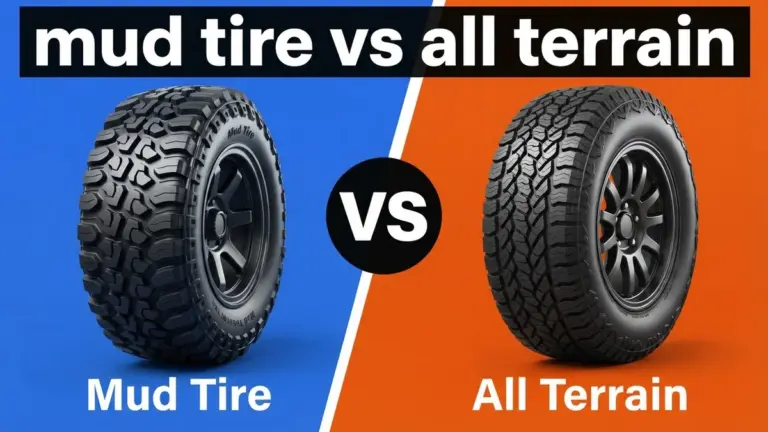
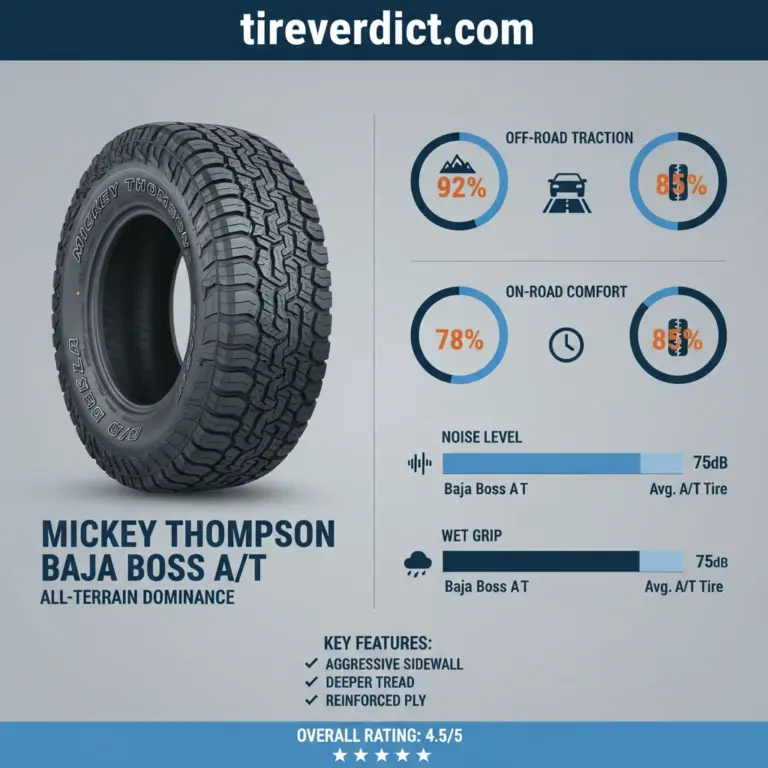
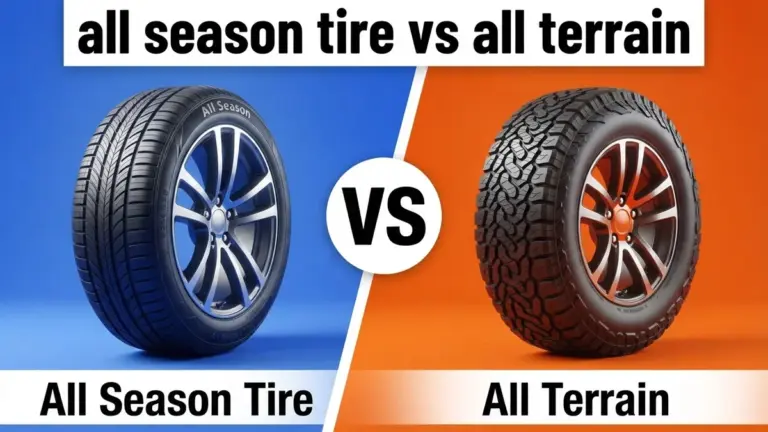
Trading a standard Highway Tire for a set of aggressive All Terrain tires costs you roughly 2 miles per gallon in fuel economy while shaving nearly 20,000 miles off expected tread life. That is the stark physical reality of tire tread physics. Modern truck and SUV owners face this exact crossroad during replacement time. Do you prioritize everyday refined comfort or occasional off-pavement capability? While aggressive shoulder lugs look impressive sitting in the driveway, the daily commute demands smooth rolls, low noise, and maximum longevity. In our head-to-head comparison, we pitted these two tire categories against each other across pavement, gravel, mud, and highway sloughs.
Quick Verdict: Highway Tires win for 90% of everyday commuters due to superior fuel efficiency, whisper-quiet cabin comfort, and 70,000-mile treadwear warranties. However, All Terrain tires are essential if you frequently navigate unpaved trailheads, deep snow, or mud, sacrificing about 2 MPG and $240 per set for rugged off-road traction.
Daily commuters and road trippers prioritizing whisper-quiet comfort, maximum fuel efficiency, and 70,000+ mile longevity.
Truck and SUV owners who regularly haul off-road, tackle rocky trails, or drive through deep winter conditions.
- Highway Tire models offer up to 70,000 miles of tread life versus 55,000 miles for All Terrain options.
- Choosing All Terrain tires results in a 1 to 2.5 MPG penalty due to elevated rolling resistance.
- Highway Tire cabin noise measures roughly 64 dB at highway speeds compared to 71 dB on All Terrain setups.
- An average set of 18-inch Highway Tire rubber costs $680, saving around $240 over All Terrain alternatives.
- All Terrain options carry up to 13/32-inch initial tread depth and 3PMSF severe snow ratings.
Highway Tire vs All Terrain: Head-to-Head Specs
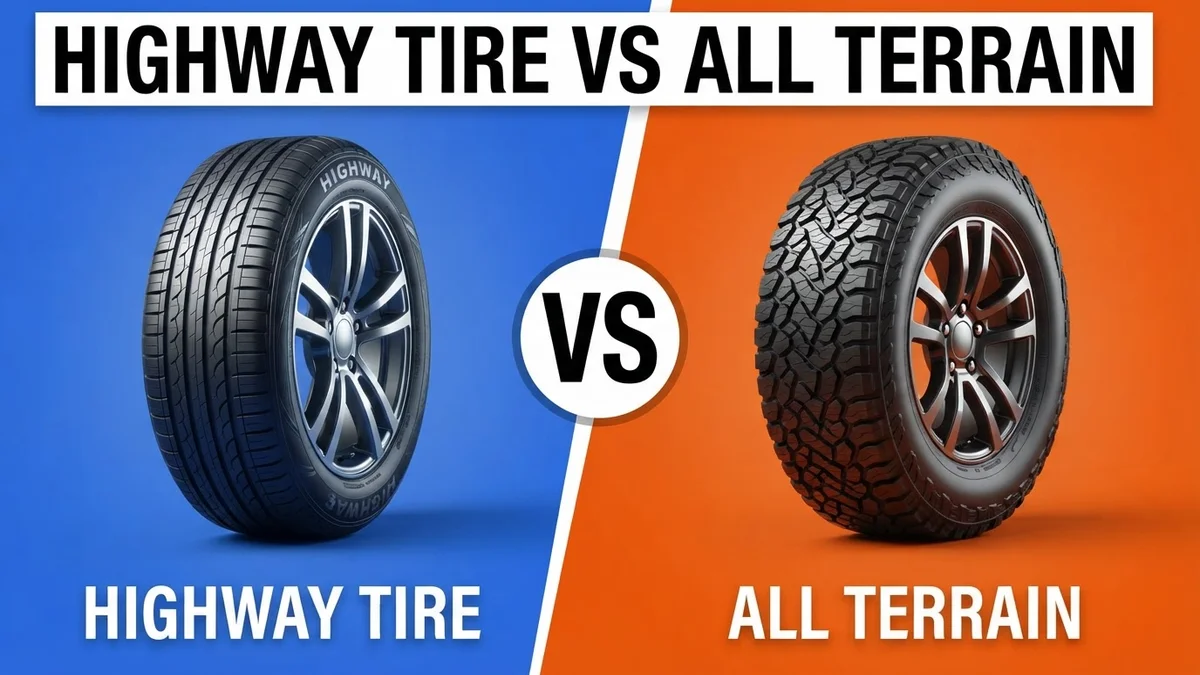
Evaluating tire specifications reveals fundamental engineering differences between these two designs. A typical Highway Tire features dense circumferential grooves and shallow tread voids optimized for pavement contact, delivering treadwear warranties reaching up to 70,000 miles. Conversely, an All Terrain tire uses deeper 12/32-inch tread voids and staggered shoulder blocks engineered to clean out mud and grab loose rock. These structural variances directly impact everything from wet braking distances to high-speed steering response on dry asphalt.
✓ = better value in that row. Sourced from manufacturer specifications.
Highway Tire vs All Terrain: Performance & Category Ratings
Performance scores highlight two vastly different sets of engineering priorities. Highway Tire models dominate on pavement, posting a commanding 9.2 in comfort and noise alongside a 9.1 in fuel economy. Their closed shoulder ribs and continuous center tread blocks reduce cabin hum to a whisper while minimizing rolling resistance. They also claim victory in tread longevity with a 9.0 rating, backed by hard-wearing rubber compounds that routinely outlast aggressive alternatives by tens of thousands of miles. That directly drives an 8.8 score in value for money.
However, the dynamic flips completely once asphalt ends or winter storms hit. All Terrain tires score a dominant 9.2 off-road compared to a dismal 3.5 for Highway Tire options. Open tread blocks, reinforced sidewalls, and stone ejectors allow All Terrain models to claw through loose dirt, sand, and slick mud where highway rubber spins helplessly. Severe weather traction also heavily favors All Terrain tires at 8.8 versus 6.5, thanks to Three-Peak Mountain Snowflake (3PMSF) certifications and deep, multi-directional siping. Finally, curb appeal plays a major role in buyer decisions. All Terrain tires earn a massive 9.0 in vehicle aesthetics, giving trucks and SUVs an aggressive, capable stance that a subtle 6.0-rated Highway Tire cannot match.
Highway Tire
All Terrain
Highway Tire Vs All Terrain by the Numbers
Raw data cuts straight through marketing claims when comparing tire classes. Looking closely at real-world telemetry reveals the measurable trade-offs you make with every turn of the wheel. From measurable decibel levels inside the cabin at 65 mph to long-term ownership costs across 60,000 miles, the physical numbers clearly demonstrate why tread compound and void ratio dictate your daily driving experience. Here is how empirical testing data breaks down between both tire types.
Highway Tire
All Terrain
Hover any bar for exact values. Each metric scaled independently.
Highway Tire: Strengths and Weaknesses
Choosing a Highway Tire is a decision rooted in practical daily driving. The primary strength lies in uncompromising pavement efficiency. On long interstate road trips, the continuous center rib delivers sharp center feel and immediate steering response. Cabin noise stays virtually silent, registering up to 4 decibels quieter than rugged alternatives. Fuel efficiency remains uncompromised because low rolling resistance compounds require less kinetic energy to maintain speed. Add in standard 70,000-mile warranties, and your cost-per-mile stays remarkably low over years of ownership.
The drawbacks become obvious the second you venture past the shoulder of the road. Wet grass, deep mud, or loose trail gravel instantly pack tight into the shallow tread grooves, turning the tire into a slick rubber cylinder. Severe winter storms also expose clear limitations; hard rubber compounds lose flexibility in sub-zero temperatures, stretching stopping distances on icy pavement. Keep a reliable 🛒 Digital Tire Pressure Gauge → in your glove box to maintain precise inflation, as running low PSI accelerates shoulder wear on highway tread patterns.
If your truck rarely leaves paved roads and you value long tread life above aggressive styling, investing in a set of premium highway rubber makes complete financial sense.
Price & availability subject to change. As an Amazon Associate we earn from qualifying purchases.
All Terrain: Strengths and Weaknesses
All Terrain tires excel by transforming standard trucks into capable off-road machines. Their heavy-duty construction features cut-and-chip resistant rubber compounds, reinforced sidewall plies, and deep tread lugs that dig into rutted trails with relentless grip. You gain immense confidence when pulling heavy trailers across muddy construction sites or hauling camping gear up rocky mountain passes. Furthermore, winter capability is outstanding; most carry severe snow ratings that bite through deep snowpacks where standard street tires stall out. To optimize trail traction, airing down with a quality 🛒 Tire Deflator Kit → expands the footprint before reinflating with a 🛒 Portable Tire Inflator →.
Those rugged capabilities come with distinct daily sacrifices. Heavy tire mass increases unsprung weight, blunting quick acceleration and adding wear to suspension components. You will feel a subtle harmonic vibration through the steering wheel at highway speeds, accompanied by a noticeable tread hum. Tread wear accelerates faster, with typical warranties capping out around 50,000 miles. Expect to pay roughly $240 more per set upfront while consuming about 2 MPG extra at the pump.
For drivers who regularly explore backcountry trails or tackle harsh winter weather, the rugged versatility of this tire class easily justifies the added fuel and upfront cost.
Price & availability subject to change. As an Amazon Associate we earn from qualifying purchases.
- ✅ Extends treadwear life up to 70,000 miles or more
- ✅ Delivers up to 2 MPG better fuel efficiency than all-terrain tires
- ✅ Whisper-quiet cabin experience with low rolling noise (64 dB average)
- ✅ Shorter wet and dry stopping distances on asphalt roads
- ✅ Costs $200–$300 less per set than comparable all-terrain options
- ❌ Prone to slipping on loose mud, deep sand, and unpaved steep trails
- ❌ Lacks 3-Peak Mountain Snowflake severe snow ratings
- ❌ Lacks aggressive sidewall styling that truck enthusiasts prefer
- ✅ Superior grip in mud, loose gravel, deep snow, and rocky terrain
- ✅ Reinforced 3-ply sidewalls resist cuts, punctures, and sharp rocks
- ✅ 3PMSF severe winter certification on most modern models
- ✅ Rugged, aggressive tread pattern enhances vehicle truck styling
- ✅ Higher load durability during heavy trail hauling and off-road vehicle recovery
- ❌ Reduces fuel economy by 1 to 2.5 MPG due to high rolling resistance
- ❌ Generates noticeable cabin humming noise at highway speeds (71 dB)
- ❌ Higher purchase cost and shorter treadwear warranty (50k–60k miles)
Highway Tire or All Terrain: Which Should You Choose?
Selecting between these two tire categories comes down to honest self-assessment regarding how you actually use your vehicle. Do you spend 95% of your driving time commuting on interstate highways and suburban thoroughfares? If so, the Highway Tire is your smartest choice. Daily commuters, highway haulers, and suburban family drivers benefit immensely from low rolling resistance and quiet operation. You save hundreds of dollars in fuel over the lifespan of the tires, while enjoying a plush ride that lets you listen to podcasts without persistent cabin hum.
Conversely, choose an All Terrain tire if your routine demands genuine off-pavement traction. If your weekend plans include towing a boat down unpaved ramps, navigating muddy job sites, hunting in rural timberlands, or driving through heavy snow belts, the sacrifice in fuel economy pays immediate dividends. The tough sidewalls prevent sharp rocks from causing trailside flats, saving you from disastrous breakdowns miles away from cell service. If you store seasonal tires in your garage during off-months, keeping them protected under a 🛒 Heavy-Duty Tire Cover → preserves the rubber compound against UV degradation.
Budget-conscious buyers who want maximum value per mile should lean heavily toward highway designs. However, if vehicle aesthetics and go-anywhere capability top your list of priorities, paying the extra $240 per set for all-terrain rubber is money well spent.
Daily commuters and road trippers prioritizing whisper-quiet comfort, maximum fuel efficiency, and 70,000+ mile longevity.
Truck and SUV owners who regularly haul off-road, tackle rocky trails, or drive through deep winter conditions.
Final Verdict: Highway Tire vs All Terrain
In our head-to-head evaluation, the Highway Tire emerges as the overall winner for roughly 90% of everyday drivers. It delivers unmatched cabin tranquility, exceptional tread longevity backed by 70,000-mile warranties, and superior fuel efficiency that keeps money in your wallet every single month. It is simply the most practical, cost-effective choice for paved commutes and highway cruising.
However, victory comes with a strict caveat regarding surface terrain. The All Terrain remains indispensable for truck owners who regularly brave mud, rocky trails, or severe winter blizzards. Choosing between them ultimately hinges on one fundamental trade-off: trading roughly 2 MPG and $240 per set for go-anywhere off-road confidence and aggressive visual appeal. If pavement dominates your daily drive, stick with the Highway Tire; if the trail calls every weekend, step up to the All Terrain.
As an Amazon Associate we earn from qualifying purchases.
Highway Tire vs All Terrain: Frequently Asked Questions
Is Highway Tire better than All Terrain?
Highway Tire options are better for 90% of daily drivers because they provide a quieter ride, stop 11 feet shorter in wet pavement tests, and last up to 70,000 miles compared to 55,000 miles on All Terrain tires while saving 1 to 2 MPG in fuel.
What is the biggest difference between Highway Tire and All Terrain?
The primary difference lies in tread design and block spacing. Highway Tire models feature continuous shoulder ribs for quiet asphalt cruising, while All Terrain tires use deep, open tread channels and reinforced 3-ply sidewalls to clean out mud and bite into loose earth.
Do All Terrain tires decrease gas mileage significantly?
Yes, switching from Highway Tire to All Terrain typically reduces fuel economy by 1.0 to 2.5 MPG. The heavier casing and open tread blocks increase rolling resistance, adding roughly $180 to $300 in extra annual fuel costs for average drivers.
Are All Terrain tires worse in rain on pavement?
Yes, on wet asphalt, All Terrain options require about 139 feet to stop from 60 MPH compared to 128 feet for a Highway Tire. The large tread blocks reduce the total surface contact area on flat pavement.
Which tire type lasts longer?
Highway Tire models last significantly longer, offering warranties up to 70,000 miles. All Terrain options average 50,000 to 55,000 miles because their softer rubber and high tread voids accelerate rubber wear under highway friction.