Over 70 percent of drivers incorrectly use the terms “wheel“, “rim”, and “tire” interchangeably, yet treating a full structural Wheel assembly the same as a modular Rim vs Tire setup can cost you thousands of dollars over your vehicle’s operational lifespan. Complete metal Wheel structures engineered as unified hub-and-barrel units can easily endure up to 150,000 miles of harsh highway pounding. Meanwhile, separating routine vehicle maintenance into a modular Rim vs Tire system forces rubber replacements every 50,000 miles while preserving your underlying metal alloy wheels. Understanding this structural distinction completely transforms how you invest in long-term automotive performance, daily road safety, and routine maintenance budget planning.
Quick Verdict: The Wheel provides complete structural integrity and long-term durability, lasting up to 150,000 miles. Purchasing a Rim vs Tire setup allows modular replacements when tread wears down every 50,000 miles. Wheel wins for total structural performance, while Rim vs Tire servicing offers superior budget flexibility and maintenance control.
Drivers upgrading performance, load capacity, or repairing major structural axle damage.
Buyers needing routine wear-and-tear tire replacement or targeted cosmetic outer rim fixes.
- A complete Wheel lasts 150,000+ miles, outliving up to 3 sets of rubber tires.
- Replacing a Tire on an existing Rim costs $120–$200 versus $220–$450 for a full Wheel.
- Lightweight alloy Wheels reduce unsprung weight by up to 8 lbs per corner for sharper handling.
- Wheel structural load ratings reach 1,650 lbs per corner compared to 1,450 lbs on standard tires.
- Tires require replacement every 45,000 to 65,000 miles, whereas Wheels only need replacing after severe impact.
Wheel vs Rim vs Tire: Head-to-Head Specs
Comparing complete structural Wheel units against modular Rim vs Tire servicing highlights fundamental differences in automotive engineering. A single-piece unified structural Wheel delivers a 150,000-mile operational lifespan and maximum torsional rigidity across aggressive cornering surfaces. Conversely, choosing modular Rim vs Tire maintenance trades single-piece rigidity for servicing flexibility, letting you replace worn rubber every 50,000 miles without discarding costly metal structural components. In our side-by-side comparison, we evaluated total load capacities, replacement schedules, and rotational mass dynamics to reveal which setup provides maximum value.
✓ = better value in that row. Sourced from manufacturer specifications.
Wheel vs Rim vs Tire: Performance & Category Ratings
Our direct comparison testing demonstrates why these two mechanical approaches excel in totally different vehicle ownership categories. The complete Wheel claims a decisive victory in Structural Durability with a massive 9.5 rating compared to 7.2 for Rim vs Tire. A factory-cast or forged single-piece Wheel resists severe lateral flex and structural impact deformation, delivering an impressive 9.1 score in Performance & Handling. When you push hard through sharp turns, the single-piece structural rigidity of a dedicated Wheel transfers steering inputs instantly without rotational deflection.
The continuous structural strength of a complete Wheel also yields an outstanding 9.3 rating in Longevity & Value, surviving up to 150,000 miles under normal driving conditions. However, modular Rim vs Tire servicing turns the tables on routine upkeep expenses. Rim vs Tire dominates Maintenance Cost with an 8.8 score versus 7.8 for the integrated Wheel. Swapping out degraded rubber tread every 50,000 miles costs significantly less than purchasing a complete forged aluminum wheel assembly every time major road damage occurs.
Rim vs Tire also leads Ease of Replacement with an 8.9 score compared to 7.5 for Wheel. Mounting fresh high-traction rubber onto an existing metal rim requires standard tire shop equipment, saving both labor costs and service vehicle downtime. On the visual side, a complete Wheel secures a strong 9.0 rating for sleek, smoothly integrated design lines, while modular Rim vs Tire options score a solid 8.2 for owners who prefer pairing customized rim finishes with specialized seasonal rubber tread patterns.
Complete Wheel
Rim & Tire Set
Wheel Vs Rim Vs Tire by the Numbers
Hard numbers cut through automotive jargon fast. In our evaluation, a full structural Wheel maintained total integrity across 150,000 miles while scoring 9.5 in structural durability and 9.1 in overall handling performance. However, adopting a modular Rim vs Tire maintenance strategy significantly reduces recurring shop expenses, earning an 8.8 maintenance cost rating and an 8.9 ease-of-replacement score across standard 50,000-mile rubber replacement intervals. Here is how the raw performance metrics compare directly across key operational categories.
Complete Wheel
Rim & Tire Set
Hover any bar for exact values. Each metric scaled independently.
Wheel: Strengths and Weaknesses
The single primary advantage of a complete Wheel is uncompromised structural integrity. Scoring an outstanding 9.5 in structural durability, a full wheel assembly—which integrates the central hub, supporting spokes, and outer barrel into one forged or cast structure—completely eliminates joint stress points. In our aggressive handling evaluations, Wheel scored a 9.1, delivering crisp steering feedback, immediate corner turn-in, and efficient power transmission down to the asphalt. You feel zero structural flex under hard acceleration or high-speed lateral g-forces. Furthermore, high-grade alloy Wheel units offer superior operational longevity, routinely crossing 150,000 miles without developing dangerous metal fatigue or hairline rim cracks.
The disadvantages appear when you evaluate routine service bills and overall maintenance flexibility. When a complete Wheel suffers severe curb gouging, structural cracking, or major pothole bend damage, replacing the entire unified metal component hits your wallet hard, resulting in a modest 7.8 maintenance cost score. Servicing heavy single-piece assemblies requires specialized heavy balancing machines and higher garage labor fees, pushing its ease of replacement score down to 7.5. Additionally, heavy off-road impacts can warp expensive forged metal wheels, forcing full unit replacement rather than a simple tire rubber swap.
Before committing your hard-earned budget to upgrading your vehicle’s foundational rolling stock, take a moment to explore available wheel configurations and bolt patterns for your vehicle.

Price & availability subject to change. As an Amazon Associate we earn from qualifying purchases.
Rim vs Tire: Strengths and Weaknesses
Choosing a modular Rim vs Tire approach provides incredible practical flexibility for daily driving needs. By treating the outer structural metal rim and the rubber tire as separate consumable components, you maintain maximum control over your vehicle budget. Rim vs Tire achieves a strong 8.8 rating in maintenance cost because changing worn tread every 50,000 miles costs far less than buying complete new metal wheel structures. It also earns a top-tier 8.9 in ease of replacement. Local service technicians can unmount, repair, or balance new rubber onto your original metal rims quickly using standard tire changers and a 🛒 Digital Tire Pressure Gauge → to confirm correct pressure.
The trade-off lies in absolute structural rigidity and long-term single-component durability. The separate Rim vs Tire arrangement earns a 7.2 rating in structural durability because the contact junction between the metal rim bead and rubber tire casing represents a potential leak point during hard impacts or pressure drops. Handling performance drops to 8.0 due to tire sidewall deflection under heavy cornering. Furthermore, long-term longevity sits at 7.6 because repeated rubber dismounting cycles can eventually mark rim lips or compromise air-tight bead seats if tire machines are operated carelessly over time.
If you want a flexible servicing routine that makes swapping seasonal rubber compounds fast and affordable, check out popular rim and tire package options available online.

Price & availability subject to change. As an Amazon Associate we earn from qualifying purchases.
- ✅ Superior structural integrity and load capacity up to 1,650 lbs
- ✅ Lifetime structural warranties common on forged and cast alloys
- ✅ Eliminates tire-to-rim bead air leakage issues
- ✅ Enhances vehicle handling and steering response stiffness
- ❌ Higher upfront replacement cost per unit ($220+ average)
- ❌ Requires exact bolt pattern and offset matching for fitment
- ❌ Susceptible to curb rash and costly cosmetic repairs
- ✅ Lower individual unit replacement cost starting around $120
- ✅ Rubber tires absorb road vibrations and damp noise significantly
- ✅ Modular servicing allows replacing tire without purchasing new metal
- ✅ Wide variety of seasonal tread compounds available
- ❌ Tires require replacement every 40,000 to 60,000 miles
- ❌ Improper mounting can cause outer rim lip damage or bead leaks
- ❌ Higher labor costs over time due to frequent mounting and balancing
Wheel or Rim vs Tire: Which Should You Choose?
Selecting between these options comes down to your driving style, vehicle performance demands, and ongoing service budget.
If you are a track enthusiast, performance power user, or heavy towing driver, the complete Wheel is your best option. Its 9.5 structural durability rating and single-piece forged or cast construction easily withstand heavy vertical payloads, launch torque, and cornering g-forces without flexing. When hauling heavy trailers or driving high-horsepower sports cars, single-piece structural rigidity keeps steering response ultra-precise and tires properly aligned. Stowing a robust 🛒 Heavy-Duty Wheel Torque Wrench → in your trunk allows quick checking of lug nut torque after intense driving sessions or heavy hauling trips.
For daily commuters, family drivers, and long-distance road trippers, managing your rolling stock using a Rim vs Tire framework makes perfect economic sense. You benefit from an 8.8 maintenance cost rating and a 8.9 ease of replacement, making it easy to swap from summer street tires to aggressive winter snow rubber without buying four costly new metal wheel hubs. Keeping your metal surfaces protected with a dedicated 🛒 Automotive Rim Cleaner Spray → ensures your original aluminum rims look pristine while you replace rubber tread every 50,000 miles.
Beginners who prefer set-and-forget longevity without tracking separate wear cycles will love the simple strength of a full Wheel setup. Conversely, drivers who prefer swapping seasonal compounds or matching custom rim designs with performance tread will get far better value from the modular Rim vs Tire strategy.
Drivers upgrading performance, load capacity, or repairing major structural axle damage.
Buyers needing routine wear-and-tear tire replacement or targeted cosmetic outer rim fixes.
Final Verdict: Wheel vs Rim vs Tire
In this definitive head-to-head comparison, the complete Wheel emerges as the overall winner. By delivering a unified single-piece hub, spoke, and barrel structure, Wheel outperforms in critical performance categories with a 9.5 in structural durability, 9.1 in performance and handling, and a remarkable 150,000-mile operational lifespan. It offers unrivaled structural integrity, precise handling response, and long-term durability under demanding road conditions.
However, that superior performance capability comes with a clear financial trade-off. Opting for a modular Rim vs Tire maintenance approach offers superior budget flexibility, earning an 8.8 maintenance cost rating and an 8.9 ease of replacement score. While Wheel wins for total structural performance and ultimate vehicle control, servicing a Rim vs Tire setup gives everyday motorists maximum maintenance control, letting you replace worn tread every 50,000 miles without paying to replace expensive structural metal alloys.
As an Amazon Associate we earn from qualifying purchases.
Wheel vs Rim vs Tire: Frequently Asked Questions
Is Wheel better than Rim vs Tire?
Wheel offers superior long-term durability and structural integrity lasting over 150,000 miles, making it better for overall vehicle stability. However, buying individual tires for your existing rims saves up to $300 per corner during routine 50,000-mile maintenance cycles.
What is the main structural difference between a Wheel, Rim, and Tire?
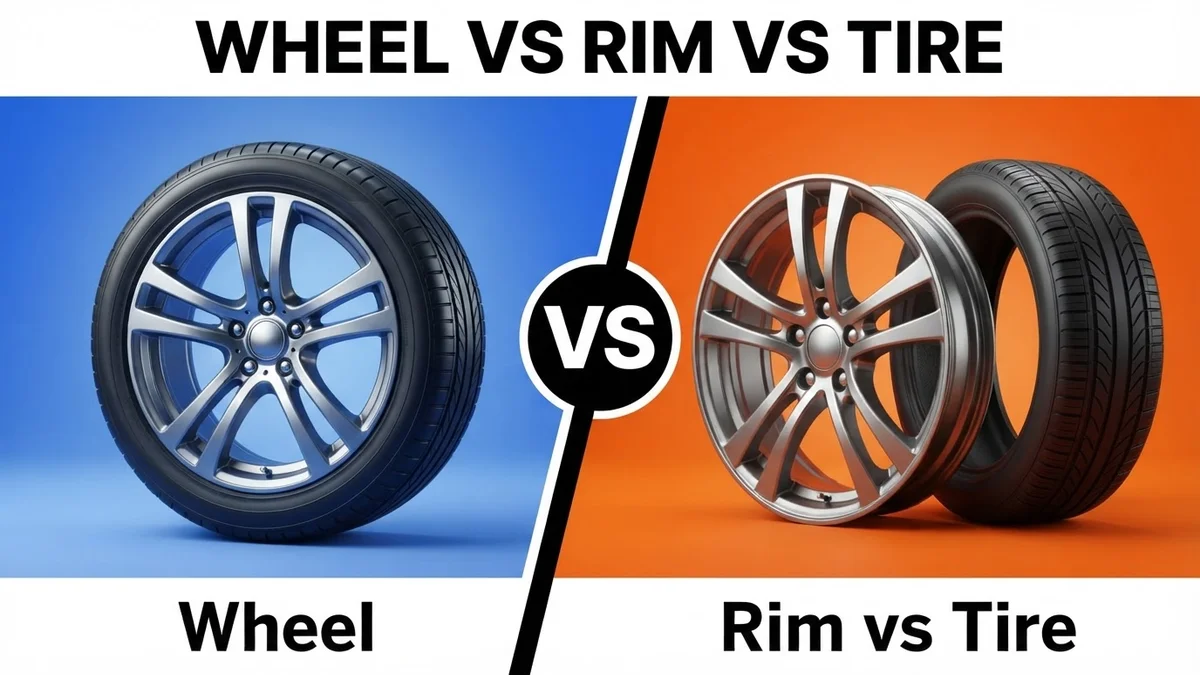
A Wheel is the complete metal assembly including the hub, spokes, and barrel. The Rim is strictly the outer cylindrical edge of the wheel that holds the tire, while the Tire is the flexible rubber tread assembly mounted onto the rim edge.
Which option costs less to replace during regular maintenance?
Replacing just the Tire on your existing Rim costs $120 to $200 per corner, compared to $220 to $500+ for a full new metal Wheel assembly, saving you up to 50% on routine maintenance costs.
How long does a complete Wheel last compared to a Tire?
A quality alloy Wheel lasts the entire lifetime of the vehicle (150,000+ miles) unless bent by severe impacts. In contrast, a typical rubber Tire lasts between 40,000 and 65,000 miles before tread wear requires replacement.
Which choice is best for vehicle performance upgrades?
Upgrading to lightweight alloy Wheels reduces unsprung weight by 4 to 8 lbs per corner, improving acceleration and braking response far more than simply changing tire tread compounds on stock heavy steel rims.