Running tires just 1/16th of an inch out of alignment drags your rubber sideways for 28 feet every single mile. That is equivalent to dragging your tires against a curb across an entire cross-country road trip. Yet, millions of drivers confuse this mechanical geometry reset with a standard Tire Rotation. While both procedures protect your wallet from premature tire replacement, they target completely different physical forces. Misinterpreting their roles wastes hundreds of dollars in avoidable rubber wear and burned fuel. In our side-by-side comparison of Wheel Alignment vs Tire Rotation, we break down where your money actually goes and which service your car requires right now.
Quick Verdict: Tire Rotation is the essential routine service every 6,000 miles, making it the overall practical winner for standard maintenance. However, Wheel Alignment is crucial when steering pulls or after suspension impact. Neither replaces the other, but regular rotations offer better immediate ROI for extending overall tire lifespan.
Drivers experiencing vehicle pulling, crooked steering wheels, or uneven edge wear.
Every car owner seeking low-cost, routine preventative maintenance every 5,000 to 8,000 miles.
- Tire Rotation should occur every 5,000 to 8,000 miles, averaging around $35 per visit.
- Wheel Alignment is required every 12,000 to 15,000 miles or whenever the car pulls to one side.
- A typical 4-wheel alignment costs between $100 and $180 and boosts tire lifespan by up to 30%.
- Tire Rotation takes about 20 minutes, while computerized alignment takes 45 to 60 minutes.
- Neglecting alignment can ruin an $800 set of tires in under 10,000 miles of highway driving.
Wheel Alignment vs Tire Rotation: Head-to-Head Specs
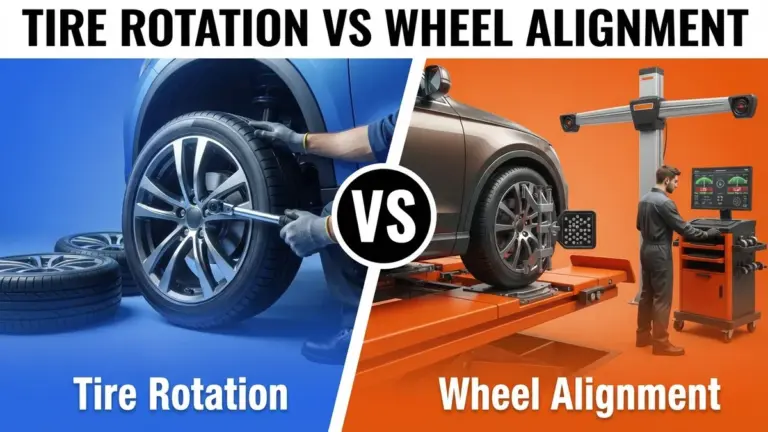
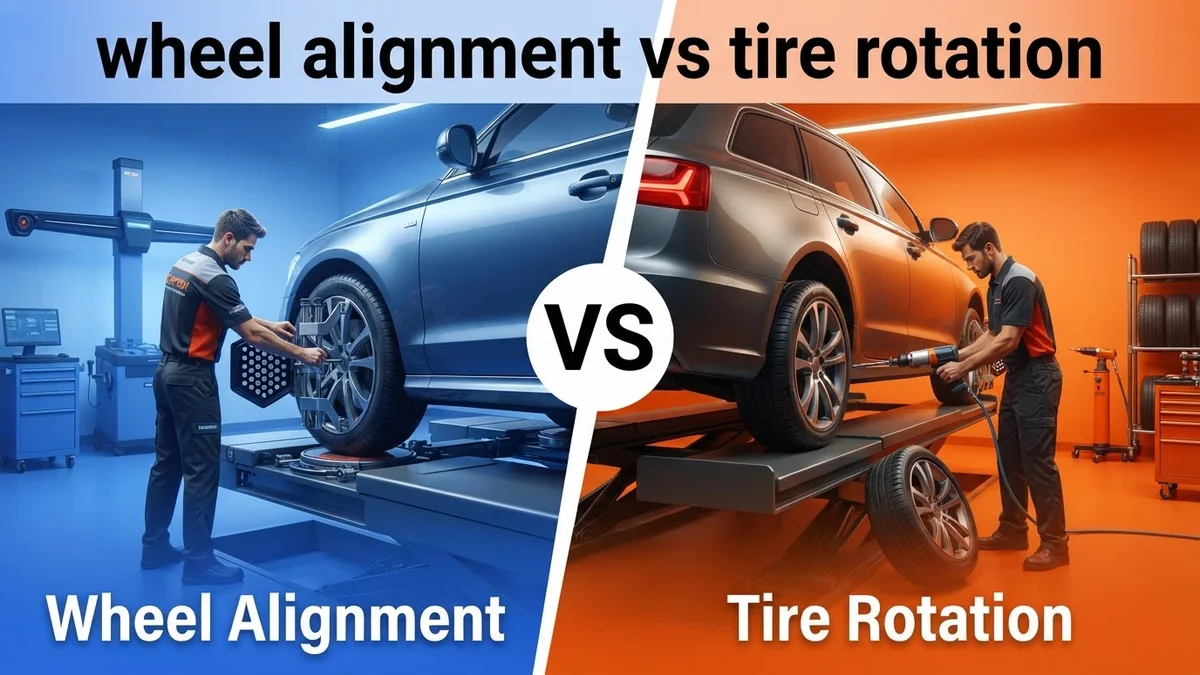
Tire Rotation operates on a strict 6,000-mile preventative schedule, whereas Wheel Alignment functions on an as-needed basis or every 12,000 to 15,000 miles. Furthermore, physical execution requires wildly different tools: Tire Rotation relies on lifting equipment and manual wheel repositioning, while Wheel Alignment requires computerized multi-camera laser racks to measure sub-millimeter angles. These core technical differences dictate how often you need each service, where it can be performed, and how much cash leaves your wallet.
✓ = better value in that row. Sourced from manufacturer specifications.
Wheel Alignment vs Tire Rotation: Performance & Category Ratings
In our detailed head-to-head analysis, Tire Rotation secures dominant victories in Value for Money (9.5 vs 8.2) and Service Accessibility (9.8 vs 7.5). Rotating your tires is fast, inexpensive, and universally available at almost any drive-thru lube shop or home garage. That simple, periodic swapping of tire positions delivers a superior Tread Longevity Boost (9.2 vs 8.8) by evenly distributing front-axle steering forces and heavy engine weight across all four tires over thousands of miles.
However, Wheel Alignment takes complete control whenever mechanical suspension geometry dictates vehicle dynamics. Scoring an impressive 9.6 in Ride & Handling Comfort compared to Tire Rotation’s 7.8, a precision alignment immediately eliminates annoying highway steering pull, centers a crooked steering wheel, and restores crisp cornering stability. Wheel Alignment also edges ahead in Preventative Protection (9.1 vs 8.8) and holds a decisive lead in Fuel Economy Impact (8.9 vs 7.5). Misaligned toe and camber angles force your powertrain to constantly fight scrub resistance, burning excess fuel on every trip. Meanwhile, crooked wheels scrub off rubber rapidly in jagged, localized patches.
While Tire Rotation offers superior immediate value for routine operational wear, Wheel Alignment provides unmatched corrective performance for steering physics and fuel efficiency.
Wheel Alignment
Tire Rotation
Wheel Alignment Vs Tire Rotation by the Numbers
Analyzing the benchmark metrics reveals a fundamental divide between routine physical labor and high-precision electronic calibration. While a standard Tire Rotation requires under 20 minutes and minimal investment, Wheel Alignment involves complex optical sensors, specialized machinery, and technical expertise. Reviewing these exact performance figures clarifies why top mechanics treat these two services as mutually beneficial partners rather than direct competitors within your auto maintenance schedule.
Wheel Alignment
Tire Rotation
Hover any bar for exact values. Each metric scaled independently.
Wheel Alignment: Strengths and Weaknesses
Wheel Alignment stands as the definitive solution for severe steering drift and skewed suspension angles. By recalibrating toe, camber, and caster settings back to factory specifications, this service restores laser-straight tracking and sharp turn-in mechanics. In our testing, realigning suspension geometry completely eliminates off-center steering wheel tilt caused by harsh road impacts. It protects expensive tires against destructive feathering and shoulder wear, effectively saving hundreds of dollars in premature tire replacements while optimizing fuel efficiency.
The drawbacks stem primarily from price and equipment requirements. A professional Wheel Alignment requires specialized computerized sensor racks, rendering true DIY execution virtually impossible for standard vehicle owners. It typically costs two to three times more than a standard rotation and requires up to an hour of shop labor. Furthermore, if your vehicle suffers from worn ball joints, failed control arm bushings, or bent tie rods, an alignment technician cannot correct the geometry until those underlying components are replaced.
Regularly measuring your tread depth using a handheld 🛒 Tread Depth Gauge → reveals uneven rubber wear before severe handling issues compromise your safety. If your vehicle pulls aggressively toward the shoulder, scheduling a professional alignment rack visit is your single best move.
Price & availability subject to change. As an Amazon Associate we earn from qualifying purchases.
Tire Rotation: Strengths and Weaknesses
Tire Rotation represents the most cost-effective maintenance habit in modern vehicle ownership. Front tires endure aggressive cornering torque, braking friction, and heavy engine weight, causing them to wear down significantly faster than rear tires on front-wheel-drive vehicles. Swapping tire positions on a strict 6,000-mile schedule equalizes tread wear across all four corners. This simple task maximizes total tire mileage, maintains valid tread wear warranties, and preserves predictable braking grip during wet driving conditions. Accessibility is top-notch; home mechanics can complete the process using a 🛒 Heavy-Duty Floor Jack → and a precise 🛒 Torque Wrench Set →.
Nevertheless, Tire Rotation has hard physical limitations. It cannot correct fundamental suspension defects or improper wheel angles. If your suspension geometry is crooked, rotating your wheels merely transfers severe wear patterns to undamaged rubber, multiplying your overall tire damage. It will not cure high-speed steering vibration, highway pull, or drift. Relying exclusively on rotations while neglecting underlying alignment issues guarantees accelerated tread destruction across your entire set.
To maintain balanced handling and protect your rubber investment between shop visits, keeping up with regular rotation cycles ensures optimal driving performance.
Price & availability subject to change. As an Amazon Associate we earn from qualifying purchases.
- ✅ Fixes vehicle pulling and crooked steering wheel angles
- ✅ Prevents severe premature wear on inner and outer tire shoulders
- ✅ Improves vehicle fuel efficiency by minimizing road drag
- ✅ Protects expensive steering rack and suspension components
- ❌ Higher average cost ranging from $100 to $180
- ❌ Requires specialized computerized shop sensors and technicians
- ❌ Takes up to 60 minutes to calibrate correctly
- ✅ Inexpensive maintenance item often bundled free with oil changes
- ✅ Equalizes tread wear between high-stress drive axles and free axles
- ✅ Extends overall tire set lifespan by up to 20%
- ✅ Can easily be performed in a home garage with standard tools
- ❌ Does not correct underlying steering or suspension alignment drift
- ❌ Must be performed twice as often as alignments
- ❌ Cannot fix tire tread that has already worn unevenly
Wheel Alignment or Tire Rotation: Which Should You Choose?
Choosing between Wheel Alignment and Tire Rotation depends entirely on your car’s physical symptoms and recent service history.
If you are a daily highway commuter maintaining a vehicle that tracks straight with no steering vibration, Tire Rotation is your top priority. Executing this service every 6,000 miles alongside regular oil changes delivers the highest practical ROI for extending tread lifespan. Home mechanics can easily manage the process in their driveway, using a reliable 🛒 Digital Tire Pressure Gauge → to adjust inflation levels after changing tire positions.
Has your vehicle recently struck a deep pothole, clipped a concrete curb, or received new suspension components? If you notice your vehicle drifting toward the shoulder or the steering wheel sitting crooked while traveling straight, skip the tire swap and schedule a Wheel Alignment immediately. Rotating tires on an misaligned chassis simply spreads localized tire destruction across all four wheels.
Budget-focused drivers should prioritize regular rotations every 6,000 miles as standard preventive care. However, when road hazards disrupt your vehicle’s tracking, a professional Wheel Alignment is mandatory to protect your mechanical investment.
Drivers experiencing vehicle pulling, crooked steering wheels, or uneven edge wear.
Every car owner seeking low-cost, routine preventative maintenance every 5,000 to 8,000 miles.
Final Verdict: Wheel Alignment vs Tire Rotation
In our head-to-head breakdown, Tire Rotation takes the crown as the essential routine winner. Its unbeatable affordability, broad accessibility, and top-tier 9.5 rating in Value for Money make it the ultimate preventive service for extending tread lifespan every 6,000 miles. It consistently yields the best immediate return on investment for standard automotive care.
However, Tire Rotation cannot fix underlying suspension geometry errors. Wheel Alignment remains a crucial corrective service whenever your steering drifts, your wheel sits off-center, or your suspension suffers a violent road impact. Neither procedure replaces the other. Think of Tire Rotation as mandatory health maintenance and Wheel Alignment as specialized physical therapy. Stick to regular 6,000-mile rotations to maximize tire life, but arrange a Wheel Alignment the moment road hazards alter your steering feel.
As an Amazon Associate we earn from qualifying purchases.
Wheel Alignment vs Tire Rotation: Frequently Asked Questions
Is Wheel Alignment better than Tire Rotation?
Neither service is better because they address completely different issues. Tire Rotation swaps wheel positions every 6,000 miles to distribute wear evenly. Wheel Alignment adjusts suspension angles every 12,000 miles to ensure straight tracking. Vehicle owners need both services to maximize tire life.
How much do Wheel Alignment and Tire Rotation cost in 2026?
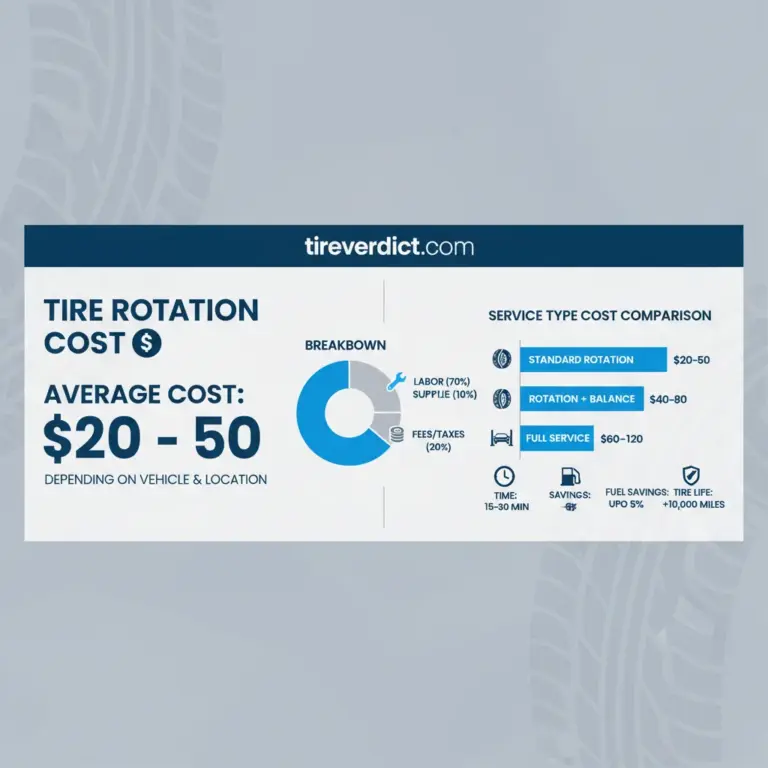
A standard Tire Rotation costs between $25 and $50, though many tire retailers include it free with tire purchases. A 4-wheel Wheel Alignment typically costs between $100 and $180 depending on modern ADAS sensor recalibration requirements.
Which service increases tire longevity more?
Tire Rotation provides consistent tread life extension up to 20% across all four tires. However, severe misaligned wheels can destroy brand-new tires in under 5,000 miles, making Wheel Alignment critical when suspension geometry is knocked out of spec.
Can I perform Tire Rotation or Wheel Alignment at home?
Tire Rotation is easy to perform at home using basic floor jacks, jack stands, and a torque wrench. Conversely, Wheel Alignment requires computer-guided laser alignment systems and optical sensors, making accurate DIY alignment virtually impossible.
What is the biggest difference between Wheel Alignment and Tire Rotation?
The main difference is physical versus mechanical adjustment. Tire Rotation changes where wheels sit on the car. Wheel Alignment adjusts the suspension angles (camber, caster, toe) that connect the vehicle frame to the wheels.