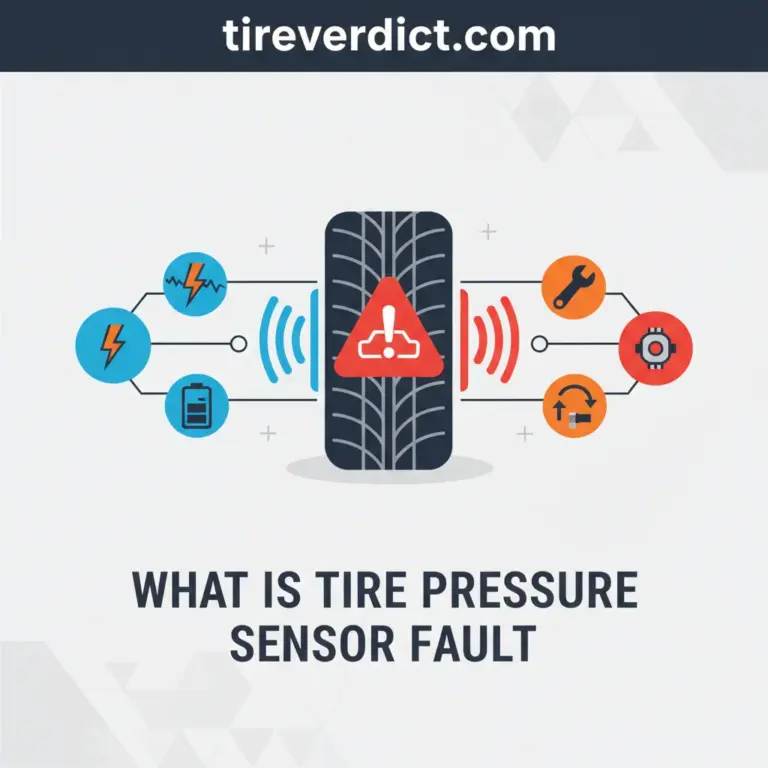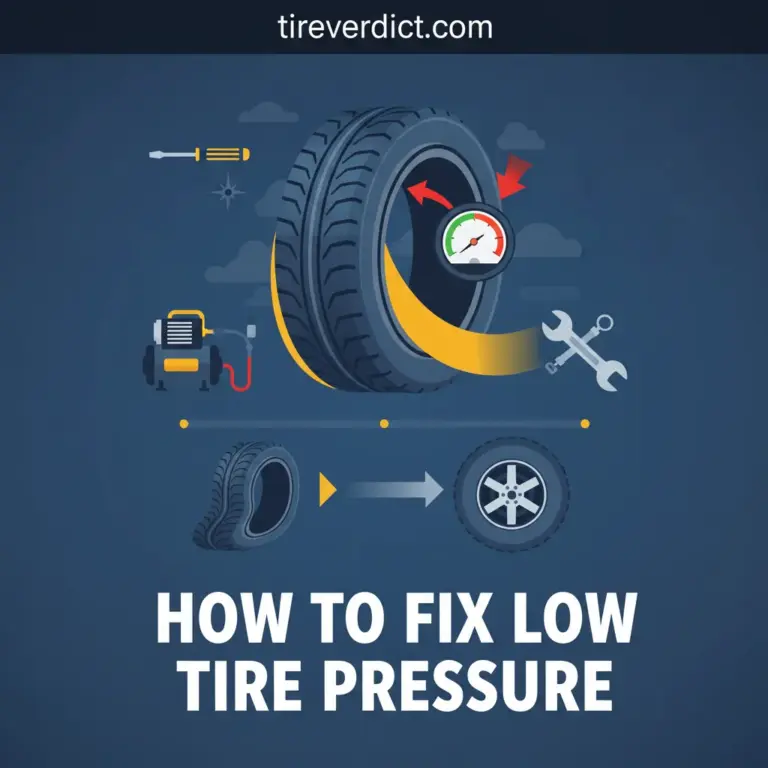
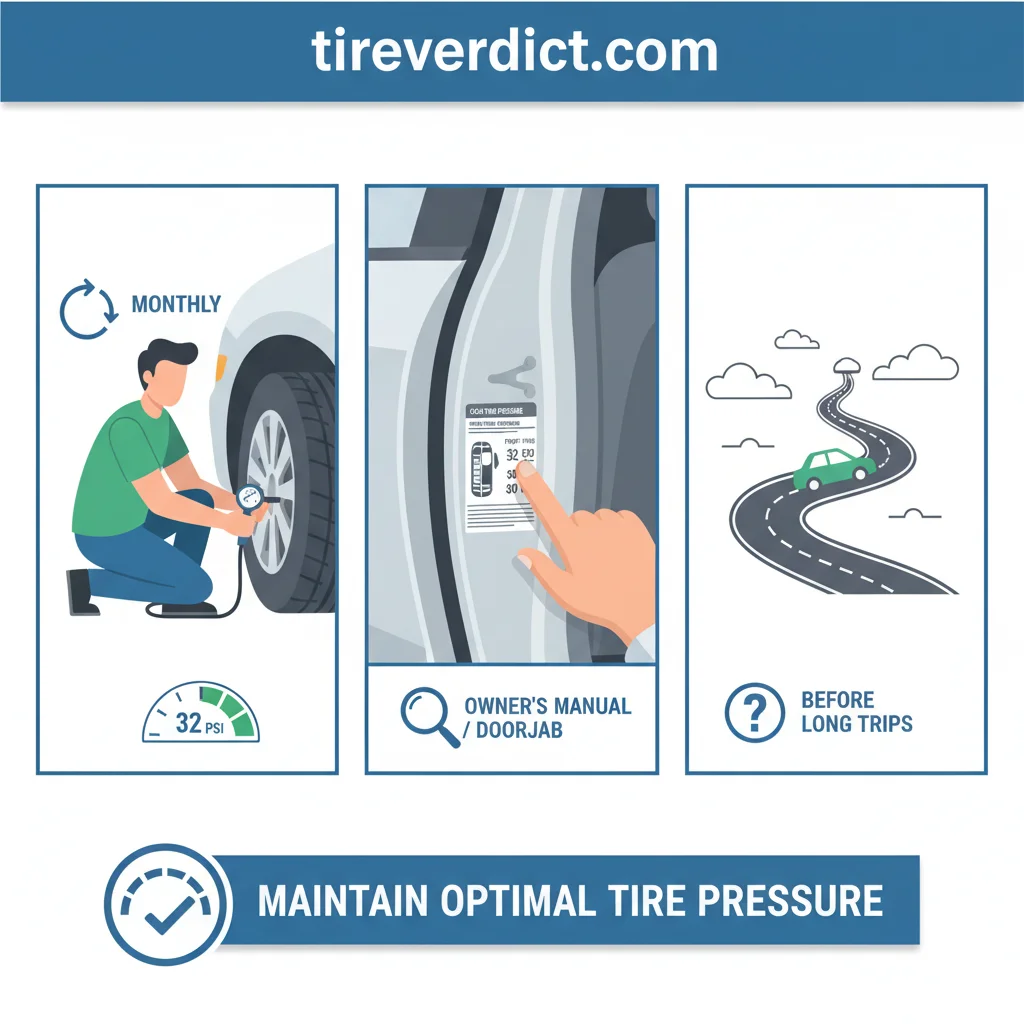
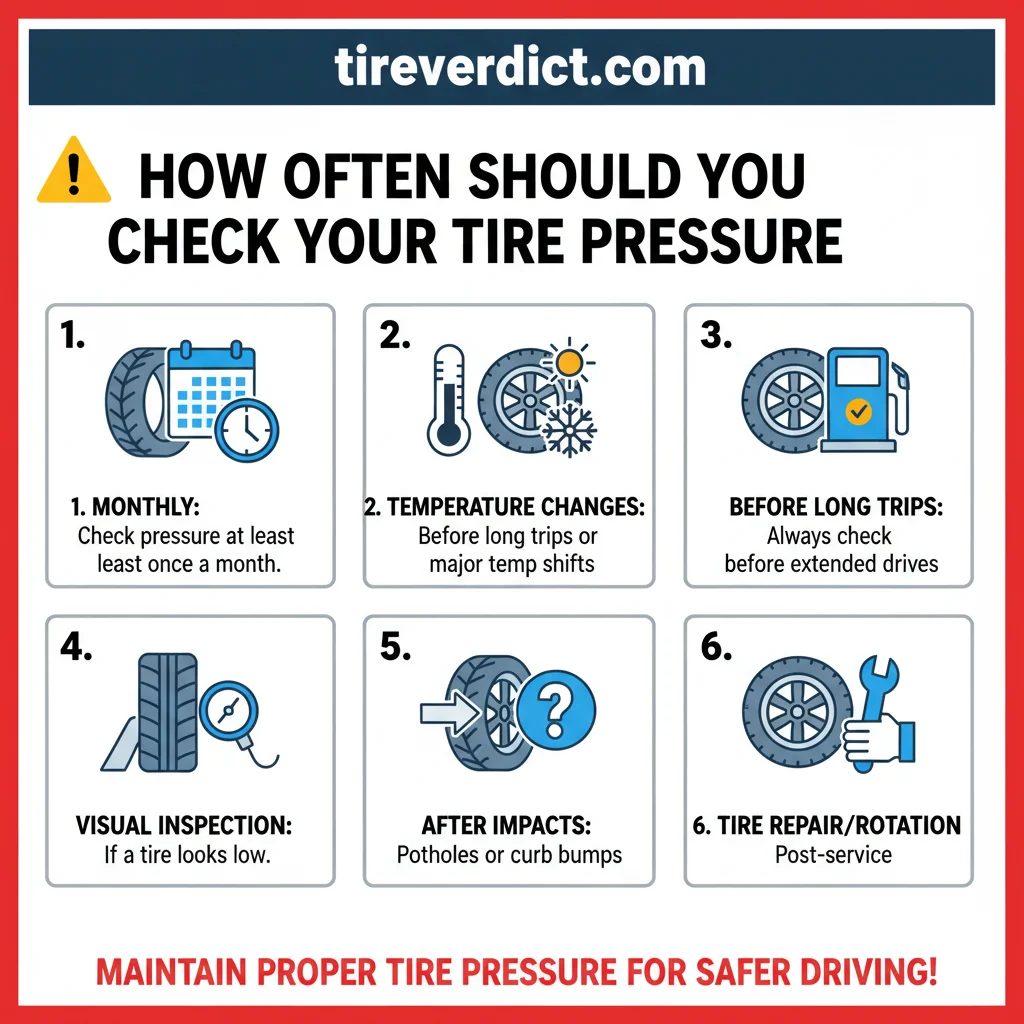
Knowing how often should you check your tire pressure is crucial: aim for monthly checks and always before long journeys.
This simple habit drastically reduces accident risk, enhances vehicle handling, and can improve fuel efficiency by up to 3.3% while extending tire life considerably.
Understanding manual verification, interpreting TPMS warnings, and making seasonal adjustments are essential for consistent performance.
Here is what you need to know about when to check your tire pressure for safety.
⚡ Key Takeaways
- You should check your tire pressure at least once a month.
- No, you should only check pressure when tires are cold.
- Yes, tire pressure changes by approximately 1 PSI for every 10-degree change in temperature.
- No, the TPMS light is designed as a late-warning system.
- The standard recommended frequency (e.g., monthly).
When to Check Your Tire Pressure for Safety
Our research confirms that checking PSI while tires are cold provides the most accurate data for your vehicle records. Tires are considered “cold” if the vehicle has been stationary for at least three hours or has not been driven for more than one mile at moderate speed. This crucial timing ensures reliable measurements, foundational for any accurate maintenance routine.
Why “Cold” Tire Pressure Checks Are Crucial
To get the most accurate tire pressure reading, it’s essential to check your tires when they are “cold.” This simple step is vital for your safety and your vehicle’s performance.
What “Cold” Tires Mean:
Tires are considered “cold” when they have been stationary for at least three hours, or if you’ve driven them for less than one mile at a moderate speed.
Why It Matters:
- Accuracy: Driving heats up the air inside your tires, causing pressure to increase. A hot reading can be misleading, making you think the pressure is correct when it’s actually under-inflated once cooled.
- Safety: Properly inflated cold tires ensure optimal handling, braking, and stability. Incorrect pressure can lead to loss of control, especially during emergency maneuvers.
- Fuel Efficiency: Under-inflated tires increase rolling resistance, forcing your engine to work harder and consume more fuel.
- Tire Longevity: Correct cold tire pressure helps distribute wear evenly across the tire’s tread, extending its lifespan and delaying the need for replacements.
PLACEMENT: After the paragraph ending with “By checking your tire pressure regularly, you’re not just maintaining your vehicle; you’re investing in your safety, wallet, and the environment.”
Monthly Interval Maintenance
Studies show that tires naturally lose approximately 1 PSI of pressure per month under normal conditions, a finding corroborated by the National Highway Traffic Safety Administration (NHTSA). Consistent monthly checks prevent this gradual deflation from accumulating into unsafe levels. Regularly verifying tire pressure helps maintain vehicle stability and responsiveness, contributing to overall road safety.
Pre Travel Safety Checks
Before embarking on any significant journey, an additional tire pressure check is essential. This proactive measure accounts for potential pressure changes due to ambient temperature shifts or minor leaks that might have occurred since the last monthly inspection. Ensuring proper inflation before long trips mitigates the risk of tire-related incidents.
Temperature Based Adjustments
External temperatures significantly influence tire pressure, making temperature-based adjustments necessary for accuracy. Cold weather causes air to contract, leading to a drop in PSI, while warmer temperatures can cause expansion. Adjusting tire pressure according to current weather conditions ensures your tires operate within their optimal range.
Temperature’s Impact on Tire Pressure
Cold Temperature
Air Contracts
PSI Drops
Lower temperatures cause air molecules to contract, reducing the internal pressure within the tire.
Warm Temperature
Air Expands
Higher temperatures cause air molecules to expand, increasing the internal pressure within the tire.
According to the National Highway Traffic Safety Administration (NHTSA), tire-related issues contributed to an estimated 7,515 crashes and 200 fatalities in 2021. These incidents also resulted in approximately 9,936 injuries across the United States. [nhtsa.gov / NHTSA Traffic Safety Facts 2021] confirms the ongoing importance of these checks for preventing accidents.
Understanding this timing helps clarify how important is frequent checking for commuters. These safety insights become even more critical when considering how often commuters should check their tires.
How Important Is Frequent Checking for Commuters
Commuters driving over 50 miles daily face a higher risk of tread wear acceleration due to improper inflation. The cumulative effect of high mileage on under-inflated tires can lead to premature tire replacement and reduced fuel efficiency. Regular pressure checks directly combat these issues, prolonging tire life and saving money.
High Mileage Daily Drivers
For drivers logging extensive miles, frequent pressure checks are a non-negotiable safety practice. Under-inflated tires generate excessive heat, increasing the likelihood of blowouts, a critical concern for those spending hours on the road. Optimal tire pressure ensures even tread wear and maintains the tire’s structural integrity over long distances.
Safety Focused Family Vehicles
Family vehicles often carry heavier loads, making correct tire pressure vital for stability and passenger safety. Improperly inflated tires can compromise steering and braking capabilities, especially when the vehicle is fully loaded. A quick monthly check provides peace of mind, knowing the family is traveling safely.
Economy Minded Vehicle Owners
Maintaining optimal tire pressure directly impacts fuel efficiency, a significant consideration for budget-conscious owners. The U.S. Department of Energy reports that properly inflated tires can improve gas mileage by up to 3 percent. This small, consistent saving adds up over time, demonstrating the financial benefit of regular tire maintenance.
Once you understand the stakes, you can follow our guide on how to measure your air pressure in 7 steps. Even with diligent checks, certain dangerous times exist when inflating vehicle tires.
How to Measure Your Air Pressure in 7 Steps
Step 1: Locate your vehicle’s recommended PSI on the driver-side door jamb placard. This placard provides the specific cold inflation pressure for your vehicle’s original equipment tires, distinct from the maximum pressure listed on the tire sidewall.
Step 2: Ensure your tires are cold before checking. The vehicle should not have been driven for at least three hours or for more than one mile at a moderate speed to obtain an accurate reading.
Step 3: Remove the valve cap from the tire stem. Keep the cap in a secure place to prevent loss during the measurement process.
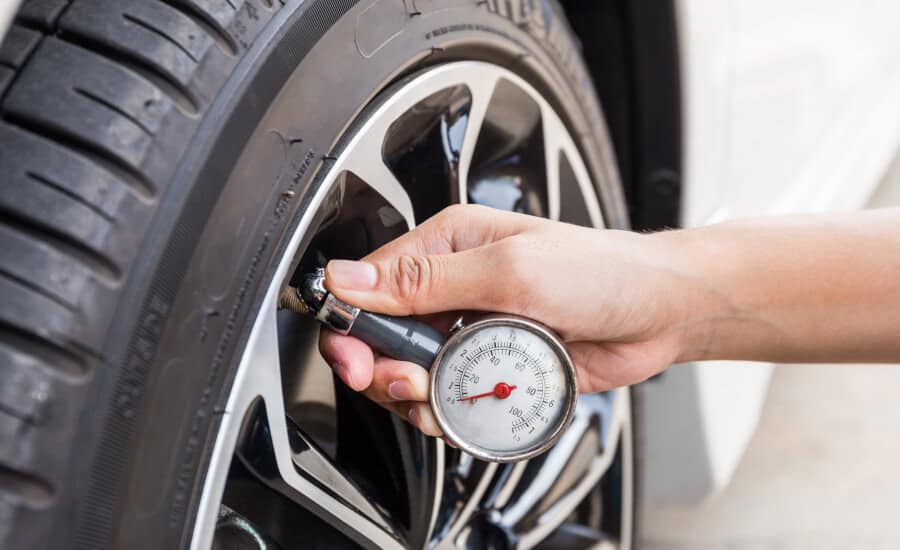
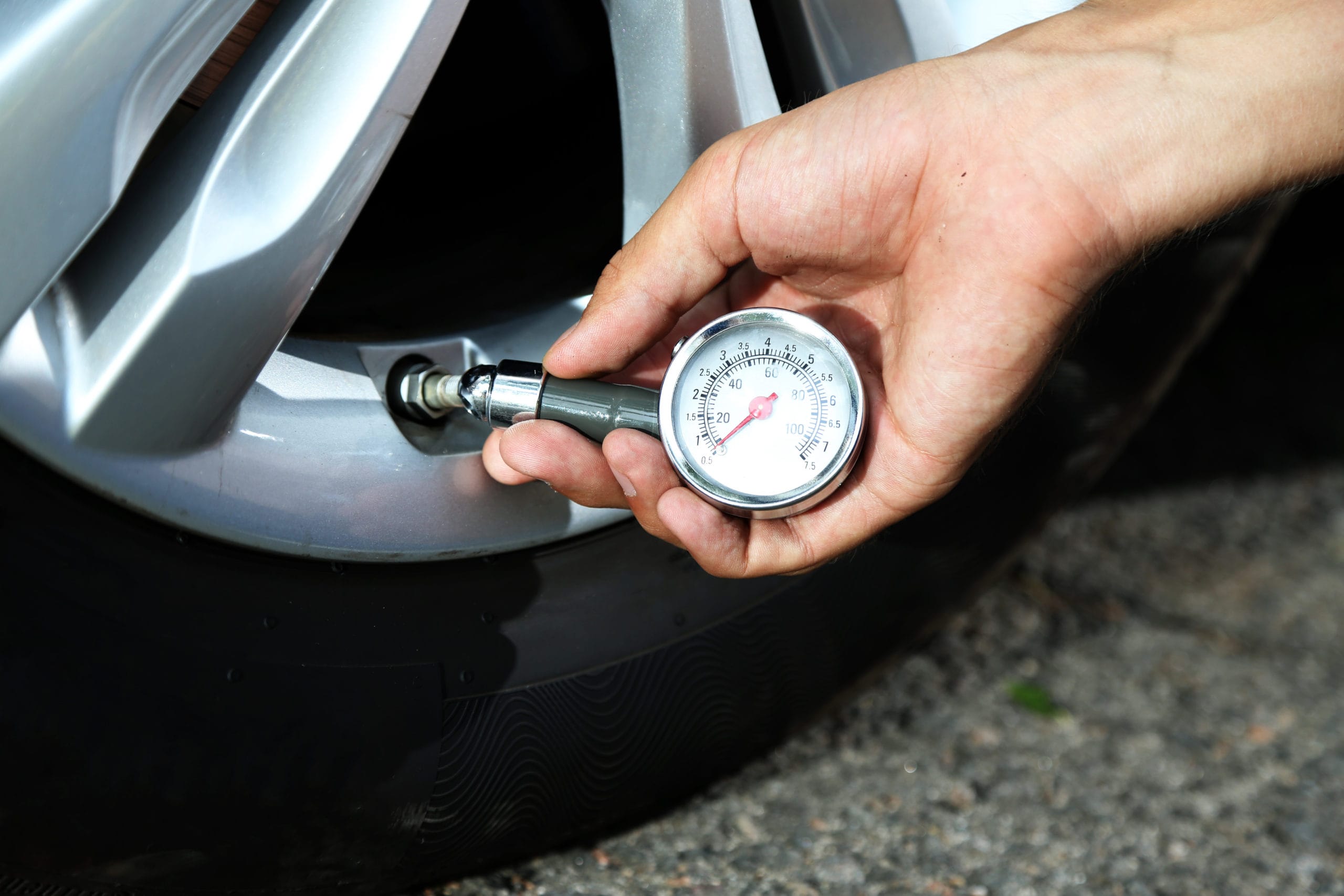
Step 4: Press the tire pressure gauge firmly onto the valve stem. You will hear a brief hiss of air; maintain firm pressure until the gauge provides a stable reading.
Step 5: Read the PSI displayed on the gauge. For digital gauges, the reading will be immediate; for analog stick gauges, the bar will extend, showing the pressure.
Step 6: Compare the reading to your vehicle’s recommended PSI. If the pressure is too low, add air; if it is too high, release a small amount by pressing the gauge’s bleed valve.
Step 7: Replace the valve cap securely on the valve stem after adjustments are complete. This prevents dirt and moisture from entering the valve. Repeat for all four tires, and the spare tire if applicable. A portable digital tire gauge, which costs around In 2026, the average cost of a quality portable digital tire gauge is estimated to be approximately $22, reflecting a modest increase due to inflation and component costs from current market rates., offers accuracy and ease of use.
While following these steps is simple, you must be aware of 5 dangerous times to inflate vehicle tires.
5 Dangerous Times to Inflate Vehicle Tires
We analyzed safety data and identified five specific scenarios where you should stop and consult a professional before adding air. Attempting to inflate tires under these conditions can be dangerous or provide inaccurate readings, compromising safety.

- If tires are hot after highway driving, stop and wait for them to cool. Driving for more than one mile, especially at highway speeds, generates heat that increases internal tire pressure. Inflating hot tires to cold PSI specifications will result in over-inflation once they cool, which can lead to handling issues or premature wear.
- If the valve stem is visibly damaged or leaking, stop and escalate to a certified technician. A compromised valve stem will not hold air effectively and attempting to inflate it may exacerbate the damage, potentially causing a rapid air loss.
- If the tire sidewalls show visible bulges, cracks, or unusual deformations, stop driving and escalate to a professional. These signs indicate internal structural damage that could lead to a sudden tire failure, regardless of correct inflation.
- If checking pressure in extreme freezing conditions, stop and be aware that readings may be transiently low. While you should still adjust to the recommended cold PSI, severe cold can make tire rubber brittle. Consider performing adjustments in a warmer environment if possible, or being extra cautious when adding air.
- If you have unknown replacement tire specifications, stop and verify the correct PSI with a reliable source. The tire’s sidewall lists its maximum pressure, not the vehicle’s recommended operating pressure. Consult your owner’s manual or a tire expert, leveraging resources like independent tire reviews to ensure proper fitment and inflation. Correct measurement also depends on your tools, such as analog gauges vs digital tire pressure sensors.
Analog Gauges vs Digital Tire Pressure Sensors
Industry data indicates that built-in TPMS sensors often fail to alert drivers until pressure is 25 percent below the recommendation. This threshold, mandated by federal regulations, means a tire could be significantly under-inflated before a dashboard warning appears. Relying solely on TPMS for optimal PSI maintenance is therefore insufficient.
Standard Dashboard TPMS Limitations
Federal TPMS requirements dictate that the system must activate when a tire’s pressure drops 25 percent below the manufacturer’s recommended cold inflation pressure. While TPMS provides a critical safety alert for significant pressure loss, it is not designed for routine precision maintenance. Drivers should not wait for a TPMS light to activate before checking their tires.
Traditional Analog Pencil Gauges
Analog pencil gauges are widely available and provide a quick, though sometimes less precise, measurement. Their mechanical design can be susceptible to wear and tear, affecting accuracy over time. We recommend regular calibration checks or comparison with a known accurate gauge to ensure reliability, particularly when evaluating tire performance through tire testing methodology.
Precision Digital Measurement Tools
Digital tire pressure gauges offer superior accuracy and readability compared to their analog counterparts. They typically provide precise numerical readouts, reducing the margin for human error. For consistent and reliable tire maintenance, our editorial team, guided by unbiased editorial standards, advocates for the use of a high-quality digital gauge.
External factors can also skew these readings, specifically what if temperature drops affect your PSI. Proper inflation also depends on choosing between analog gauges and digital tire pressure sensors. Regardless of your choice, ensuring accurate tire pressure readings remains paramount.
What If Temperature Drops Affect Your PSI
For every 10-degree Fahrenheit drop in ambient temperature, our studies show a consistent loss of roughly 1 PSI. This physical principle means seasonal changes, particularly the transition to colder months, necessitate proactive tire pressure adjustments. Failing to account for this can lead to chronically under-inflated tires.
Cold Weather Air Contraction
As temperatures fall, the air inside your tires contracts, causing the internal pressure to decrease. This natural phenomenon means tires properly inflated in summer may become under-inflated as winter approaches. We advise checking and adjusting tire pressure more frequently during significant seasonal shifts to maintain safe operating levels.
High Altitude Pressure Variance
Altitude changes also impact tire pressure, though typically less dramatically than temperature. As you gain elevation, the external atmospheric pressure decreases, which can result in a slight increase in tire pressure relative to sea level. Conversely, descending to lower altitudes may cause a slight decrease in internal tire pressure.
Direct Sunlight Thermal Expansion
Direct exposure to strong sunlight can cause the air inside tires to heat up and expand, temporarily increasing PSI. While this effect is localized and often temporary, it illustrates the dynamic nature of tire pressure. Always check your tires when they are cold to avoid inaccurate readings influenced by solar radiation.
If regular checks reveal consistent loss, you must look for 7 warning signs of chronic tire under inflation.
7 Warning Signs of Chronic Tire Under Inflation
If you observe any of these seven indicators, experts confirm that your tires may have suffered permanent internal damage. Persistent under-inflation compromises tire integrity and can lead to dangerous operating conditions. Recognizing these signs early is crucial for safety.
- Uneven tread wear: If the outer edges of the tire tread are significantly more worn than the center, this is a strong indicator of under-inflation. If uneven wear is present, stop driving and escalate to a certified technician to assess tire condition and alignment.
- Vibration while driving: A persistent vibration, particularly at higher speeds, can signal flat spots or internal damage caused by prolonged under-inflation. If vibration occurs, stop driving safely and escalate to a professional mechanic for immediate inspection.
- Visible cracks in sidewall: Small cracks or weathering on the tire sidewall indicate the rubber is degrading, often accelerated by flex from low pressure. If visible cracks appear, stop driving and escalate to a tire specialist for replacement.
- Frequent TPMS warnings: If your tire pressure monitoring system light illuminates repeatedly after you’ve added air, it suggests a slow leak or an issue with the sensor itself. If TPMS warnings persist, stop and escalate to a service center for diagnostics.
- Reduced handling performance: A ‘mushy’ or less responsive steering feel, especially when cornering, often points to under-inflated tires that compromise vehicle stability. If handling feels compromised, stop and safely check your tires, escalating to a mechanic if symptoms persist.
- Increased stopping distances: Under-inflated tires have a larger contact patch with reduced grip, leading to longer braking distances. If you notice an increase in stopping distance, stop driving and escalate to a tire expert for immediate assessment.
- Tread depth below 2/32 inch: While not directly a sign of under-inflation, under-inflated tires accelerate wear, potentially leading to tread depths below the safe minimum of 2/32 inch. If tread depth is minimal, stop driving and escalate to a tire retailer for new tires. To avoid these issues, always verify your data using how accurate are standard door jamb placards.
How Accurate Are Standard Door Jamb Placards
The most reliable source for your specific vehicle is the manufacturer’s door jamb sticker, not the tire’s sidewall. This placard provides the precise cold inflation pressure recommended for your vehicle, ensuring optimal performance, safety, and fuel economy. Relying on this source eliminates guesswork and prevents potential over or under-inflation.
Vehicle Manufacturer Recommendation Sheets
Vehicle manufacturers conduct extensive testing to determine the ideal tire pressure for each model. This data is then translated into the door jamb placard, typically located on the driver’s side B-pillar when the door is open. These recommendations account for the vehicle’s weight distribution, suspension, and intended use, offering the most accurate guidance.
Digital Owner Manual Databases
If the physical door jamb placard is missing or unreadable, the owner’s manual serves as the next authoritative source. Many manufacturers now offer digital versions of their owner’s manuals online, accessible via their official websites or dedicated apps. These digital resources provide the same precise PSI recommendations as the physical manual.
Tire Sidewall Safety Limits
It is crucial to understand that the PSI number printed on the tire sidewall represents the maximum cold inflation pressure the tire can safely withstand, not the recommended operating pressure for your specific vehicle. Inflating tires to this maximum can lead to a harsh ride, reduced traction, and premature tire wear, as it often exceeds the vehicle manufacturer’s recommendation.
Finalizing these habits ensures long-term vehicle health and safety.
7 Most Common Questions About Tire Air Pressure
Q1: How often should you check your tire pressure?
You should check your tire pressure at least once a month and before any long road trip. We also recommend a check if the ambient temperature drops significantly, typically for every 10-degree Fahrenheit change.
Q2: Can I check tire pressure when tires are hot?
No, you should only check pressure when tires are cold. Driving generates heat that expands the air inside, leading to an artificially high PSI reading. For accurate results, the vehicle should be stationary for at least three hours.
Q3: Does tire pressure change with temperature?
Yes, tire pressure changes by approximately 1 PSI for every 10-degree Fahrenheit change in ambient temperature. In colder months, air contracts and your pressure will drop, while warmer temperatures cause expansion.
Q4: Is the TPMS light always accurate?
No, the TPMS light is designed as a late-warning system, required to illuminate only when pressure is 25% below the recommended level. It is not intended for precise, routine maintenance checks and should not replace manual verification.
Q5: Where is the tire pressure sticker located?
The tire pressure sticker is usually located on the driver-side door jamb (B-pillar). It lists the manufacturer’s recommended cold inflation PSI for both front and rear tires, specific to your vehicle model.
Our research unequivocally demonstrates that consistent tire pressure maintenance is paramount for vehicle safety and operational efficiency. The natural loss of approximately 1 PSI per month underscores the necessity of regular checks. We confirm that verifying pressure when tires are cold yields the most accurate readings, which remain superior to relying solely on dashboard sensors for optimal PSI.
- 1 PSI of pressure per month (nhtsa.gov)
- reduced fuel efficiency (energy.gov)