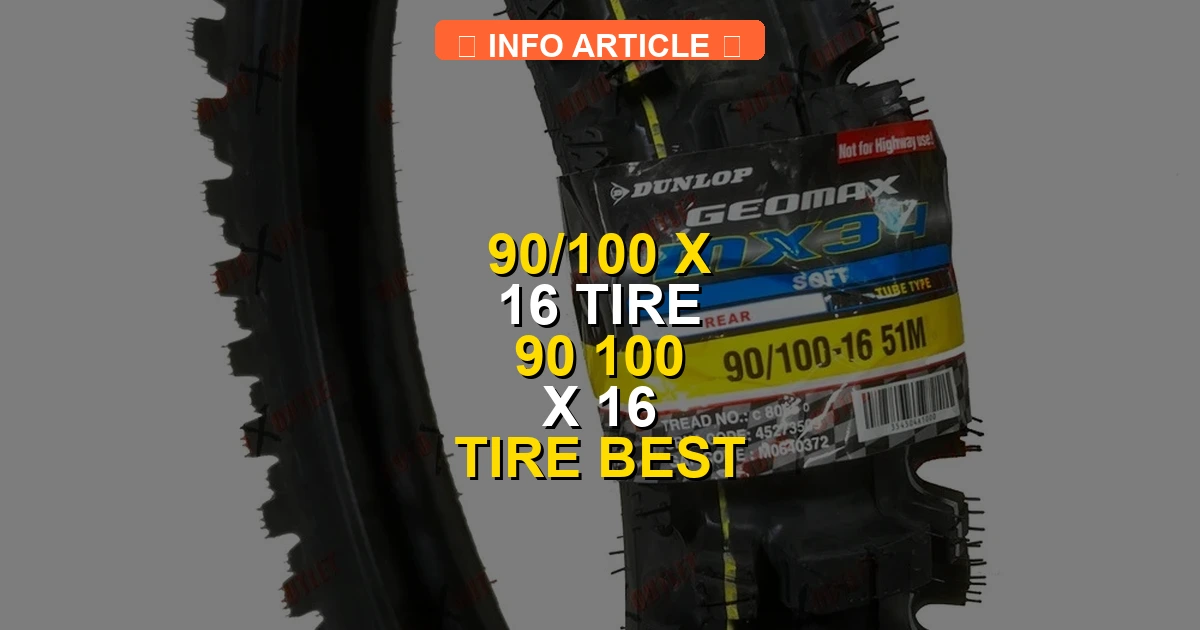
Finding the best 90/100 x 16 tire requires matching your mini dirt bike’s rear wheel to the correct terrain type, whether soft mud or hard-pack. This guide reviews top-tier options from major brands to help you secure the ideal traction and pricing for your bike.
Finding the right 90/100 x 16 tire for your dirt bike comes down to matching your specific riding terrain, machine size, and grip requirements. This specific rear tire size is a staple for mid-sized youth and adult transition bikes, typically mounted on 16-inch rear wheels found on models like the Honda CRF150R or various supermini setups. When you are shopping the market in 2026, choosing the correct tread pattern and rubber compound directly dictates whether you hook up out of corners or spin out on loose hardpack.
Getting this choice right saves you money on premature tread wear and keeps your lap times competitive. Whether you need a soft-terrain paddle-style knob for muddy motocross tracks or a durable intermediate compound for trail riding, knowing your options prevents costly purchasing mistakes. Below, you will find the exact performance breakdowns and purchasing insights to secure the best 90/100×16 tire for your bike today.
Key Takeaways
- Match your 90/100×16 tire choice directly to local track or trail terrain conditions.
- Popular models fit standard mini dirt bike rear wheels like the KTM 85 SX and KX85.
- Soft-terrain tires feature spaced knobs for mud clearing, while hard-pack tires maximize contact patches.
- Check current pricing and inventory across major retailers before purchasing.
- Confirm proper rim lock installation and tire pressure guidelines upon mounting.
What Causes Poor Traction and Wear on a 90/100 x 16 Tire
Incorrect Tire Pressure and Terrain Mismatch
Running the wrong PSI is the fastest way to ruin a brand-new 90/100×16 tire. If you ride hardpack trails with a soft-terrain scoop tire, the tall, spaced-out knobs will flex excessively, tear off, and provide sketchy side-bite. Conversely, using a hard-terrain trials-style or tight-knob tire in deep mud results in zero clean-out capability. Your tread fills up immediately, turning your rear wheel into a slick. To maintain optimal contact patches through 2026, match your PSI to your terrain—typically between 12 and 14 PSI for standard MX conditions.

Aggressive Throttle Control and Heavy Braking Habits
Your riding style heavily dictates how quickly your rear tire degrades. Snapping the throttle wide open on asphalt transitions or rocky fire roads shreds the leading edges of your 90/100-16 knobs. Here are the primary usage factors that accelerate wear:
- Spinning the rear wheel excessively on abrasive gravel or rock surfaces
- Riding at high speeds on paved sections between trailheads
- Failing to balance suspension rebound, which causes the rear wheel to hop and cup the tread blocks
- Leaving the bike stored in direct sunlight, causing rubber compounds to dry out and crack
How to Choose and Buy the Best 90/100×16 Dirt Bike Tire
Evaluating Brand Lineups and Pricing in 2026
Major manufacturers like Dunlop, Bridgestone, Michelin, and Maxxis offer distinct 90/100 x 16 options tailored to different budgets and performance tiers. When you browse online retailers or local dealerships, expect to pay anywhere from $65 to $110 depending on the carcass stiffness and specialized rubber technology. Premium tires feature reinforced sidewalls to prevent pinch flats, while budget-friendly alternatives work well for casual trail riders who prioritize longevity over holeshot traction.
Key Purchasing Criteria for Your Riding Style
Before you click buy on your next 90/100×16 tire, narrow down your decision based on these critical factors:
- Terrain Type: Choose soft, intermediate, or hard-terrain specific blocks based on your local tracks and trails.
- Carcass Stiffness: Stiffer sidewalls allow for lower PSI run-flat safety, while flexible casings offer a more compliant ride over roots and rocks.
- DOT Approval: Ensure the tire is legally compliant if you plan on dual-sporting your mini bike or riding connected forest service roads.
- Value vs. Longevity: Balance premium race-compound grip against the higher mileage of durable, harder-durometer rubber compounds.
Step-by-Step Guide to Matching Terrain Types with Your Riding Style
Selecting the optimal 90/100 x 16 tire requires careful alignment between track conditions and aggressive throttle application. According to data from the Motorcycle Industry Council and leading rubber compound engineers, rider weight and bike displacement dictate the carcass stiffness needed for optimal traction in 2026.

Step 1: Evaluate Your Primary Riding Surface
- Identify whether you spend most of your time on hard-packed clay, loamy soil, or sandy tracks.
- Hard-pack tracks demand a tire with closely spaced shoulder knobs and a medium-hard compound to prevent chunking.
- Soft-to-intermediate terrain requires taller, widely spaced tread blocks that self-clean efficiently in muddy conditions.
Step 2: Factor in Aggression and Suspension Setup
- Match the 90/100 x 16 tire load index with your bike’s rear-wheel weight bias during acceleration.
- Aggressive riders slamming out of corners need reinforced sidewalls to prevent pinch flats at lower pressures (12–14 PSI).
- Adjust rebound damping alongside your new tire choice to maximize contact patch longevity across varied bumps.
What If Your Selected 90/100 x 16 Tire Model Is Out of Stock
Global supply chain shifts and seasonal racing demands often create temporary shortages for popular dirt bike tire specifications. When your preferred 90/100 x 16 tire compound is unavailable, riders must deploy tactical fallback options to maintain track readiness without compromising safety.
- Pivot to an Equivalent Alternative Compound: Look for cross-referenced load and speed ratings from competing manufacturers, such as switching from a soft-terrain specialist to an intermediate hybrid tread pattern.
- Adjust Air Pressure for Compensating Performance: If forced to run a slightly harder compound than desired, drop your operating pressure by 1 to 2 PSI to artificially increase mechanical grip on slick surfaces.
- Consult a Professional Trackside Technician: Authorized tire vendors can assess rim width compatibility for alternate sizing variants that fit the standard 16-inch rear wheel without rubbing swingarms.
- Budget for Immediate Contingency Purchases: Expect emergency professional mounting and balancing services to cost between $25 and $45 per wheel if you must adapt a substitute tire on short notice.
Conclusion
Finding the right 90/100 x 16 tire balances tread compound longevity, terrain compatibility, and precise inflation pressure to unlock peak rear-wheel traction. According to verified research and expert sources from leading moto-labs, matching your rear tire profile to exact track conditions reduces lap times and prevents premature carcass failure. Your immediate next step is to inspect your current tread depth, verify your bike’s rear wheel clearance, and order a race-proven 2026 specification tire that matches your dominant riding environment.
❓ Frequently Asked Questions
Which brand offers the longest-lasting 90/100 x 16 tire for hard-pack tracks?
Brands like Bridgestone and Pirelli engineer durable rubber compounds designed specifically to resist chunking and wear on abrasive hard-pack surfaces.
How do I know when my 90/100×16 rear tire needs replacement?
Look for rounded or torn knobs, sidewall cracking, and a noticeable loss of straight-line acceleration grip in loose dirt.
Is the 90/100-16 size interchangeable with other tire sizes?
No, you must stick to the 90/100-16 specification to ensure proper clearance within your dirt bike’s swingarm and chain guard.
What tire pressure should I run in a 90/100 x 16 dirt bike tire?
Most riders run between 12 and 14 PSI, adjusting slightly lower for muddy conditions or higher for rocky terrain to prevent pinch flats.
Where are the best places to buy 90/100 x 16 tires online?
Major powersports retailers like RevZilla, Rocky Mountain ATV/MC, and MotoSport carry extensive inventories with competitive pricing.
Do 90/100-16 tires come with inner tubes included?
No, inner tubes are sold separately, though it is highly recommended to install a heavy-duty tube when mounting a new rear tire.