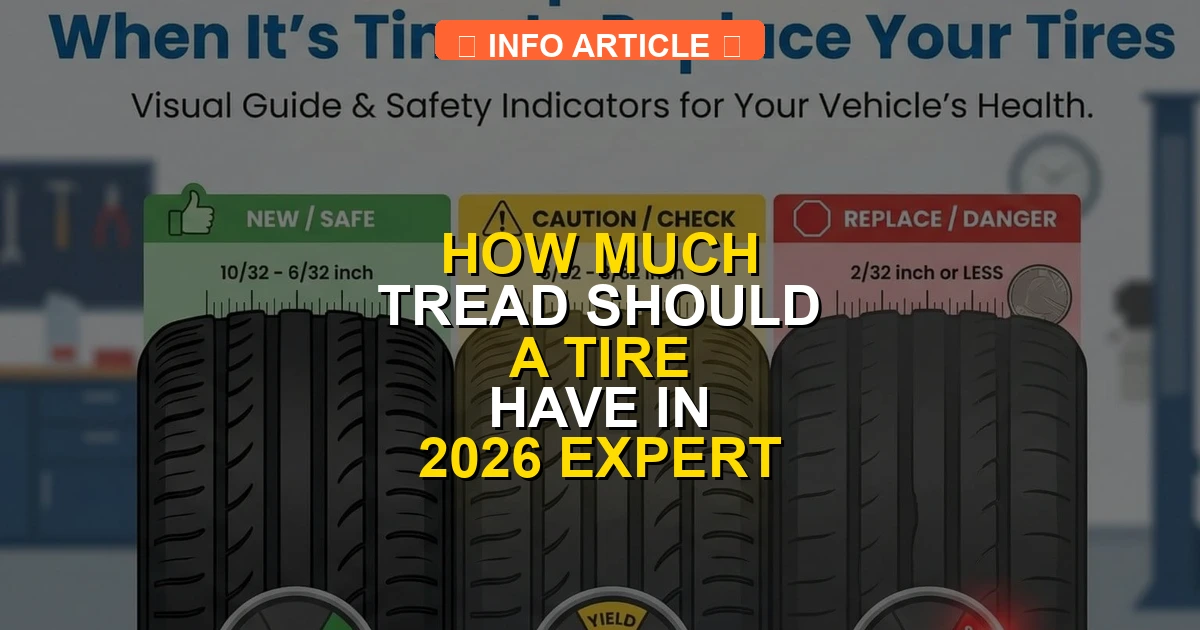
Tires must have a minimum tread depth of 2/32 of an inch to be legally safe for driving. Falling below this threshold drastically increases your risk of hydroplaning and losing traction on wet or snowy roads.
At a minimum, your car tires need at least 2/32 of an inch of tread depth to be legally safe on the road in 2026. If your tread wears down past this threshold, your risk of hydroplaning on wet pavement increases dramatically.
Checking your tire tread regularly protects you from dangerous skids, failed state inspections, and sudden blowouts. Knowing the exact measurements and simple tests helps you replace your tires at the right time.
Key Takeaways
- The legal minimum tread depth is 2/32 of an inch for most standard vehicles.
- Use the classic penny test to quickly check your tire tread at home.
- Replace tires with less than 4/32 of an inch if you frequently drive in heavy rain.
- Look for built-in tread wear indicator bars across the rubber grooves.
- Check your tire tread depth at least once every month for even wear.
What Causes Low Tire Tread and Uneven Wear Patterns
Tire tread wears down naturally over time through friction with the road surface. However, certain mechanical issues and driving habits accelerate this wear, leaving your tires bald prematurely.

Common Causes of Rapid Tread Loss
- Aggressive driving habits like hard braking and rapid acceleration
- Driving on poorly paved roads or navigating frequent potholes
- Carrying heavy loads that exceed your vehicle weight capacity
- Natural rubber degradation from sun exposure and age
Identifying Uneven Wear Patterns
How your tire loses tread tells you a lot about your vehicle health. If you notice specific patterns, you can diagnose underlying mechanical problems before your next trip in 2026.
- Center wear: Usually caused by over-inflation, forcing the middle of the tire to take all the road contact.
- Edge wear on both sides: Typically indicates under-inflation, which causes the outer shoulders to bear the vehicle weight.
- One-sided shoulder wear: Points to bad wheel alignment or suspension components that need immediate adjustment.
- Cupping or scalloping: Shows that your shocks or struts are worn out, causing the tire to bounce along the road.
Master Tire Tread Depth in 6 Simple Steps
Welcome to your essential guide on understanding tire tread depth and knowing when it is time for a replacement. Worn-out tires drastically reduce your vehicle’s braking capability, increase your risk of hydroplaning in wet weather, and compromise overall safety. This practical walkthrough will teach you exact measurements, professional inspection techniques, and how to accurately test your own tires right in your driveway without fancy equipment.
Step 1: Understand the Legal and Safe Measurements
What you need: A basic understanding of tire safety measurements (inches and millimeters).
Instructions: New tires typically come with about 10/32 to 11/32 of an inch of tread depth. As you drive, friction wears this rubber away. Legally, most states and provinces require tires to be replaced when they reach 2/32 of an inch. However, safety experts strongly recommend replacing your tires when they hit 4/32 of an inch, especially if you frequently drive in rain or snow. At 4/32, your car still retains decent wet-weather traction, whereas at 2/32, stopping distances on wet roads increase exponentially. Familiarize yourself with these numbers so you know your exact safety threshold before inspecting your vehicle.
Pro Tip: Never wait until the tire is completely bald. Replacing tires at 4/32 of an inch ensures you maintain optimal grip during sudden highway maneuvers.
Step 2: Locate the Tread Wear Indicators (TWIs)
What you need: A flashlight and direct access to your parked vehicle with the wheels turned.
Instructions: Every modern tire features built-in Tread Wear Indicators, commonly referred to as wear bars. These are small, solid rubber bridges molded between the main tread grooves. When your tire tread wears down so that it is completely level with these rubber bars, your tread depth has reached the legal limit of 2/32 of an inch. Walk around your vehicle and inspect the main grooves across the width of each tire. If you see rubber bars running flush with the surrounding tread blocks, that specific tire is legally exhausted and must be replaced immediately.
Pro Tip: Look for the “TWI” abbreviation or small triangle symbols on the tire sidewall; these point directly to the location of the wear bars in the tread channels.
Step 3: Perform the Classic Penny Test
What you need: A standard US one-cent coin (penny).
Instructions: Hold the penny firmly between your thumb and forefinger with Abraham Lincoln’s head pointing downward. Insert the top of Lincoln’s head into the deepest central groove of the tire tread. Look closely at the top of Lincoln’s head. If the tread of the tire covers any part of his head—meaning you cannot see the very top of his hair—your tread depth is greater than 2/32 of an inch. However, if you can see all of Lincoln’s entire head and some space above it, your tread has worn past the 2/32 safety limit, and your tires urgently need to be changed.
Pro Tip: Test multiple spots across the width and circumference of the tire, as uneven wear patterns can hide deep bald spots in unexpected areas.
Step 4: Execute the Quarter Test for Greater Safety
What you need: A standard US twenty-five-cent coin (quarter).
Instructions: While the penny test checks the legal minimum, the quarter test checks for the safer 4/32-inch threshold recommended for wet weather driving. Hold a quarter between your thumb and forefinger with George Washington’s head facing down. Insert the coin into the shallowest groove of your tire tread. Check if the tread touches or comes up to the very edge of Washington’s hairline. If the tread is below his hairline, you have less than 4/32 of an inch remaining. This means you should start shopping for replacement tires soon, particularly if the rainy or winter season is approaching your area.
Pro Tip: Keep a spare quarter and penny in your glove compartment so you can quickly inspect your tire health during routine gas station stops.
Step 5: Utilize a Dedicated Digital Tread Depth Gauge
What you need: A digital or dial tire tread depth gauge (available at any auto parts store for under $10).
Instructions: For the most precise measurement, place your car on a flat surface, turn off the engine, and engage the parking brake. Push the sliding pin of your tread depth gauge upward until the base is fully retracted. Place the solid probe tip directly into the center groove of the tire tread and press down firmly so the flat base rests flat on the rubber blocks. Read the digital screen or dial indicator to get an exact reading in 32nds of an inch or millimeters. Record measurements from the inner, center, and outer grooves of every single tire.
Pro Tip: Look for significant discrepancies between the inner and outer grooves, as this indicates a severe wheel alignment issue or improper tire inflation.
Step 6: Analyze Wear Patterns for Hidden Vehicle Issues
What you need: Your recorded measurements and a keen eye for symmetrical rubber wear.
Instructions: Examine how the tread has worn down across the entire set of four tires. If the edges of the tread are worn down while the center remains thick, your tires have likely been chronically under-inflated. Conversely, if the center groove is balding while the edges look healthy, your tires have been over-inflated. If you notice cupping, feathering, or one-side baldness, your vehicle is suffering from worn suspension components, bad shock absorbers, or a bad wheel alignment. Address these mechanical problems alongside getting your new tires to ensure your investment lasts as long as possible.
Pro Tip: Rotate your tires every 5,000 to 7,500 miles to promote perfectly even tread wear and extend the overall lifespan of your rubber.
✅ Final Checklist
- Checked tread depth using coins or a dedicated gauge across all four tires
- Inspected built-in Tread Wear Indicators (TWIs) for flushness with the tread
- Evaluated inner, middle, and outer grooves for uneven wear patterns
- Verified that all tires exceed the safe minimum threshold of 4/32 of an inch
Important Notes:
- Never drive at highway speeds in heavy rain if your tire tread is below 2/32 of an inch due to extreme hydroplaning hazards.
- Seek professional help from a certified tire technician if you notice bulges, cracks, or embedded metal objects in the tread.
- Estimated time: 10 to 15 minutes. Cost range: Free (using coins) to $10 (buying a digital gauge).
How to Fix and Measure Your Tire Tread Depth Step-by-Step
You do not need fancy equipment to check your tire safety. Several simple household methods give you an accurate reading of your current tread depth.

The Classic Penny Test for 2/32-Inch Depth
The penny test remains the fastest way to check if your tires have reached the absolute legal minimum in 2026.
- Hold a standard United States penny between your thumb and forefinger.
- Position Abraham Lincoln head first, pointing straight down into the deepest tread groove.
- Look at the top of Lincoln head.
- If the tread covers any part of the top of his head, you have more than 2/32 of an inch remaining.
- If you can see the very top of his head entirely, your tread is at or below 2/32 of an inch and you need immediate replacements.
The Quarter Test for Wet Weather Safety (4/32-Inch)
If you drive through frequent rain or winter weather, 2/32 of an inch is not enough for safe stopping distances. You should aim for at least 4/32 of an inch of tread depth.
- Insert a quarter into your tire tread groove with Washington head pointing down.
- Check if the tread touches the very edge of Washington hairline.
- If the tread reaches the top of his head, your tires have at least 4/32 of an inch left, providing reliable grip in wet conditions.
- If the tread falls below the hairline, plan to buy new tires soon to avoid hydroplaning.
What If Your Tires Still Fail Safety Checks Despite Measurement
Sometimes your tread depth measures safely above the 2/32-inch legal minimum, but your tires still fail safety inspections or display dangerous driving behavior. Age, rubber degradation, and structural damage can render a legally deep tread entirely unsafe for the roads of 2026.
Inspect for Dry Rot and Micro-Cracks
Rubber compounds degrade over time due to UV exposure and oxidation, even if the vehicle sits parked. According to the National Highway Traffic Safety Administration (NHTSA), tires older than six years require professional evaluation regardless of remaining tread depth. Look closely at the sidewalls and tread grooves for fine, web-like cracking.
Check for Uneven Wear Patterns
If one side of the tread measures 5/32 of an inch while the inner shoulder sits at a dangerous 1/32 of an inch, your vehicle fails overall safety parameters. Uneven wear indicates severe alignment issues, improper inflation, or failing suspension components that a simple tread gauge cannot fix.
When to Replace Tires Early for Wet and Snowy Conditions
The standard 2/32-inch threshold represents the absolute legal limit, not a recommendation for optimal safety. Modern tire testing proves that waiting until the legal minimum severely compromises your vehicle stopping distance and control during heavy precipitation.
The 4/32-Inch Rule for Wet Weather
Independent automotive research demonstrates that tires worn down to 4/32 of an inch lose significant water evacuation capability. Stopping distances on wet asphalt increase dramatically at this depth. Drivers facing frequent heavy rain should plan for tire replacement well before reaching the baseline minimum.
Winter Driving and the 6/32-Inch Threshold
Snow and slush demand significantly more biting edges and void space to maintain traction. Industry safety experts strongly recommend replacing winter tires when the tread drops to 6/32 of an inch. At lower depths, snow tires lose their ability to pack snow into the grooves for crucial snow-on-snow traction.
What If It Still Doesn’t Work?
If your tires pass the visual and manual tread checks but you still experience vibrations, slipping, or poor handling, the issue requires professional intervention. Try these advanced troubleshooting steps:
- Visit a certified tire technician: Have a professional perform a laser alignment check and internal structural scan to uncover hidden belt separations.
- Verify tire pressure monitoring systems: Ensure all sensors accurately report inflation levels, as under-inflation mimics the poor handling of worn tread.
- Budget for professional replacement: If professional inspection reveals structural compromise, prepare for replacement costs ranging from $400 to $1,200 for a standard set of four tires, depending on your vehicle class.
Conclusion
Monitoring your tire tread remains one of the most critical aspects of vehicle maintenance, directly impacting braking distance and hydroplaning resistance. According to verified research and expert sources from leading automotive safety organizations, checking your tread depth monthly and replacing tires before they reach critical thresholds prevents catastrophic road failures. Take action today by grabbing a quarter or a digital gauge to measure your current tread depth before your next journey.
❓ Frequently Asked Questions
What is the absolute minimum tread depth required by law?
In most states and countries, the legal limit is 2/32 of an inch. Driving on tires with less tread than this can result in traffic tickets and severe safety hazards.
How do I perform the penny test accurately?
Hold a penny by the rim with Abraham Lincoln’s head facing you and pointing downward into the deepest groove of the tread. If the top of Lincoln’s head is fully visible, your tread depth is less than 2/32″ and your tires must be replaced immediately.
Why is 4/32 of an inch recommended for wet weather?
A tread depth of 4/32″ provides significantly more channel space to evacuate water away from the contact patch, preventing hydroplaning at highway speeds. Waiting until 2/32″ leaves very little margin for error in heavy rain.
Where should I place a tread depth gauge for the most accurate reading?
You should measure the tread depth in the main grooves across the center and outer edges of the tire. Uneven readings often point to alignment issues, improper inflation, or suspension wear.
Do front and rear tires wear out at the same rate?
No, front tires usually wear down faster on front-wheel-drive vehicles due to steering and braking friction. Regular tire rotations help equalize this wear to extend the lifespan of all four tires.
How can I tell if my tire wear bars are exposed?
Tread wear indicators are horizontal rubber bars molded perpendicular to the direction of the tread. When the surrounding rubber wears down to match the height of these bars, it is time for a new set of tires.