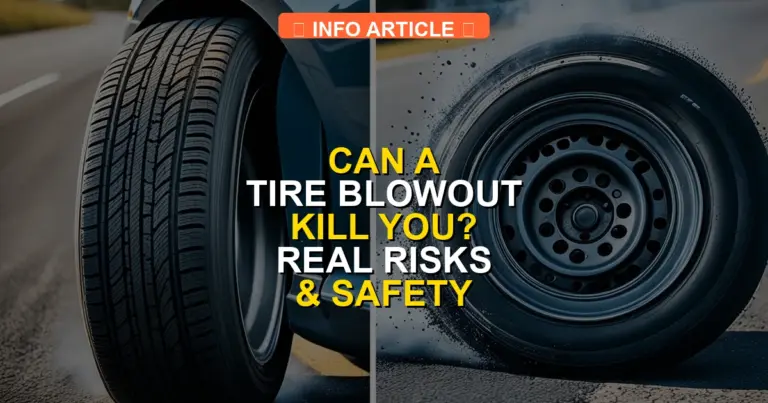
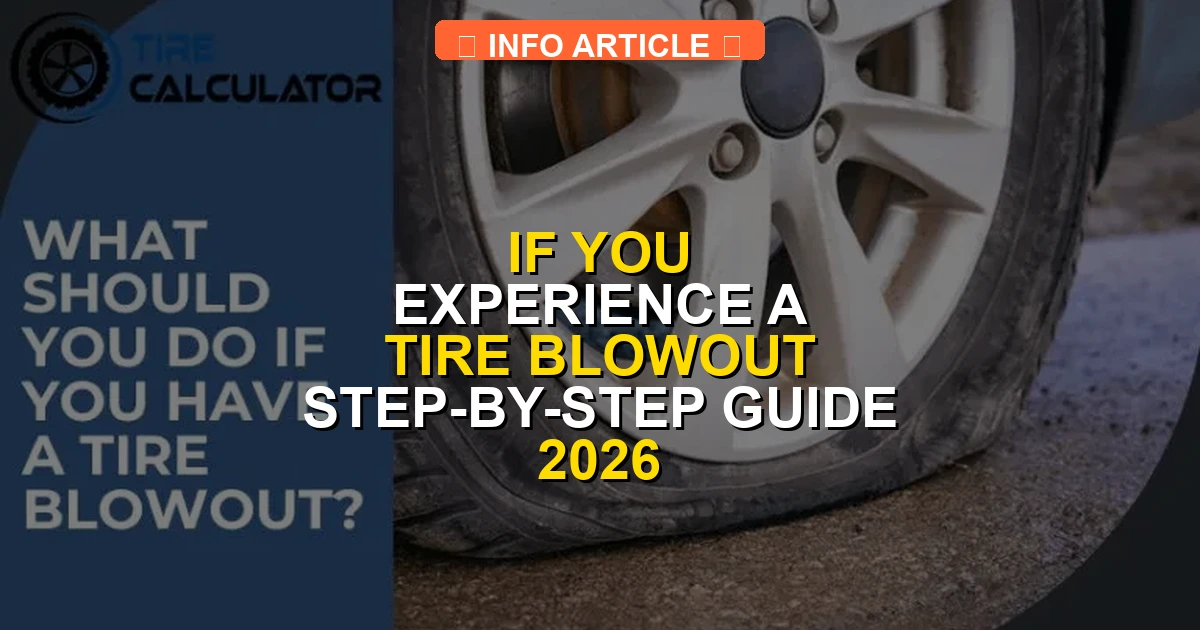
If you experience a tire blowout, your primary survival instinct must be resisted by keeping your foot off the brake. Firmly grip the steering wheel, maintain a straight line, and let the vehicle decelerate naturally before guiding it to a safe stop.
When a tire explodes on the highway, your first instinct will tell you to slam on the brakes and jerk the steering wheel to safety. Doing either of those things can instantly send your vehicle into an uncontrollable spin or roll. In 2026, vehicle safety technology has advanced significantly, but basic physics during a high-speed tire failure remain entirely unchanged.
You need to fight every survival reflex your body has for the first ten seconds of a blowout. By keeping your foot off the brake, holding the steering wheel firmly, and letting your vehicle naturally decelerate, you keep yourself out of a catastrophic multi-car accident.
Key Takeaways
- Never slam on the brakes immediately during a sudden tire blowout.
- Grip the steering wheel with both hands to maintain vehicle control.
- Allow the car to slow down naturally by easing off the accelerator.
- Signal and gently guide the vehicle to the shoulder of the road.
- Turn on your hazard lights once you have safely stopped.
What Causes a Tire Blowout and How It Affects Vehicle Control
A tire blowout happens when the structural integrity of the tire fails completely, causing an instantaneous loss of air pressure. Modern tire monitoring systems in 2026 vehicles alert you to slow leaks, but sudden structural failures still catch drivers off guard. Understanding the mechanical forces at play helps you react without panic.

The Physics of Sudden Air Loss
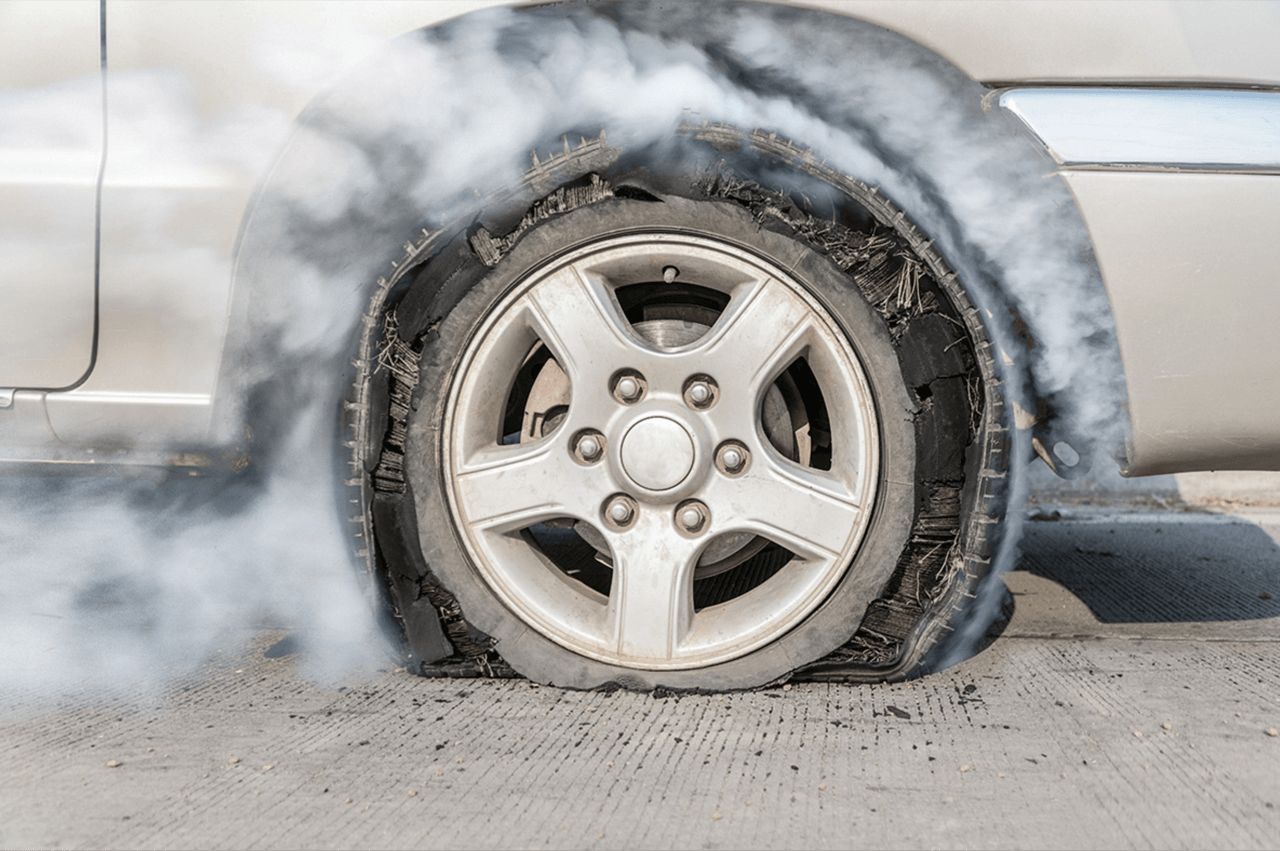
When a tire loses its air pressure instantly, the weight of your vehicle drops onto the metal rim. This creates massive friction and an uneven rolling resistance on that single corner of the car. Your vehicle will immediately pull hard toward the side of the blown tire. If you are traveling at 70 mph, this force feels like someone physically grabbing your steering wheel.
Common Triggers on the Road
- Impact with deep potholes, construction debris, or road hazards at highway speeds
- Severe internal tread separation caused by age or manufacturing defects
- Rapid heat buildup in under-inflated tires during hot summer driving
- Overloading a vehicle beyond its maximum weight capacity
How to Handle Your Steering and Speed During a Blowout
Your actions during the first five seconds of a blowout dictate whether you stay in your lane or cross into oncoming traffic. You must manage your steering inputs with precision and override your foot’s natural urge to hit the brake pedal. Maintaining steady control requires a strict mechanical sequence.
Steering Firmness and Lane Discipline
Grip the steering wheel with both hands at the nine-and-three o’clock positions the second you hear the pop or feel the thumping. Do not jerk, yank, or over-correct the wheel. Keep the steering wheel pointed straight ahead to fight the vehicle’s pull toward the compromised side. Once you stabilize the vehicle’s trajectory, you can begin gentle steering corrections toward the road shoulder.
Managing Speed Without Brakes
- Keep your foot completely off the brake pedal for the first few seconds of the blowout.
- Allow the natural drag, wind resistance, and engine braking to slow your vehicle down safely.
- Let your speed drop below 45 mph before applying very light, progressive pressure to the brakes.
- Keep your eyes locked on your escape path on the right shoulder rather than staring at traffic behind you.
Step-by-Step Procedure to Pull Over Safely
Once you regain initial control of your vehicle following a tire failure, executing a precise roadside recovery sequence is vital. The National Highway Traffic Safety Administration (NHTSA) outlines a strict protocol to protect drivers from secondary collisions during a 2026 roadside emergency.
Executing the Maneuver
- Activate hazard lights immediately: Signal surrounding traffic that your vehicle is operating under restricted conditions.
- Scan the shoulder: Look for a wide, well-lit shoulder, an off-ramp, or a flat commercial parking lot to maximize visibility.
- Signal your intention: Turn on your directional signal toward the chosen side of the road, accounting for compromised steering response.
- Brake with minimal force: Apply light, steady pressure to the brakes only after the vehicle speed drops below 40 mph naturally.
- Steer smoothly: Guide the vehicle completely off the active lanes of traffic to prevent blocking high-speed commuter routes.
Turn off the engine completely once stopped and engage the emergency parking brake firmly. Industry safety groups note that remaining inside a vehicle parked on a narrow shoulder carries high statistical risks of rear-end impacts.
What If the Car Still Pulls Hard or Doesn’t Stop Safely
Severe tire shredding or complete tread separation can compromise mechanical steering linkages, rendering standard recovery procedures ineffective. If the automobile refuses to respond to steering inputs or decelerate predictably, alternative emergency measures are required.
Advanced Emergency Mitigation
- Utilize the electronic parking brake: Modern 2026 vehicles feature electronic parking brakes that can apply controlled, balanced stopping force to the rear wheels when the driver lifts the center console switch.
- Scrape a safety barrier: As an absolute last resort to avoid a catastrophic high-speed rollover or a collision with oncoming traffic, gently guide the vehicle’s side against a guardrail or concrete divider to shed momentum.
- Abandon the vehicle if safe: If the car comes to a rest in an active travel lane with zero shoulder access, unbuckle immediately and climb over the center console to exit away from traffic flow.
- Contact emergency services: Call 911 immediately to request highway patrol traffic control protection. Professional roadside towing services typically charge between $125 and $250 for emergency hazard recovery, depending on the municipality and time of day.
Conclusion
Experiencing a sudden tire blowout requires calm execution, progressive deceleration, and a controlled shift to a safe roadside refuge. Never attempt to change a damaged tire on a narrow shoulder where passing traffic travels at high speeds. According to verified research and expert sources from the Federal Highway Administration, your safest course of action after securing the vehicle is to remain belted inside with hazards on or wait behind a concrete barrier until professional assistance arrives. Prioritize professional roadside dispatch services in 2026 to handle structural vehicle recovery safely.
❓ Frequently Asked Questions
Why does a car pull to one side during a tire blowout?
When a tire loses air pressure instantly, the rolling resistance on that side increases dramatically. This imbalance causes the vehicle to pull strongly toward the side of the deflated tire.
Is it safe to use cruise control when a tire blows out?
Cruise control should never be used while driving, but if it is active, a blowout will disengage it in some modern cars. However, you must immediately manually disengage it to prevent the car from maintaining speed.
What causes most sudden tire blowouts on the highway?
Most blowouts are caused by underinflation, overloading, road debris, or structural damage and excessive wear on aging tire treads operating at high speeds.
Can I change the tire myself on the side of a busy highway?
Changing a tire on a narrow highway shoulder is extremely dangerous due to passing traffic. If you are not completely safe from oncoming cars, stay inside with your seatbelt on and call roadside assistance.
How can I tell if my front tire or rear tire blew out?
A front tire blowout creates a heavy pull on the steering wheel and vibrations in your hands. A rear tire blowout usually makes the back of the car fishtail or feel loose and unstable.
What should I do after bringing the car to a complete stop?
Shift into park, engage the emergency parking brake, turn on your hazard lights, and assess whether it is safe to exit the vehicle or call for professional help.