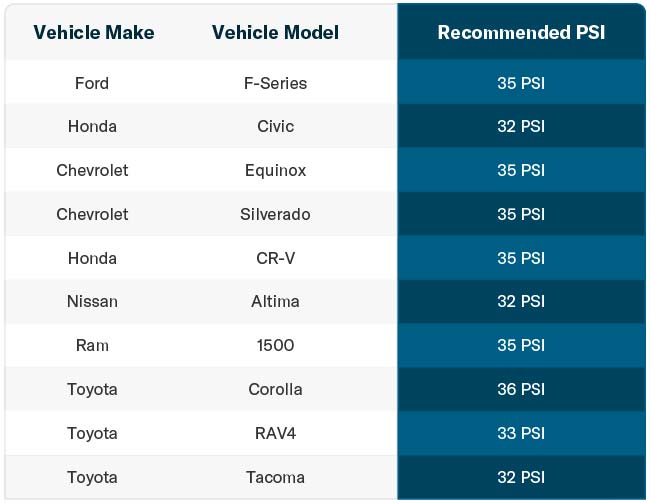
Most passenger car tires require between 32 and 35 PSI when cold. However, the exact correct pressure depends entirely on your specific vehicle make and model, not the maximum number printed on the tire sidewall.
For almost all modern passenger vehicles on the road in 2026, the correct tire pressure typically ranges between 32 and 36 PSI (pounds per square inch) when the tires are cold. However, guessing that number or defaulting to a random figure can ruin your fuel economy and wear out your tread prematurely. Your specific car has a precise PSI engineered by the manufacturer to handle its weight, braking, and steering limits safely.
Maintaining the right tire pressure is not just about avoiding dashboard warning lights. Correctly inflated tires maximize your braking distance, improve fuel efficiency, and prevent dangerous blowouts at highway speeds. Skipping this routine check costs you money at the fuel pump and shortens the lifespan of an expensive set of tires.
Key Takeaways
- Most standard passenger vehicles require between 32 and 35 PSI of tire pressure.
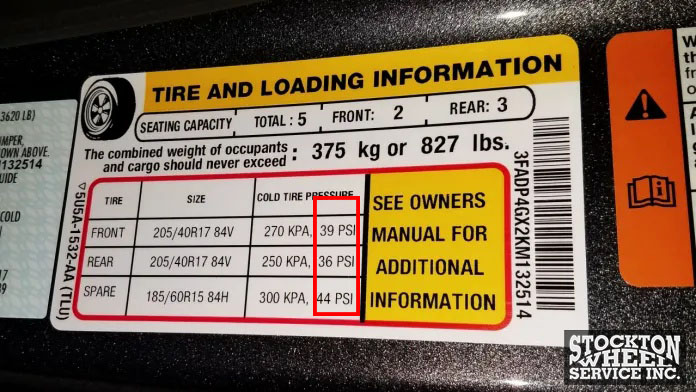
- Always check the driver’s side door jamb placard for your vehicle’s exact recommended PSI.
- Never use the maximum PSI printed on the tire sidewall for daily driving.
- Check your tire pressure when the tires are cold for the most accurate reading.
- Ambient temperature changes cause tire pressure to fluctuate by about 1 PSI per 10 degrees.
What Causes Incorrect Tire Pressure and Why PSI Matters
Tire pressure is constantly in flux due to everyday driving conditions and environmental changes. Knowing what causes these fluctuations helps you stay ahead of potential handling issues on the road.
Natural Air Loss and Environmental Factors
- Temperature shifts: Tires naturally lose or gain about 1 to 2 PSI for every 10-degree Fahrenheit drop or rise in ambient temperature.
- Seepage: Air molecules naturally migrate through the rubber compounds over time, causing tires to lose roughly 1 to 2 PSI per month.
- Slow leaks: Punctures from nails, road debris, or damaged valve stems create gradual pressure drops that require constant monitoring.
The Direct Impact of Improper Inflation
- Under-inflation: Causes excessive sidewall flexing, internal heat buildup, reduced fuel economy, and rapid wear on the outer edges of the tread.
- Over-inflation: Reduces the tire’s contact patch with the road, leading to harsh ride quality, diminished traction, and accelerated wear right down the center of the tread.
How to Find the Correct PSI for Your Car
Never guess your target tire pressure and never rely solely on the numbers printed on the tire itself. Finding the right manufacturer-approved specification requires looking in the correct location on your vehicle.
The Driver’s Side Door Placard
- Door jamb sticker: Open the driver’s side door and look at the b-pillar or door edge for the white and yellow federal certification placard.
- Cold pressure specs: This sticker lists the exact recommended PSI for your front and rear tires, often split into standard load and heavy cargo conditions.
- Original equipment baseline: Always use these numbers as your primary reference point for daily driving in 2026.
Sidewall Maximum PSI vs. Vehicle Placard
- The sidewall limit: The number stamped directly onto the rubber tire sidewall represents the maximum pressure the tire can safely hold, not the recommended pressure for your ride.
- The golden rule: Always inflate your tires to the PSI listed on the door placard, which balances comfort and performance specifically for your car’s chassis.
Step-by-Step Guide to Checking and Inflating Your Tires
Maintaining correct tire pressure requires accuracy and the right equipment. According to the Rubber Manufacturers Association, checking tires at least once a month ensures optimal fuel efficiency and tread longevity.
Preparation and Measurement
Always check tire pressure when the tires are cold. Driving generates friction that heats the air inside, artificially inflating the PSI reading by 1 to 4 PSI. Complete the following steps for an accurate measurement:
- Park the vehicle on a flat surface and turn off the engine.
- Remove the valve stem cap from the designated tire.
- Press a reliable digital tire pressure gauge firmly onto the valve stem until the hissing sound stops.
- Read the digital display and compare the number against the placard located on the driver-side door jamb.
Inflation Process
If the reading falls below the manufacturer recommendation, add air immediately using a portable compressor or a station pump. Complete the following steps to inflate safely:
- Connect the air compressor hose nozzle securely to the tire valve stem.
- Apply short bursts of air, checking the gauge frequently to avoid over-inflation.
- Stop when the gauge matches the exact PSI specification for your vehicle.
- Replace the valve stem cap tightly to prevent moisture and debris infiltration.
What If Your Tire Pressure Keeps Dropping
If a freshly inflated tire loses more than 2 PSI per month, a deeper mechanical issue is usually present. Environmental temperature fluctuations account for minor losses, but rapid deflation signals structural damage. Consider these troubleshooting steps if standard inflation fails:
- Inspect the entire tread and sidewall surface thoroughly for embedded nails, screws, or sharp debris.
- Apply a soapy water solution around the valve stem and the tire bead to check for bubbling, which indicates a slow air leak.
- Verify that the valve core is tightened properly using a valve core tool, as loose cores leak air constantly.
- Visit a certified tire service center if the leak persists despite a clean tread inspection. Professional patching typically costs between $20 and $40, while a complete tire replacement may be necessary if damage occurs too close to the sidewall.
Conclusion
Maintaining the correct PSI for your car tires is critical for maximizing fuel economy, ensuring responsive handling, and preventing dangerous blowouts on the highway. According to verified research and automotive safety experts, routine monthly checks significantly reduce premature tread wear. As an immediate next step, locate your vehicle’s door jamb placard today and check all four tires with a calibrated gauge to ensure safe driving throughout 2026.
❓ Frequently Asked Questions
Why does the recommended PSI differ between the door sticker and the tire sidewall?
The vehicle manufacturer determines the PSI on the door jamb based on your car’s weight, handling, and fuel efficiency. The number on the tire sidewall simply represents the absolute maximum pressure the tire can structurally handle, which would result in a harsh ride and uneven tread wear if used.
How does cold weather affect my car tire PSI?
As outside temperatures drop, the air molecules inside your tire contract, causing the pressure to decrease. Typically, you will lose about 1 PSI of pressure for every 10-degree Fahrenheit drop in ambient temperature.
Can I drive if my tire pressure warning light is on?
You can drive a short distance to a service station, but you should do so cautiously and at lower speeds. A low tire pressure warning light means at least one tire is 25% or more below the recommended manufacturer specification.
Do front and rear tires require the same PSI?
Not always. Many performance cars, SUVs, and trucks require different PSI levels for the front and rear axles to optimize handling and load capacity, which is clearly noted on the door jamb sticker.
What happens if I overinflate my car tires?
Overinflated tires reduce the contact patch with the road, leading to reduced traction, harsh ride quality, and accelerated center tread wear. It also makes the tires more susceptible to damage from potholes and road debris.
What happens if I underinflate my car tires?
Underinflated tires generate excessive friction and heat, which increases fuel consumption and can eventually lead to dangerous tire failure or a blowout. It also causes heavy wear on the outer edges of the tread.