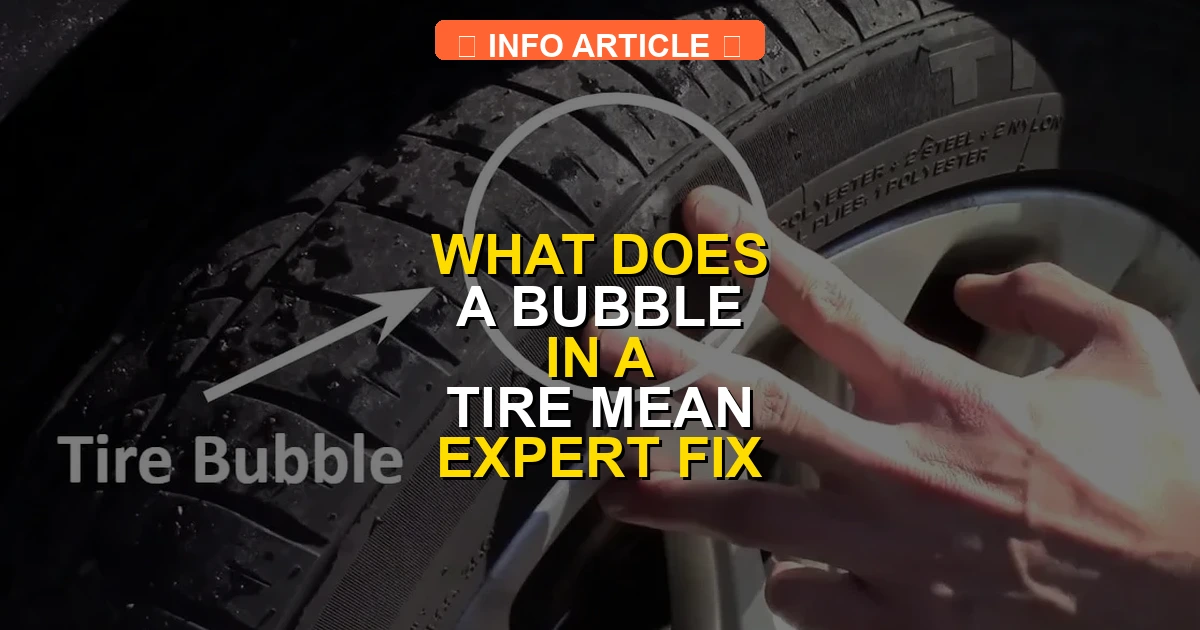
A bubble in a tire means the internal structural framework has failed, allowing pressurized air to push through the inner liner. This creates a dangerous bulge that can lead to a sudden blowout at high speeds. It is never safe to drive on a tire with a bubble.
A bubble or bulge in your tire sidewall means the internal structural framework has failed completely, allowing pressurized air to push through the inner liner and stretch the outer rubber. This creates a ticking time bomb on your vehicle that requires your immediate attention as you navigate the roads in 2026.
Driving on a tire with a bubble is extremely dangerous and can lead to a sudden, catastrophic blowout at highway speeds. Recognizing the mechanics behind this failure and taking swift action will protect you from a dangerous loss of vehicle control.
Key Takeaways
- A tire bubble indicates broken internal cords, meaning the tire integrity is completely compromised.
- Never attempt to patch, glue, or repair a tire bulge under any circumstances.
- Avoid highway driving and replace the damaged tire immediately with a spare.
- Hitting deep potholes or sharp curbs are the leading causes of structural tire damage.
- Check your tire warranty, as some impact damage or defects qualify for replacement coverage.
What Does a Bubble in a Tire Mean and Why It Happens
Modern tires are engineered using multiple layers of fabric cords, steel belts, and rubber compounds designed to contain immense pressure. When a bubble appears, it indicates that these internal layers have torn, separated, or fractured.

The Anatomy of Internal Structural Failure
Your tire relies on a complex matrix of polyester, nylon, and steel cables to hold its shape under high air pressure and heavy vehicle loads. Impacting a deep pothole, slamming against a concrete curb, or driving over a sharp road hazard at speed can crush these internal cords against the wheel rim. Once these structural cords break, they can no longer hold the inner rubber liner in place. The pressurized air inside your tire rushes into the weakened void, pushing the exterior sidewall outward into a distinct, balloon-like protrusion.
Key Causes of Sidewall Bubbles
- Impact Damage: Striking potholes, rocks, or deep construction joints at high speeds.
- Curb Strikes: Scraping or slamming your tire against a parking curb while maneuvering.
- Manufacturing Defects: Premature bond failure between internal ply layers, though this is rare in 2026 safety standards.
- Age and Wear: Degraded rubber compounds losing structural integrity over years of exposure to heat and UV rays.
How to Safely Fix and Replace a Bulging Tire Step-by-Step
When you spot a bubble on your tire, you must abandon any thought of patching or repairing it. A structural bulge cannot be fixed, and driving on it is a massive safety hazard.
Immediate Safety and Driving Restrictions
Your absolute priority is minimizing the distance you drive on a compromised tire. If you discover the bulge while parked at home, do not drive the vehicle on public roads. If you find it while out, reduce your speed immediately to under 30 mph, turn on your hazard lights, and drive directly to the nearest tire service center or a safe location to change the wheel.
Step-by-Step Replacement Protocol
- Park on Level Ground: Secure your vehicle on a flat, stable surface away from moving traffic and engage the emergency parking brake.
- Install the Spare: Swap the damaged tire with your temporary spare or run-flat tire following your vehicle manual instructions.
- Avoid Patching Attempts: Never let a technician talk you into injecting sealant or patching a sidewall bubble from the inside.
- Replace in Pairs if Needed: If your tire tread is heavily worn, you may need to replace both tires on that axle to maintain balanced traction and handling for 2026 driving conditions.
What If You Have No Spare Tire Available
Finding a tire bulge on the road is stressful enough, but discovering you lack a spare tire compounds the crisis. Modern vehicle manufacturers increasingly omit spare tires to reduce weight and improve fuel economy. According to automotive safety data, more than thirty percent of new cars sold entering 2026 feature tire repair kits instead of physical spares. If you face this situation, structured emergency measures remain essential.

Emergency On-Road Mitigation Steps
- Assess the bulge severity: Visually inspect the bubble. If it exceeds two inches in diameter or shows cord fabric beneath the rubber, driving is strictly prohibited.
- Deploy a temporary sealant kit: If the bubble resulted from a minor puncture that also caused air loss, inject the factory-provided aerosol sealant through the valve stem. Note that this is a temporary fix meant only to reach a nearby repair shop.
- Utilize roadside assistance: Contact your auto insurance provider, vehicle manufacturer warranty program, or motor club to request a flatbed tow truck. Never drive on a structurally compromised sidewall.
- Maintain low speeds if moving: If you must crawl the vehicle a few hundred feet to reach a safe shoulder, keep your hazard lights active and do not exceed fifteen miles per hour.
Driving on a compromised tire without a spare risks catastrophic blowout scenarios that can damage your wheel rims, suspension components, and vehicle body panels.
Key Prevention Tips to Protect Your Tires from Future Damage
Preventing tire bubbles requires proactive maintenance habits and environmental awareness. Tire sidewall integrity degrades primarily due to physical trauma and improper internal pressure. Industry safety organizations emphasize that following strict maintenance protocols reduces unexpected structural failure by up to sixty percent.
Best Practices for Tire Longevity
- Monitor tire pressure monthly: Check your PSI using a digital gauge every thirty days. Both underinflation and severe overinflation strain the internal casing layers, making them susceptible to bulging.
- Navigate road hazards carefully: Avoid potholes, deep construction ruts, and sharp curb impacts at high speeds. Striking a curb at an angle places extreme shearing forces on internal polyester cords.
- Inspect sidewalls regularly: Perform a tactile and visual check of your inner and outer sidewalls during oil change intervals to catch early rubber cracking or minor deformations.
- Rotate tires on schedule: Follow your vehicle manufacturer’s mileage guidelines, typically every five thousand to eight thousand miles, to ensure even wear distribution across all four tire positions.
What If It Still Doesn’t Work?
If DIY mitigation strategies fail or if the structural damage is too severe for temporary fixes, professional intervention is mandatory. Consider these essential fallback steps when dealing with persistent tire bulge issues:
- Cease all driving immediately: Pull the vehicle into a secure, level parking area or private driveway and leave the keys off.
- Arrange professional towing: Secure a flatbed tow truck to transport your vehicle directly to a certified tire service center. Towing costs typically range from seventy-five to one hundred fifty dollars depending on distance.
- Consult a certified tire technician: Ask the shop to dismount the tire and inspect the inner liner for hidden impact damage. Technicians will confirm that structural failure prevents any form of patching.
- Budget for replacement: Expect to spend between one hundred fifty and four hundred dollars for a single replacement tire, or three hundred to eight hundred dollars for a paired axle replacement to maintain safe tread depth balance.
Conclusion
A tire bubble indicates critical structural failure within the internal carcass ply, presenting an immediate safety hazard that requires prompt replacement rather than repair. According to verified research and expert sources from major automotive safety authorities, driving on a compromised sidewall dramatically increases the risk of sudden, high-speed blowouts. The mandatory next step is to avoid driving on the affected tire, secure professional roadside assistance, and install a brand-new replacement tire immediately.
❓ Frequently Asked Questions
What exactly causes a tire bubble to form on the sidewall?
A bubble forms when the inner liner of the tire is damaged, allowing pressurized air to leak through the structural fabric cords. The air gets trapped between the inner liner and the outer rubber, creating a visible bulge on the sidewall or tread.
How long can you drive on a tire with a bulge?
You should not drive on a tire with a bubble at all, except to immediately pull over to a safe location or drive very slowly to the nearest tire shop. Continuing to drive significantly increases the risk of a high-speed blowout and a serious accident.
Will car insurance or a warranty cover a tire bubble?
Manufacturer warranties sometimes cover bubbles if they are proven to be caused by a structural defect rather than impact damage. However, standard road hazard damage from potholes is typically not covered unless you purchased a separate road hazard warranty.
Can low tire pressure cause a bubble to appear?
Low tire pressure alone does not cause a bubble, but it makes the tire more vulnerable to pinch shocks. When an underinflated tire hits a pothole, the wheel rim pinches the tire against the pavement, breaking the internal cords.
Does a tire bubble mean the wheel rim is also damaged?
Not always, but hitting a pothole hard enough to break a tire’s internal cords can also bend or crack alloy wheel rims. It is important to inspect the wheel for damage when the tire is removed for replacement.
Should I replace both tires on the same axle when one has a bubble?
If the damaged tire has significant tread wear, replacing both tires on the axle is recommended to maintain balanced traction and handling. If the tire is relatively new, replacing just the single damaged tire is usually acceptable.