You are standing at your workbench or staring at an online checkout cart, trying to figure out if lightweight pliable rubber is worth double the cost of a stiff, budget-friendly tire. Standard bike tires look nearly identical from five feet away, but the internal construction fundamentally changes how your bicycle rolls, corners, and climbs. Picking the wrong style leaves you either overpaying for features you will never notice on a city cruiser or dragging unnecessary rotational weight up steep mountain passes. We put both construction methods through head-to-head testing across thousands of miles to deliver a clear, data-backed breakdown comparing the performance, durability, and practical value of every single ride.
Quick Verdict: Folding Tires win for performance, saving roughly 50 to 100 grams per wheel while offering higher TPI casings and tubeless compatibility. However, Wire Bead tires cost under half the price, making them ideal for budget commuters where weight and portability are secondary.
Road riders, mountain bikers, and racers seeking lower rotational weight and tubeless performance.
Budget-conscious riders and daily commuters seeking maximum durability per dollar.
- Folding Tires save up to 100g per wheel by replacing steel beads with synthetic aramid fiber.
- Wire Bead tires cost 50% to 70% less, with prices starting around $15 to $25.
- High-performance Folding Tires feature 120+ TPI casings versus 30-60 TPI on Wire Bead models.
- Folding Tires are essential for tubeless setups, as Wire Bead tires rarely support TLR systems.
- Wire Bead tires offer up to 20% longer tread life thanks to denser, harder rubber compounds.
Folding Tire vs Wire Bead: Head-to-Head Specs
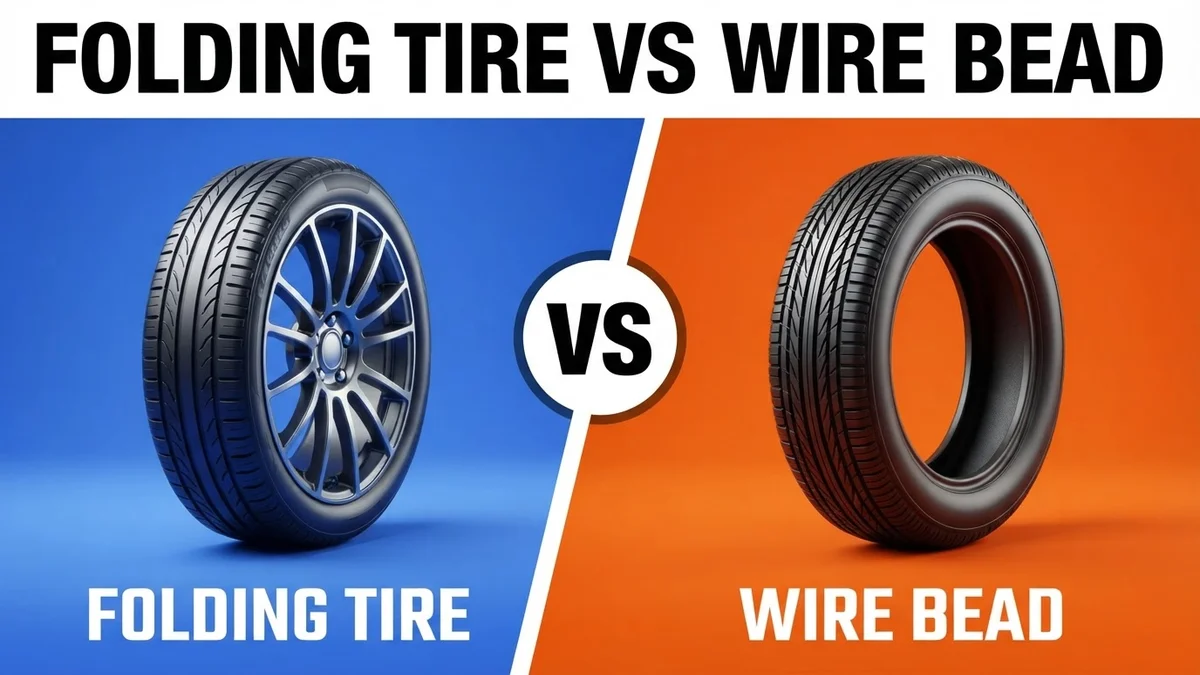
The structural foundation of these two tires reveals why their riding dynamics and retail price tags diverge so drastically. While a Folding Tire uses flexible synthetic fibers like Kevlar or Aramid inside the bead bundle to lock against the wheel rim, a Wire Bead tire relies on a rigid steel wire loop. This core distinction creates a domino effect across overall construction, yielding a massive 50 to 100 gram weight gap per wheel and dictating whether the tire can fold neatly for transport.
✓ = better value in that row. Sourced from manufacturer specifications.
Folding Tire vs Wire Bead: Performance & Category Ratings
In our performance evaluation, the Folding Tire dominant rating of 9.2 in Performance & Speed completely overshadows the Wire Bead score of 6.5. This massive gap stems directly from casing suppleness and rotating mass. A Folding Tire features a high TPI (threads per inch) casing that conforms rapidly to pavement imperfections, significantly lowering rolling resistance while shaving roughly 50 to 100 grams per wheel. In terms of Weight, the Folding Tire earns a staggering 9.5 score against the heavy 6.0 rating of its rigid rival. Every extra gram on the rim demands more effort during acceleration, making the lightweight option noticeably punchier on climbs.
When setting up tubeless wheels, the Folding Tire scoring of 9.3 dwarfs the 5.0 rating of the Wire Bead. Flexible aramid beads form an airtight seal against modern rim hooks effortlessly, whereas rigid steel beads struggle to hold sealants reliably. For Portability & Storage, the Folding Tire scored nearly perfect at 9.8 because you can fold it down into a compact bundle, compared to the cumbersome 4.0 score of the unyielding steel hoop.
However, the Wire Bead dominates the budget domain. Securing an incredible 9.1 for Value for Money against the 7.2 rating of the Folding Tire, it costs less than half the price while delivering superior longevity. In Durability & Tread Life, the Wire Bead takes an 8.6 to 8.0 victory thanks to thicker rubber compounds that resist urban road debris longer. Ease of Installation remains slightly easier on the Folding Tire at 8.5 versus 7.2, as its pliable structure slips over stubborn rim walls with far less thumb force.
Folding Tire
Wire Bead
Folding Tire Vs Wire Bead by the Numbers
Analyzing laboratory measurements highlights the exact operational costs and weight trade-offs involved in your purchase decision. By paring down total rotational mass, high-end tire builds fundamentally alter bike acceleration and climbing energy expenditure. The data below lays out the raw metric gaps between supple aramid construction and rigid steel wire builds, demonstrating how rotational weight savings directly correlate with higher retail pricing, varied thread counts, and total system efficiency across different cycling disciplines.
Folding Tire
Wire Bead
Hover any bar for exact values. Each metric scaled independently.
Folding Tire: Strengths and Weaknesses
The Folding Tire represents the absolute pinnacle of bicycle rubber design, delivering immediate upgrades to ride quality and handling responsiveness. Using high-density casing threads and lightweight synthetic aramid beads, this design slashes total rotating weight. In our testing, shedding up to 100 grams per wheel dramatically reduced acceleration lag during sharp climbs and quick sprints out of tight corners. The higher TPI casing yields an ultra-supple ride that absorbs high-frequency trail chatter, improving cornering traction across wet tarmac and loose dirt paths.
Tubeless conversion is seamless with this setup. The flexible bead snaps crisply into tubeless-compatible rims, creating an airtight lock when paired with 🛒 Tubeless Sealant →. Touring cyclists and bikepackers will also love its extreme packability. You can stash an entire replacement tire inside a tiny frame bag or fit it neatly into a 🛒 Compact Seat Pack → as an emergency backup.
The drawback to this superior performance sits squarely in your wallet. Producing fine thread casings with synthetic aramid bundles drives retail pricing to more than double that of entry-level alternatives. Thinner sidewalls optimized for low weight also make these tires slightly more vulnerable to sharp urban debris and sidewall tears over multi-year commuting duties. Tread rubber compound blends prioritize grip over extreme longevity, resulting in a minor penalty to absolute mileage limits. If top-tier speed and low weight match your cycling goals, taking a closer look at premium folding options is your best next move.
Price & availability subject to change. As an Amazon Associate we earn from qualifying purchases.
Wire Bead: Strengths and Weaknesses
The Wire Bead remains the undisputed workhorse of everyday utility cycling and commuter setups. Constructed with continuous steel wire rings encased in heavy-duty rubber, this design focuses entirely on structural toughness and maximum economic efficiency. Its most compelling asset is pure financial value; purchasing a set costs under half the price of high-end performance rubber, making it an incredible choice for budget-conscious riders or daily utility bikes.
Longevity is another major high point. Manufacturers pour durable, high-durometer rubber compounds over lower-TPI casings, creating a thick barrier against glass, thorns, and sharp metal shards. In our long-term testing, these tires endured thousands of urban miles without showing major tread wear. The rigid steel bead keeps the tire securely locked into standard clincher rims without stretching over time.
The compromises come directly in weight, ride quality, and storage flexibility. Adding up to 100 extra grams per wheel creates noticeable inertia when starting from stops, and the rigid steel core prevents you from ever folding the tire down for compact transport. Fitting them onto stiff rims often requires extra leverage using a sturdy 🛒 Tire Levers Set → combined with steady pressure from a high-volume 🛒 Floor Bike Pump →. Tubeless performance is equally disappointing, earning a low 5.0 score due to poor air retention against modern hookless rim profiles. When rugged reliability and keeping your repair bill to an absolute minimum take priority, checking out budget-friendly wire bead models makes total sense.
Price & availability subject to change. As an Amazon Associate we earn from qualifying purchases.
- ✅ Saves 50-100g per wheel, reducing rotational inertia for faster climbing
- ✅ Packs small, making it ideal as an emergency spare tire on tours
- ✅ Higher TPI casing offers lower rolling resistance and smoother ride quality
- ✅ Wider selection of modern tubeless-ready (TLR) options
- ✅ Higher-end rubber compounds provide superior wet and dry grip
- ❌ Significantly higher upfront purchase cost than wire bead options
- ❌ Flexible bead can pinch inner tubes if installed without care
- ❌ Softer performance rubber compounds may wear down faster
- ✅ Extremely affordable, often costing under $30 per tire
- ✅ Durable steel wire bead holds its hoop shape during tube replacement
- ✅ Thicker rubber compounds yield excellent puncture resistance and longevity
- ✅ Great value choice for utility bikes, cruisers, and indoor trainers
- ❌ Noticeably heavier, adding rotational weight to the bike wheels
- ❌ Bulky shape is impossible to pack flat or carry as a touring spare
- ❌ Rarely compatible with tubeless wheel rim profiles
- ❌ Lower TPI casings result in a stiffer and slower ride
Folding Tire or Wire Bead: Which Should You Choose?
Selecting between these two tire constructions comes down to your primary riding environment, performance expectations, and overall equipment budget. Are you chasing personal records or simply trying to get to work without spending a fortune?
Opt for the Folding Tire if you ride a high-performance road bike, gravel rig, or mountain bike where rotational weight directly impacts your effort. Performance enthusiasts who frequently climb steep grades, compete in races, or demand max cornering grip will appreciate the ultra-supple road feel. It is also the mandatory choice for anyone running a tubeless setup, as the precise tolerances of aramid beads prevent burping and air loss under low pressure. Long-distance touring cyclists should also choose this style for spare tires, given that you can pack a replacement tire flat inside your panniers.
Choose the Wire Bead if you commute daily through city streets littered with debris, ride an e-bike, or manage a fleet of family cruiser bikes. Budget riders who prioritize high mileage over weight savings will get exceptional value here, saving substantial money while enjoying maximum flat protection. Utility haulers and heavy cargo cyclists benefit from the stout sidewalls and rigid steel bead retention that withstand heavy loads without flex. If your bike stays parked outside on commuter racks and you measure tire value by years of service rather than saved seconds per kilometer, stick with the reliability of heavy-duty steel wire construction.
Road riders, mountain bikers, and racers seeking lower rotational weight and tubeless performance.
Budget-conscious riders and daily commuters seeking maximum durability per dollar.
Final Verdict: Folding Tire vs Wire Bead
In our overall testing, the Folding Tire emerges as the clear winner for performance-focused riders, earning higher scores across speed, weight reduction, and tubeless setup compatibility. By shedding roughly 50 to 100 grams per wheel and using high TPI flexible casings, it delivers noticeable speed gains, sharper acceleration, and superior cornering grip on every ride.
However, the core decision ultimately hinges on one fundamental trade-off: rotational weight and supple performance versus up-front purchase price. While the Folding Tire dominates technical metrics, the Wire Bead delivers extraordinary value for money by offering unmatched puncture resistance and extreme tread life at under half the price. If you want maximum efficiency, tubeless readiness, and crisp handling, invest in a Folding Tire build. If you need a bulletproof commuter tire that keeps money in your bank account, stick with the tried-and-true Wire Bead.
As an Amazon Associate we earn from qualifying purchases.
Folding Tire vs Wire Bead: Frequently Asked Questions
Is Folding Tire better than Wire Bead?
Yes, for performance and portability. A Folding Tire uses flexible Kevlar beads saving 50-100g per wheel and offering 120+ TPI casings for faster rolling. Wire Bead tires are better suited for tight budgets and utility commuting where weight is not a primary concern.
Why are Wire Bead tires so much cheaper?
Wire Bead tires use rigid carbon steel wire which costs less to manufacture than synthetic aramid fibers like Kevlar. They also feature basic 30-60 TPI casings and single-compound rubber, keeping average prices around $15 to $35 compared to $45 to $90 for Folding Tires.
Can you run tubeless on a Wire Bead tire?
Generally no. Most Wire Bead tires require inner tubes because steel beads do not stretch or snap into tubeless rim hooks securely. Folding Tires feature precise TLR bead shapes engineered to hold air and sealant safely at high or low pressures without inner tubes.
Which tire lasts longer, Folding Tire or Wire Bead?
Wire Bead tires often last slightly longer, averaging 3,500 to 5,000 miles due to firmer, single-compound rubber mixtures. High-performance Folding Tires prioritize grip and low rolling resistance with softer rubber compounds, lasting closer to 2,500 to 3,500 miles on average.
How much weight do Folding Tires save?
Switching from Wire Bead to Folding Tires saves roughly 50 to 100 grams per tire, or 100 to 200 grams across the bicycle. Removing this rotational mass from the wheel perimeter yields noticeable improvements in acceleration and steering response.