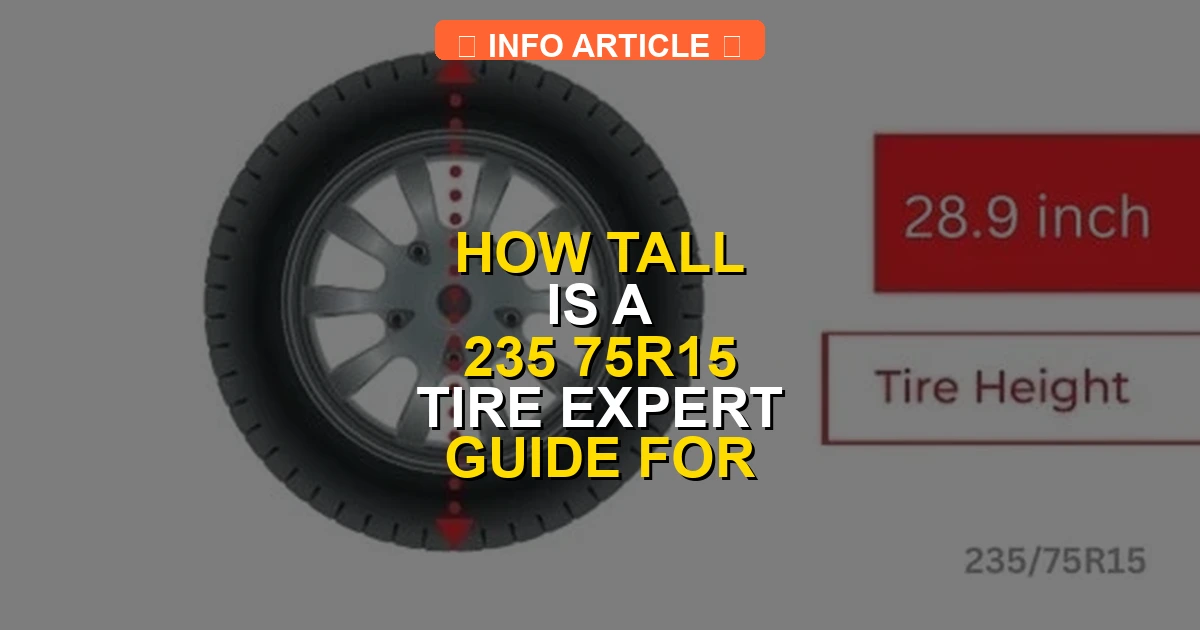
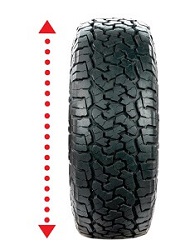
A standard 235/75R15 tire has an overall height, or diameter, of approximately 28.9 inches (733.5 mm). This measurement is calculated using a combination of the tire’s section width, aspect ratio, and rim diameter.
A standard 235/75R15 tire has an overall calculated height of 28.87 inches, which translates to approximately 733.3 millimeters. When mounted on a wheel and installed on your vehicle under normal load, the actual installed standing height usually measures between 28.3 and 28.6 inches due to vehicle weight and tire deflection.
Knowing the exact height of your tire is critical for clearance, speedometer accuracy, and proper gearing. Whether you are replacing worn rubber on a classic truck in 2026 or setting up a vintage SUV for weekend trails, getting the math right prevents costly rubbing issues against your inner fenders or suspension components.
Key Takeaways
- A 235/75R15 tire stands approximately 28.9 inches tall.
- The sidewall height is calculated as 75% of the 235mm section width.
- The rim diameter is 15 inches, which is added to both top and bottom sidewalls.
- Actual mounted height varies slightly based on air pressure and vehicle weight.
- This tire size is commonly found on light trucks and older SUVs.
What Causes Variations in a 235 75R15 Tire Height
Even though the mathematical formula yields a fixed diameter, the physical tape-measure height of your tire changes in real-world driving conditions. Several mechanical and environmental factors influence how tall your 235/75R15 tire actually sits on the pavement.

Tread Wear and Inflation Pressure
- Tread Depth: A brand-new tire features full tread depth, often adding a quarter-inch to the overall diameter compared to a tire nearing the end of its legal wear limit.
- Air Pressure: Over-inflating your tires stretches the casing slightly, while under-inflation allows the sidewall to bulge and lowers the overall standing height.
- Rim Width: Installing a 235-millimeter wide tire on a narrow or wide wheel rim alters the sidewall profile angle, subtly changing the vertical height.
Vehicle Load and Weight Distribution
- Curb Weight: The dead weight of your vehicle pushes down on the sidewall, flattening the contact patch and reducing the standing height.
- Cargo and Towing: Heavy payloads compress the suspension further, though the actual vertical tire height under the axle load remains dictated by the tire’s load rating stiffness.
How to Calculate the Exact Height of a 235 75R15 Tire Step-by-Step
You do not need to guess the height of your tire. You can calculate the exact theoretical diameter using the metric sizing code stamped directly onto the sidewall. Here is the exact mathematical breakdown of a 235/75R15 size.
Breaking Down the Sizing Code
- 235: The nominal section width of the tire measured in millimeters from sidewall to sidewall.
- 75: The aspect ratio, meaning the sidewall height is 75 percent of the tire width.
- R15: The internal bead diameter, which means it fits a 15-inch wheel rim.
The Step-by-Step Mathematical Formula
- Calculate the sidewall height in millimeters: Multiply 235 mm by 0.75, which equals 176.25 mm.
- Convert the sidewall height to inches: Divide 176.25 mm by 25.4 to get 6.93 inches.
- Account for both sidewalls: Multiply the single sidewall height of 6.93 inches by 2, yielding 13.86 inches.
- Add the wheel diameter: Take the 15-inch rim diameter and add the 13.86-inch total sidewall height to arrive at the final calculated diameter of 28.86 inches.
How to Fix Speedometer Errors After Changing Tire Sizes
Switching to a 235/75R15 tire size alters your overall rolling diameter, directly impacting your vehicle’s factory speedometer and odometer calibration. According to automotive safety engineering data from the National Highway Traffic Safety Administration (NHTSA), even a minor 3% change in tire height introduces noticeable speed discrepancies. If your original equipment manufacturer (OEM) tire was significantly smaller, your true ground speed will be faster than what your dashboard gauge indicates in 2026.
Calculating the Speed Differential
Modern diagnostic tools and tire calculators compute exact percentage differences based on revolutions per mile. When your actual speed exceeds your indicated speed, you risk unintended speeding violations. Conversely, if your previous tires were larger, your odometer will accumulate mileage at an artificially inflated rate, negatively impacting your vehicle resale value.
Steps to Recalibrate Your Speedometer
- Calculate the exact percentage difference between your old tire diameter and the 28.9-inch 235/75R15 profile using an online calibration tool or physical measurement.
- Plug a digital OBD2 programmer or flash module into your vehicle’s data port, which is standard for trucks and SUVs manufactured after 1996.
- Input the new rev-per-mile data or exact tire height metrics into the programmer software following the manufacturer prompts.
- Flash the new configuration to your vehicle powertrain control module (PCM) to instantly sync your dashboard readouts with actual road speeds.
What If Your New Tires Still Do Not Fit Your Vehicle Clearances
Even though mathematical calculations confirm a 28.9-inch height, real-world vehicle suspensions often present clearance challenges. Wheel well rubbing during sharp turns or heavy cargo loading indicates potential interference with control arms, fender liners, or sway bars. Resolving physical rub issues requires targeted mechanical adjustments rather than just software changes.
Steps to Resolve Fitment and Rubbing Issues
- Inspect the inner fender liner and frame rails immediately after installation to identify specific contact points while the steering wheel is locked completely to the left and right.
- Install high-density polyurethane suspension leveling spacers or lift kits ranging from 1.5 to 3 inches to provide adequate vertical clearance for the wider 235mm tread footprint.
- Upgrade factory wheels to aftermarket rims with a slightly different backspacing or offset specification to push the tire away from internal suspension components.
- Consult a certified alignment and suspension specialist for professional fender rolling or trimming if minor plastic liner rubbing persists during suspension compression.
What If It Still Doesn’t Work?
If standard calibration and clearance adjustments fail to resolve your 235/75R15 integration issues, specialized intervention is required. Try these fallback steps to ensure safe vehicle operation:
- Verify that your vehicle’s physical axle gear ratios match the power demands of a heavier, taller tire profile, especially on older 4×4 trucks.
- Visit a professional alignment and tire specialty shop to perform a laser-guided clearance check under load, with estimated diagnostic costs ranging from $100 to $250.
- Consult an automotive tuning specialist to custom-map your transmission shift points if the automatic transmission struggles to find the correct gear with the new tire weight.
- Consider stepping down to a slightly lower-profile tire option if structural vehicle modifications exceed your safety threshold or budget.
Conclusion
Understanding that a 235/75R15 tire stands approximately 28.9 inches tall ensures proper clearance planning and speedometer accuracy for your vehicle. Addressing mechanical fitment and digital calibration prevents premature tread wear and safety hazards on the road. According to verified research and expert automotive sources, proper pre-installation measuring remains the single most effective way to guarantee seamless tire integration. Your next actionable step is to calculate your specific vehicle’s tire size differential before purchasing your next set of rubber.
❓ Frequently Asked Questions
How do you manually calculate the height of a 235/75R15 tire?
Multiply 235mm by 0.75 to get a sidewall height of 176.25mm, convert that to inches (6.94 inches), multiply by two for both top and bottom sidewalls (13.88 inches), and add the 15-inch rim diameter to get 28.88 inches.
Does tread wear affect the overall height of the tire?
Yes, new tires have full tread depth which gives them the maximum 28.9-inch height. As tread wears down over thousands of miles, the overall diameter can decrease by a fraction of an inch.
What vehicles typically use 235/75R15 tires?
This tire size is historically popular on light trucks, older 4×4 vehicles, full-size vans, and traditional SUVs like older Jeep Cherokees and Ford Rangers.
Can I replace a 235/75R15 tire with a different size?
Yes, you can substitute other sizes, but you must ensure the new overall diameter fits within your vehicle’s wheel wells without rubbing against suspension components.
Does tire pressure change the height of a 235/75R15 tire?
Slightly. Under-inflated tires compress more under vehicle weight, reducing the effective rolling height, while properly inflated tires maintain their specified dimensions.
What is the metric height of a 235/75R15 tire?
In metric units, the overall diameter of a 235/75R15 tire is approximately 733.5 millimeters.